





16 Best AI Tools To Use In B2B Marketing


Aug 27, 2026

Contents
 22 min
- Why AI Tools Matter for B2B Marketing
- Top AI Tools for B2B Marketing
- 1.Salesforce Einstein
- 2.Jasper
- 3.Breeze by HubSpot
- 4.Fireflies AI
- 5.Synthesia
- 6.Zapier
- 7.StoryAI
- 8.Factors.ai
- 9. Gemini
- 10. ChatGPT
- 11. Claude
- 12. Otter
- 13. Demandbase
- 14. Napkin.ai
- 15. Gumloop
- 16. Chatfuel
- How to Choose the Right AI Tool
- Conclusion


As long as I have used AI tools, their best value has been simple: they remove the work that slows teams down. Not the strategic work, but they help you with the miscellaneous work that doesn’t look like much but consumes a lot of time.
Drafting first versions, summarizing calls, organizing ideas—there are an endless number of examples that can help you in automating your work.
Businesses are turning to AI solutions to eliminate repetitive work, freeing up teams to spend more time on strategy, execution, and growth.
McKinsey’s 2025 global survey found that 88% of organizations use AI in at least one business function, up from 78% the previous year.
HubSpot’s 2026 State of Marketing Report says 80% of marketers use AI for content creation, and 75% use it for media production.
For major businesses' decision-makers, the question is no longer whether AI belongs in marketing. The real question is which tools deserve a place in the stack and where they create measurable value.
Why AI Tools Matter for B2B Marketing
B2B marketing has become more complicated. Before taking the questions to the sales department, buyers research via Google, LinkedIn, review sites, communities, ChatGPT, Claude, Perplexity, Gemini, AI Mode, and AI Overview.
They allow marketers to scale content creation instantly and deliver precise personalization to diverse buying committees.
These systems can efficiently flag target accounts that are in-market through intent data analysis.
Predictive analytics also optimizes ad spend and campaign messaging in real time. Marketers save dozens of hours per week of manual work by automating lead scoring and draft creation. AI is crucial for staying competitive in the modern era given its widespread adoption
Use AI to replace strategy, not just to reduce manual drag, so marketers can focus on positioning, pipeline, conversion, and customer understanding.
Top AI Tools for B2B Marketing
This list includes 16 B2B marketing tools that can help your business to grow better and get more conversions.
| Sno | Tool | Key features | Best for |
|---|---|---|---|
| 1 | Salesforce Einstein | Predictive AI, generative content, campaign optimization, customer data insights | Enterprise CRM and marketing teams |
| 2 | Jasper | Brand voice, campaign content, AI writing, marketing workflows | Content and brand teams |
| 3 | Breeze by HubSpot | AI agents, assistants, CRM intelligence, embedded HubSpot AI | HubSpot marketing, sales, and service teams |
| 4 | Fireflies AI | Meeting transcription, summaries, action items, searchable calls | Sales and customer-facing teams |
| 5 | Synthesia | AI avatars, video generation, localization, training videos | Video, enablement, and L&D teams |
| 6 | Zapier | AI workflows, agents, app automation, no-code integrations | Marketing operations and RevOps |
| 7 | StoryAI | Behavioral insights and AI-assisted analysis | UX, product marketing, and analytics teams |
| 8 | Factors.ai | ABM data, visitor identification, attribution, account insights | B2B demand generation teams |
| 9 | Gemini | Workspace AI, research, writing, summaries, campaign support | Google Workspace teams |
| 10 | ChatGPT | Research, content, analysis, campaign planning, data summarization | Marketing, SEO, and strategy teams |
| 11 | Claude | Long-context analysis, writing, reasoning, research workflows | Strategy, content, and technical teams |
| 12 | Otter | Meeting notes, summaries, action items, team collaboration | Sales, marketing, and leadership teams |
| 13 | Demandbase | ABM, intent data, account prioritization, buying signals | Enterprise B2B GTM teams |
| 14 | Napkin.ai | Text-to-visuals, diagrams, concept visuals | Content and presentation teams |
| 15 | Gumloop | No-code AI agents, workflow automation, integrations | Ops, RevOps, and automation teams |
| 16 | AI chatbots, social messaging, lead capture, qualification | Social commerce and lead-gen teams |
1.Salesforce Einstein
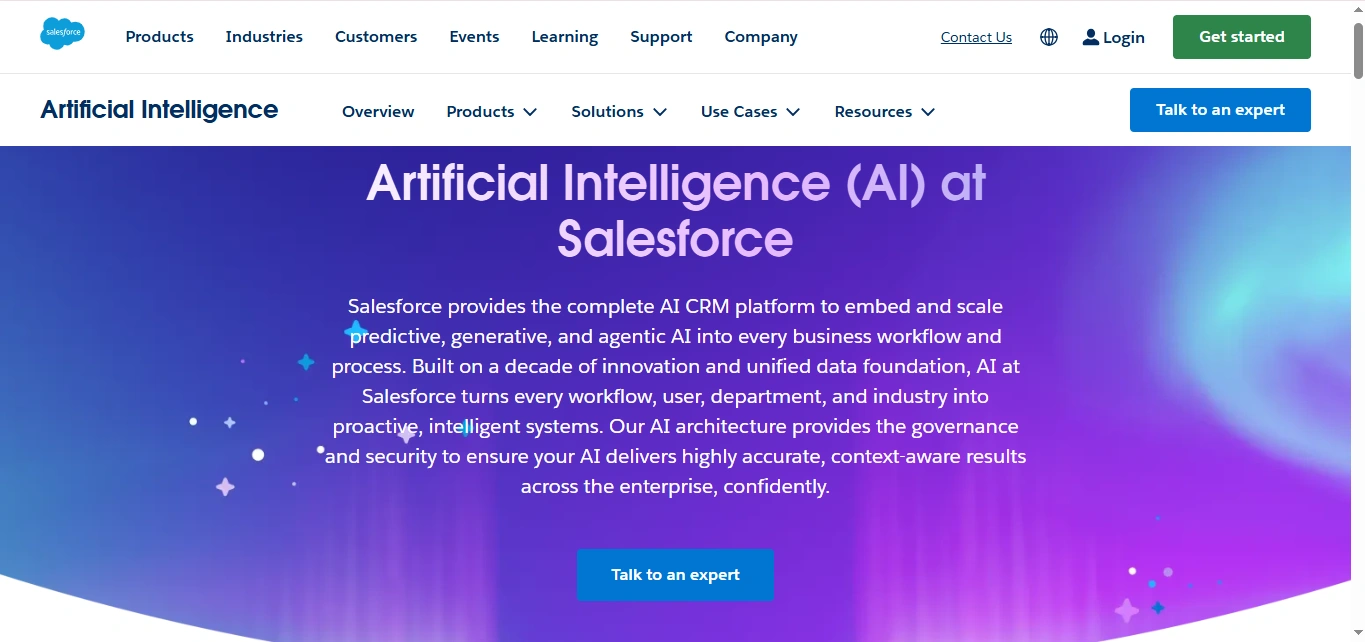
Salesforce Einstein is an artificial intelligence platform that is integrated into the Salesforce Customer Relationship Management (CRM) system.
It automates workflows, predicts future outcomes, and delivers personalized content to sales, service, marketing, and commerce teams by leveraging the single source of truth within your company.
Salesforce’s marketing AI is a way to identify stronger segments, personalize content, and optimize campaign performance.
Real-time use: A B2B SaaS company uses Einstein to predict which accounts are most likely to respond to a nurture campaign. Instead of blasting out the same message to every lead, the team can prioritize segments based on behavior and likelihood to convert.
Key features:
CRM predictive analysis: You can use Salesforce customer data to optimize lead scoring, opportunity prioritization, and customer segmentation.
AI-powered campaign personalization: This feature enables marketers to personalize messages based on customer behavior, CRM data, and engagement signals.
Einstein Content Support: You can customize email subject lines, message copy, and campaign content within Salesforce settings.
Agentforce and AI automation: Deliver more advanced AI agent workflows for enterprise teams that require higher levels of automation in sales, service, and marketing.
Pricing
-
Salesforce pricing is based primarily on cloud, edition, and AI add-ons.
-
Salesforce Starter begins at $25/user/month
-
Pro Suite is listed at $100/user/month
-
Agentforce 1 editions start at $550/user/month for advanced AI capabilities
Key benefit: Better personalization through CRM-connected intelligence.
Decision note: Must-have for Salesforce-heavy enterprise teams; optional if your CRM data is weak.
2.Jasper
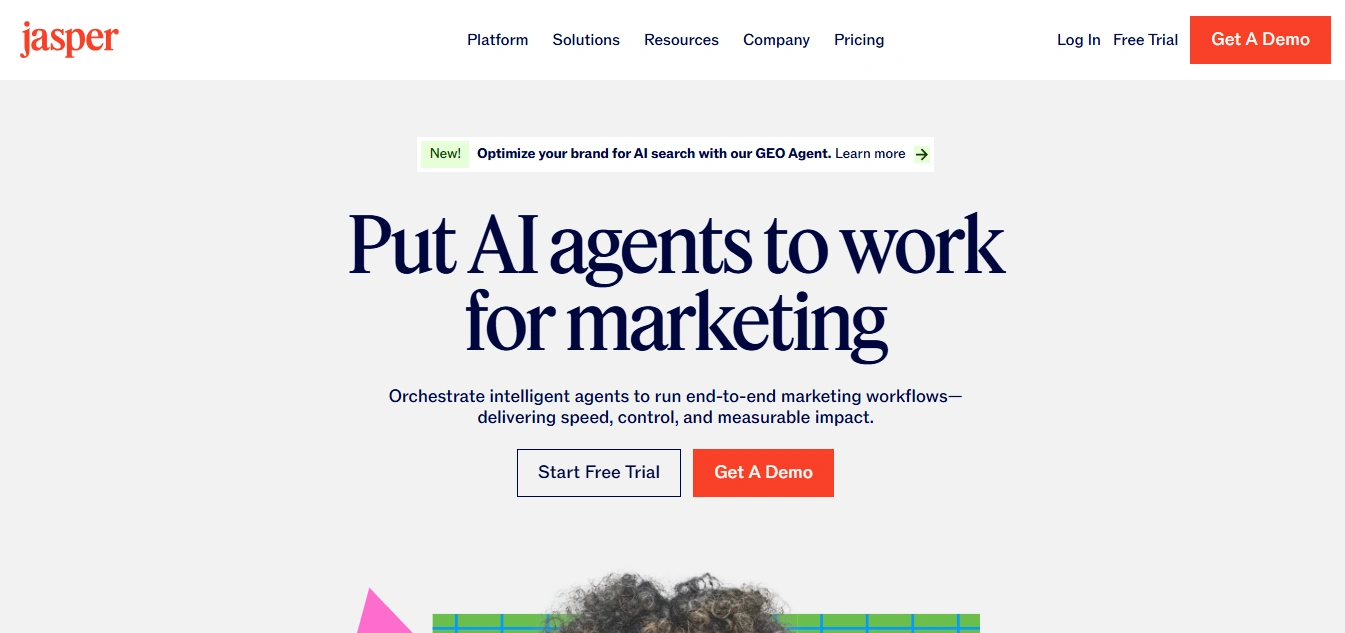
Jasper AI is an AI-powered marketing copilot platform that enables teams to scale their marketing campaigns with content automation.
It is not a general-purpose chatbot like ChatGPT but rather a tool for generating branded content—social media postings, adverts, and blogs—that closely follows a company’s particular brand language.
Its brand intelligence layer helps teams apply brand voice, style guides, audience profiles, and product knowledge across outputs.
Real-time use: A B2B content team can use Jasper to turn one campaign brief into landing page copy, LinkedIn posts, email variations, and ad copy. The team still edits the final version, but Jasper reduces first-draft time.
Key features:
Brand Voice Training: Understands your tone, style guide, product language, and messaging principles so material is consistent.
Campaign content creation: Creates blogs, landing page copy, emails, ads, and social material from one campaign brief.
Browser extension support: enables teams to use Jasper within applications such as Gmail, WordPress, HubSpot, LinkedIn, and Google Docs.
Marketing workflow collaboration: The feature allows teams to create content with campaign alignment, templates, and brand control.
Key benefit: Gives you an advantage with faster content creation with stronger brand consistency.
Decision note: Must-have for content-heavy teams publishing across multiple channels.
Pricing
-
Jasper offers a Pro plan at $59/month annually
-
$69/month monthly.
-
Business plans are priced and designed specifically for teams that need advanced controls, support, security, and scalable workflows.
3.Breeze by HubSpot
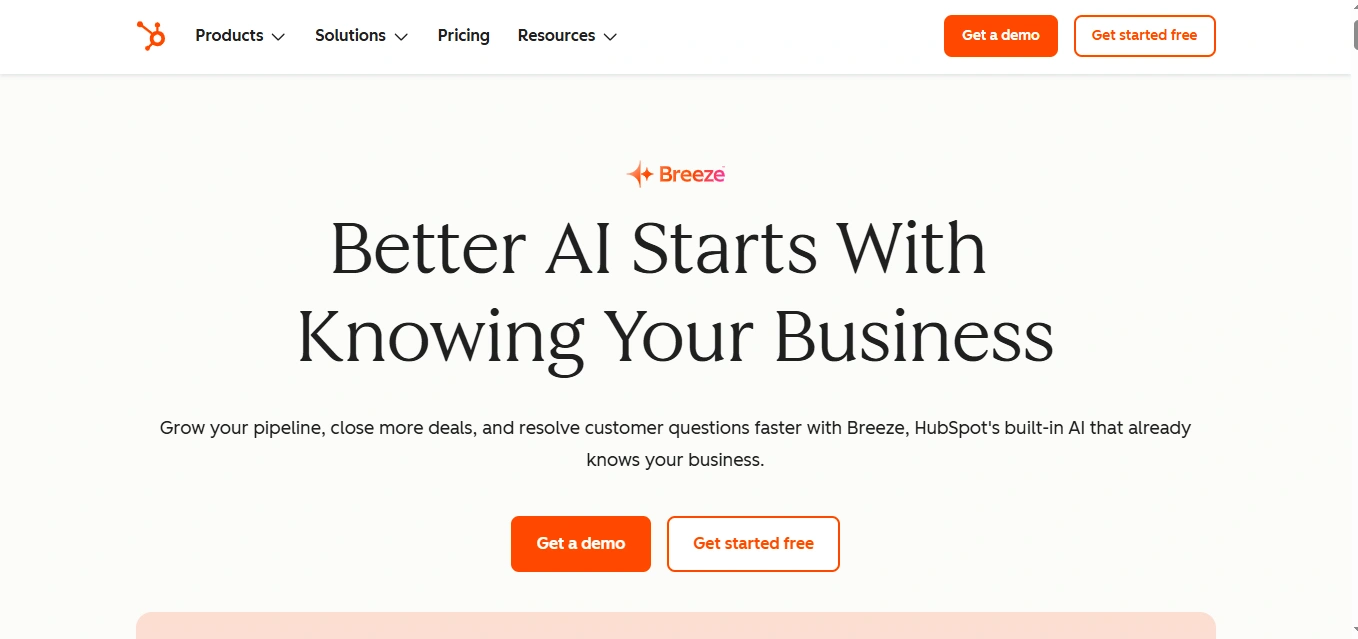
HubSpot Breeze is HubSpot’s native set of AI solutions that are tightly built directly into their CRM platform.
Built for the modern age, Breeze automates workflows and boosts productivity for marketing, sales and service teams working natively on your existing business data – so it already knows your customers, deals, and past discussions
Real-time use: A B2B company using HubSpot can use Breeze to summarize customer context, generate email drafts, assist with content, and support prospecting workflows inside the same system.
Key features:
Breeze Assistant: it helps with CRM tasks like writing, summarizing, customer context, and campaign assistance.
Breeze Agents: Automates processes such as prospecting, customer support, research, content creation, and customer health monitoring.
CRM-Native AI: Embedded within HubSpot, connecting AI outputs to customer data, interactions, and transaction history.
AEO Support: Higher-tier HubSpot packages offer answer engine optimization tools for monitoring and improving AI visibility.
Pricing
-
Breeze is included in all HubSpot plans, with access increasing by edition.
-
Starter includes prospecting and data agents.
-
Professionals provide AEO and customer agents, and Enterprise has all Breeze Agents with sensitive data controls.
Key Benefit: AI functions directly within HubSpot workflows.
Decision Note: Essential if HubSpot is your primary CRM and marketing platform.
4.Fireflies AI
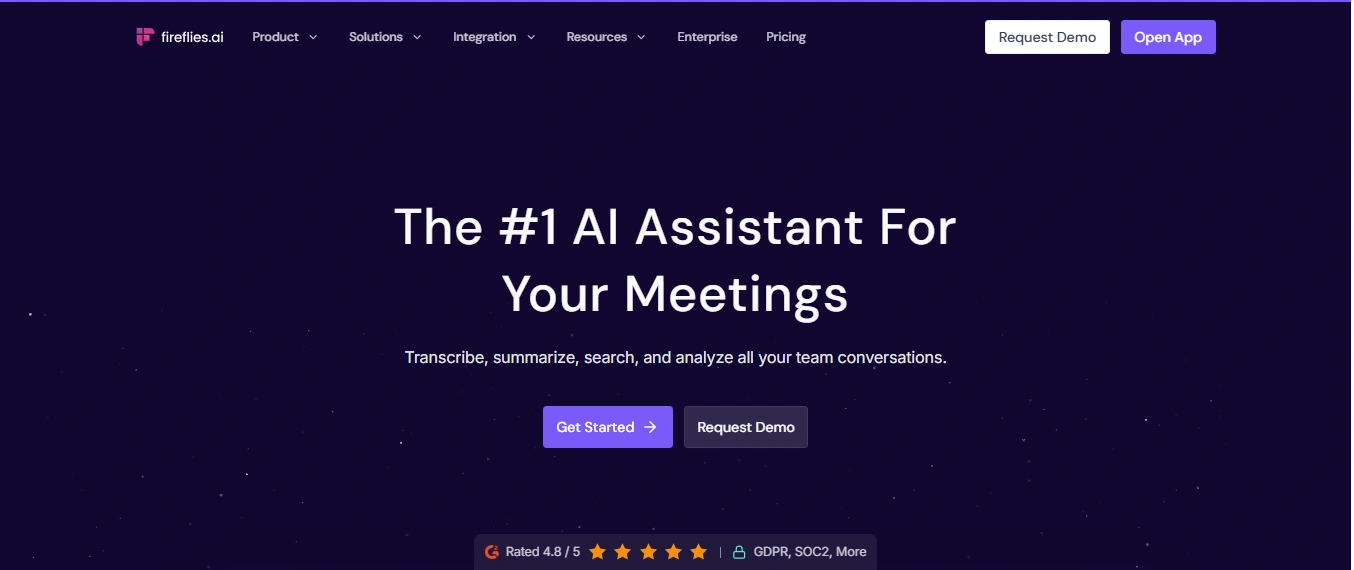
Fireflies records, transcribes, summarizes, and organizes meetings. Its product pages highlight meeting summaries, transcripts, soundbites, and downloadable meeting records.
Real-time use: A sales and marketing team can use Fireflies to capture discovery calls, extract objections, and turn recurring customer pain points into content or sales enablement material.
Key features:
Meeting transcription: Records and transcribes calls across Zoom, Google Meet, and Microsoft Teams;
AI summaries: Transforms lengthy meetings into concise summaries, action items, and searchable notes.
CRM and workflow integrations: Syncs insights to CRMs, project management tools, and collaboration platforms.
Voice agents and AI skills: Supports deeper meeting automation and post-call task creation.
Pricing
-
Fireflies offers Free, Pro, Business, and Enterprise plans.
-
Pro is $10/user/month annually or $18 monthly
-
Business is $19/user/month annually or $29 monthly
-
Enterprise is $39/user/month annually.
Key benefit: Converts meetings into searchable customer insight.
Decision note: Must-have for teams running frequent sales, client, or strategy calls.
5.Synthesia
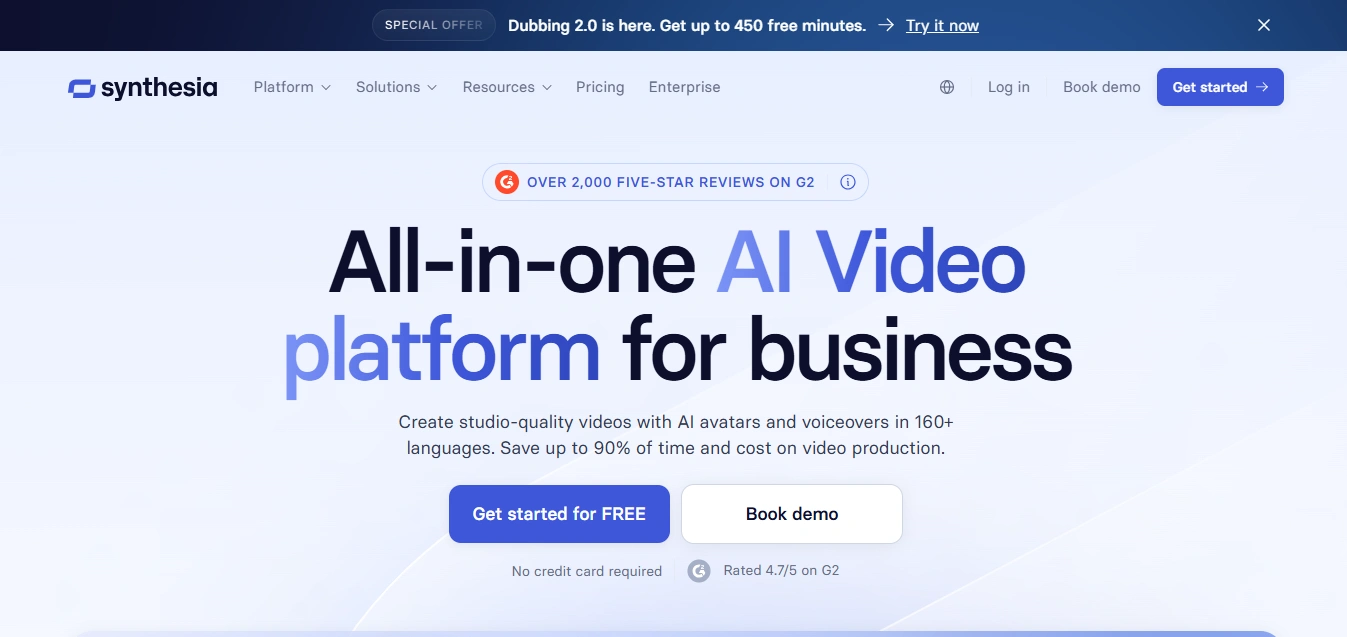
Synthesia creates AI videos with avatars, voiceovers, and localization features. Using this platform, teams can turn documents, links, or ideas into AI videos and use avatars that speak more than 160 languages.
Real-time use: A B2B company can turn a product explainer or onboarding document into a training video without booking a studio, actor, or voiceover team.
Key features:
AI Avatar Video Maker: Converts your scripts into videos with realistic avatars, and you don’t have to film anything.
Multiple Language Voiceover: AI voice support in multiple languages for global training & enablement.
Custom avatars: Stock and custom avatars are included with lower plans, and more avatar options are available for higher tiers.
Enterprise Video Controls: With this feature large teams can collaborate, govern, and produce video at scale.
Pricing
-
Synthesia offers Free, Starter, Creator, and Enterprise plans.
-
Public pricing shows Creator at $89/month, while other pricing depends on billing setup and plan selection
-
Enterprise is custom. The free plan has limited video minutes and stock avatars
Key Benefit: Scales video creation without full production overhead.
Decision Note: Must-have for enablement-heavy teams; optional for teams focused only on written content
6.Zapier
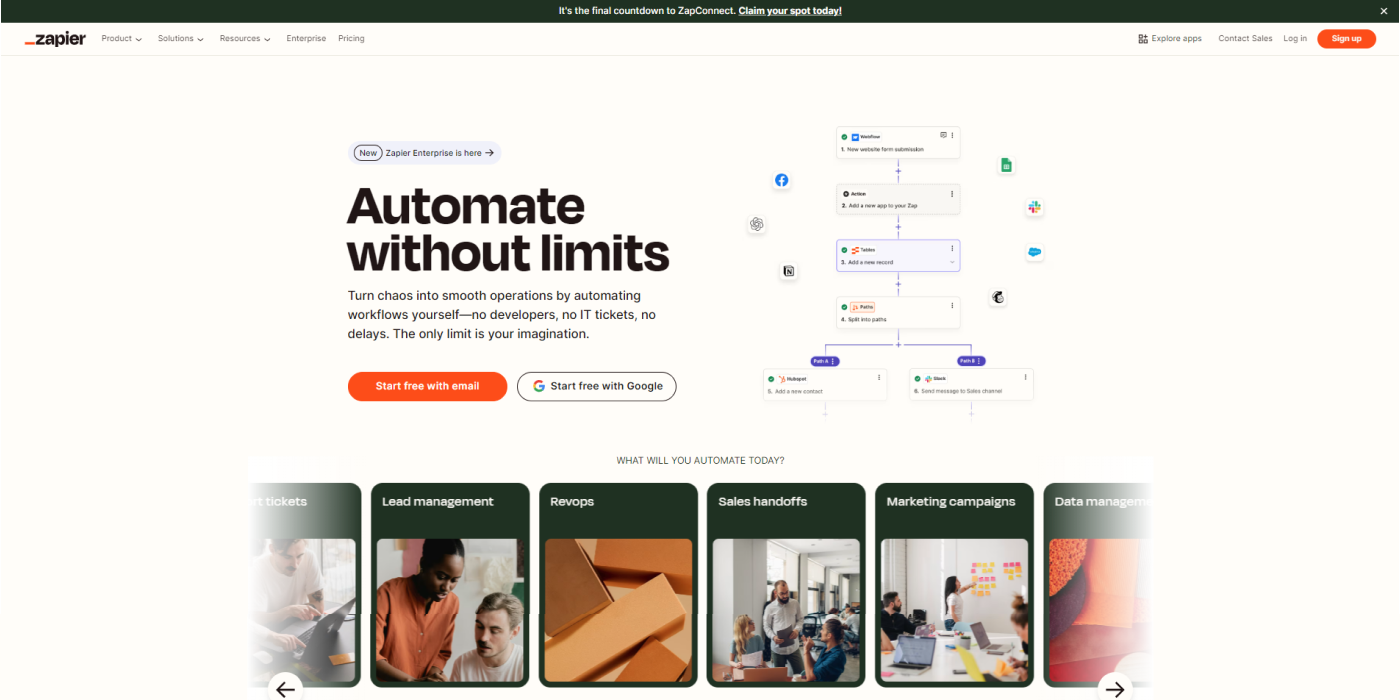
Zapier is a cloud-based no-code automation tool that connects disparate software applications and automates repetitive processes.
Zapier connects apps and automates workflows across thousands of tools. Its AI platform enables workflows, agents, chatbots, and integrations with 9,000+ apps.
Real-time use: A marketing team can connect a form submission to CRM enrichment, Slack alerts, email follow-up, task creation, or anything. This AI can give you a summary of lead context before sales responds.
Key features
App-to-app automation: It connects marketing, CRM, sales, and operations tools without custom code.
Multi-step workflows: It supports AI-powered workflows, agents, tables, forms, and automated field processing.
Team governance: Higher plans support shared workflows, shared connections, SSO, and admin controls.
Pricing
-
Zapier has a Free plan; Professional starting at $19.99/month
-
Team starting at $69/month and Enterprise with custom pricing.
-
All plans include Zapier’s core platform, including Zaps, Forms, and Tables
Key Benefit: Connects disconnected marketing systems.
Decision Note: Must-have for lean teams with repetitive manual workflows.
7.StoryAI
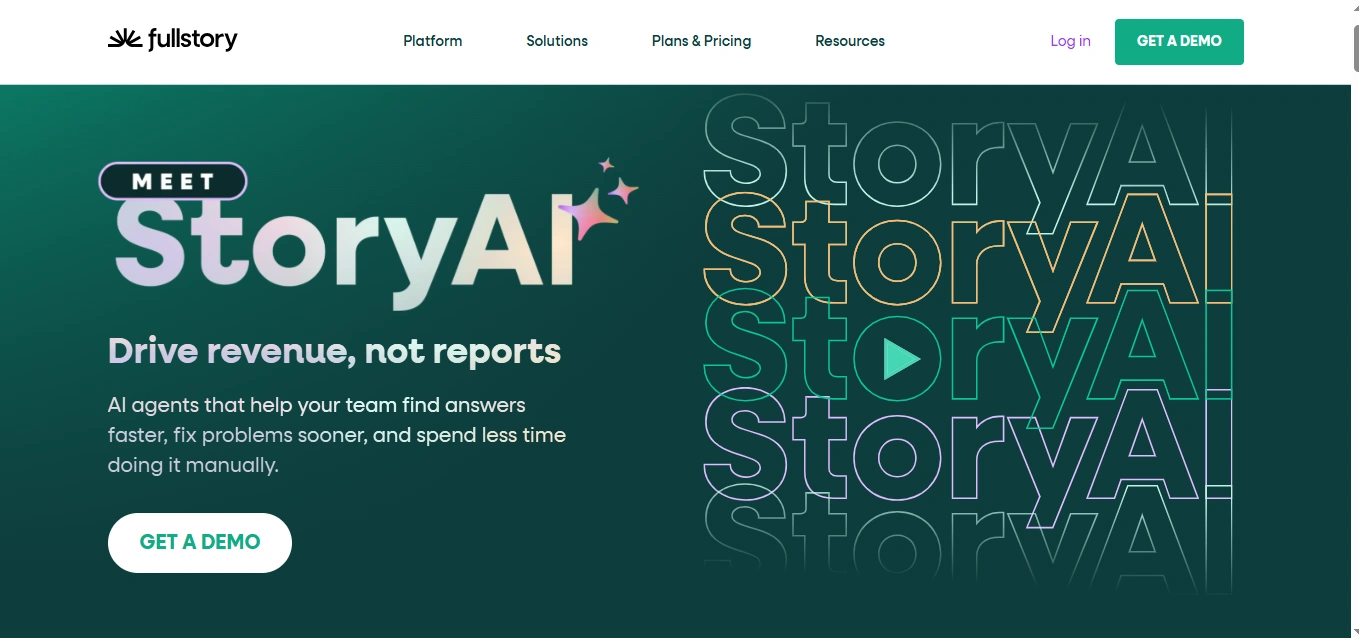
StoryAI, as part of Fullstory, applies generative AI to behavioral data analysis and customer experience insights. Fullstory describes StoryAI as a suite of AI features designed to streamline behavioral data analysis and uncover more profound insights.
Real-time use: A B2B website team can use it to understand where visitors hesitate, drop off, or interact with key pages before converting.
Key features
Behavioral AI insights: Leverages behavioral data to uncover user friction, drop-offs, and digital experience issues.
Session summaries: Provides session summaries so teams don’t have to go through all recordings manually.
Ask StoryAI: Let teams ask questions about user behavior and get answers from Fullstory data.
Opportunity prioritization: Identifies high-impact issues that could affect conversions or the user experience.
Pricing
Fullstory offers a Free plan with 30,000 monthly sessions and 12 months of analytics retention, while paid plan pricing is typically handled through sales
Key Benefit: Turns user behavior into clearer UX and conversion insights.
Decision Note: Useful after you already have meaningful website traffic.
8.Factors.ai
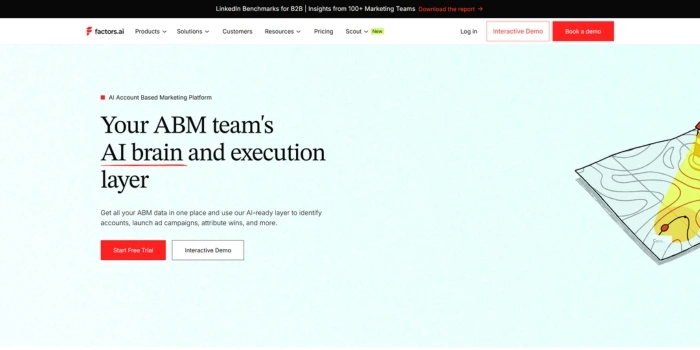
Factors.ai is an AI-powered marketing analytics and B2B demand creation tool. It enables marketing and sales organizations to identify anonymous website users, gather intent signals and assess ROI of their campaigns across different touchpoints
It helps teams identify accounts, launch ad campaigns, attribute wins, and manage ABM data in one place.
Real-time use: A lead generation team can identify companies visiting high-intent pages and sync those accounts into LinkedIn or Google Ads audiences.
Key features
Account Identification: It identifies the companies visiting your website, even if individual users don’t complete forms.
ABM analytics: it ties together website activity, campaign touchpoints, and account engagement.
Ad performance attribution: Helps teams understand how LinkedIn and paid campaigns influence pipeline.
AI agents for GTM teams: Supports pipeline visibility, engagement analysis, and account prioritization.
Pricing
-
Factors.ai lists custom pricing with tiers including Lite, Basic, Growth, and Enterprise
-
Public pricing on its site shows Lite at $199, Basic at $6K, Growth at $20K,
-
Enterprise starting at $30K onward, with startup discounts available
Key Benefit: Connects anonymous website activity to account-level marketing action.
Decision Note: Must-have for B2B teams investing in ABM and attribution.
9. Gemini
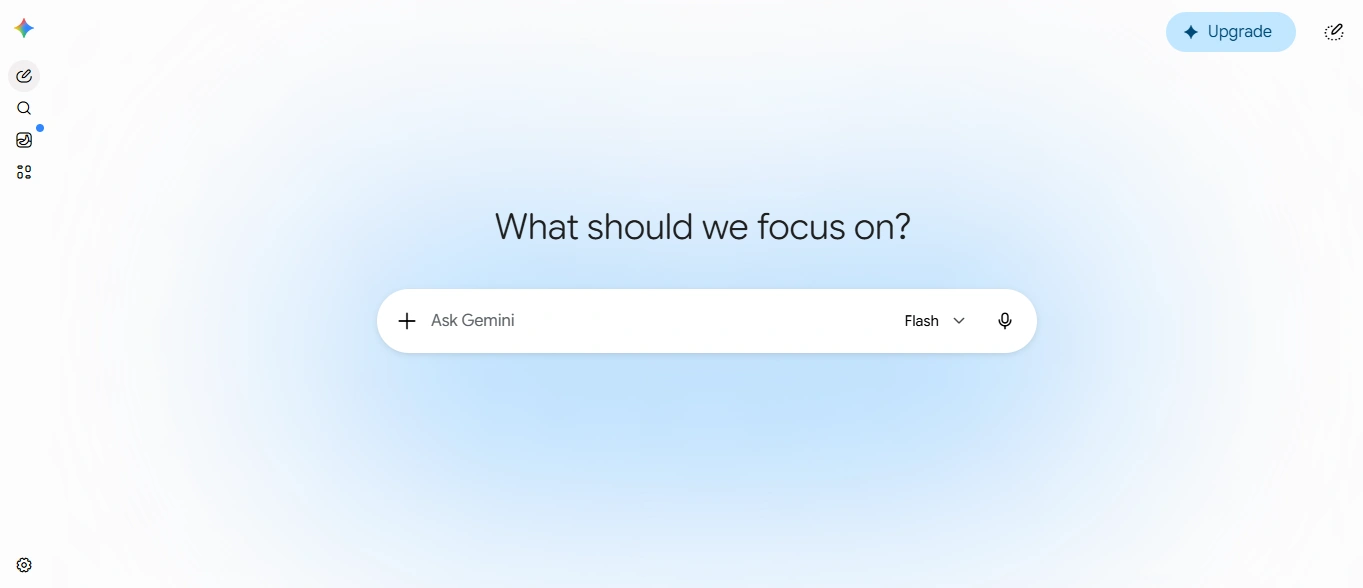
Google has built a series of powerful, multi-modal A.I. models called Gemini. It combines the underlying AI technology and a conversational chatbot (formerly known as Bard) that serves as an intelligent personal assistant for writing, coding, brainstorming, and research.
Gemini is embedded across Google Workspace and supports everyday work in Gmail, Docs, Sheets, Meet, Chat, Vids, and more.
Google says Workspace with Gemini can act as a productivity partner while keeping organizational control over data.
Real-time use: A marketing team can use Gemini to summarize campaign documents, draft email announcements, analyze Sheets data, or build first drafts inside Google Docs.
Key Features
Google Workspace integration: Operates within Gmail, Docs, Sheets, Meet, Slides and other Google apps.
Research and writing support: Assists in drafting emails, summarizing documents, analyzing information, and developing campaign materials.
Sheet and data help: Offers assistance with formula help, spreadsheet analysis, and structured data tasks.
AI for productivity: This helps teams spend less time on repetitive writing, summarization, and organization.
Pricing
-
Google AI plans include Google AI Plus at $4.99/month
-
Google AI Pro at $19.99/month
-
Google AI Ultra at $99.99/month on the public Gemini subscription page.
-
Workspace-based Gemini access may vary by business edition and add-on.
Key benefit: Speeds up work inside Google’s productivity stack.
Decision note: Must-have if your team already runs on Google Workspace.
10. ChatGPT
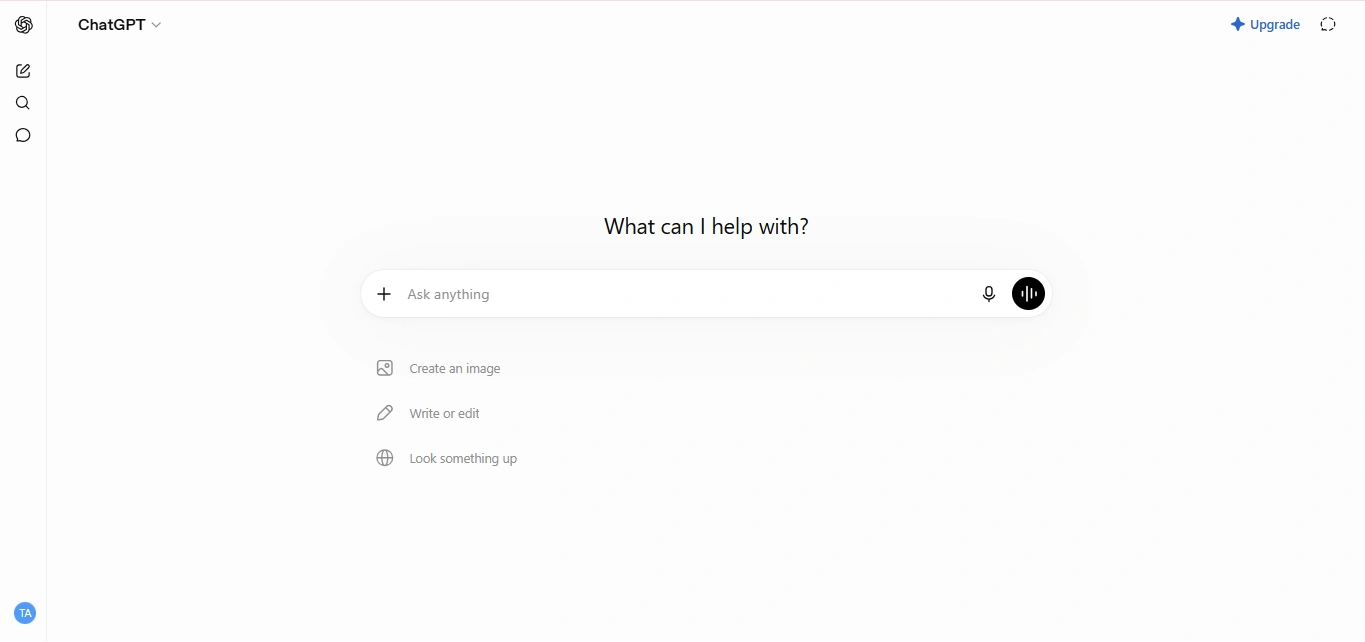
ChatGPT is an artificial intelligence conversation bot developed by OpenAI. It employs powerful natural language processing to talk to consumers, answer inquiries, write text, translate languages, develop code, and analyze information
It is useful for research, strategy, content planning, prompt testing, data summarization, and AI SEO workflows. Marketing teams widely use it to plan campaigns, create content, analyze performance, and move faster from ideas to execution.
Real-time use: An SEO team can use ChatGPT to cluster keywords, summarize SERP patterns, create content briefs, and test how topics may appear in AI search experiences like Perplexity or AI Overview results.
Key Features
Campaign planning and research: It assists marketers in developing campaigns, structuring strategies, and summarizing research.
Content and SEO support: Supports content briefs, keyword clustering, AI SEO workflows, and SERP interpretation.
Data analysis capabilities: include the ability to analyze files, spreadsheets, reports, and performance data.
Custom GPTs and projects: Enables teams to create reusable workflows for recurring marketing tasks.
Pricing
-
ChatGPT offers Free, Go, Plus, Pro, Business, and Enterprise plans.
-
Public pricing lists Free at $0, Go at $8/month, and Plus at $20/month
-
Business pricing is generally listed per user, while Enterprise pricing is custom.
Key benefit: Broad strategic support across content, research, and analysis.
Decision note: Must-have for most marketing teams when used with human review.
11. Claude
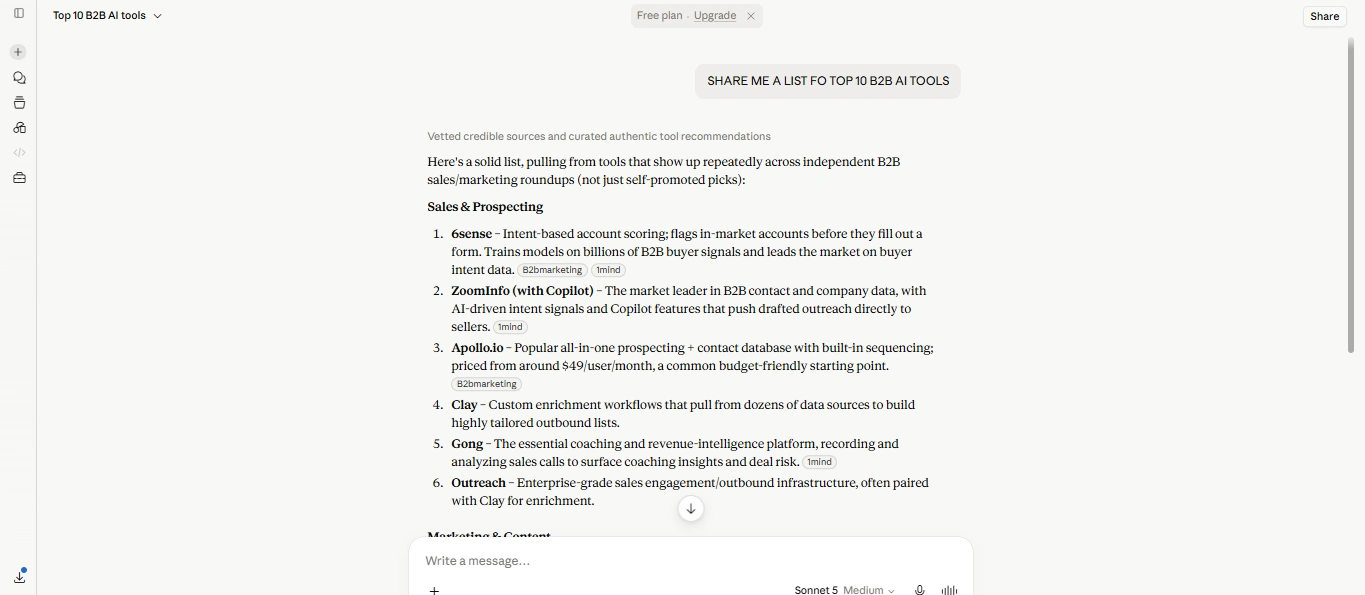
Claude is a series of next-generation large language models (LLMs) and a conversational AI assistant. It shines in deep reasoning, language analysis, complicated coding and processing huge amounts of data
Claude is strong for long-context analysis, careful writing, research synthesis, and complex document review. Anthropic positions Claude for professional workflows and business use cases, including practical guidance for integrating AI assistance into work.
Real-time use: A content strategist can upload a long research document, ask Claude to identify themes, build a content outline, and compare messaging gaps.
Key Features
Long-context document analysis: Handles large documents, briefs, transcripts, and research files efficiently.
Reasoning-intensive writing assistance: useful for strategy documents, positioning work, and detailed content planning.
Team and enterprise controls: Provides plans for professional teams requiring security, administrative controls, and governance.
Enterprise deployment support: Claude Enterprise is designed for use across an organization, with compliance and data controls.
Pricing
-
Claude offers individual, Max, Team, and Enterprise plans. Max has two public tiers
-
$100/month for Max 5x and $200/month for Max 20x.
-
Enterprise pricing works differently, with seat fees and usage billed separately at API rates.
Key benefit: Strong reasoning and long-document handling.
Decision note: Must-have for teams working with detailed briefs, reports, and strategy documents.
12. Otter
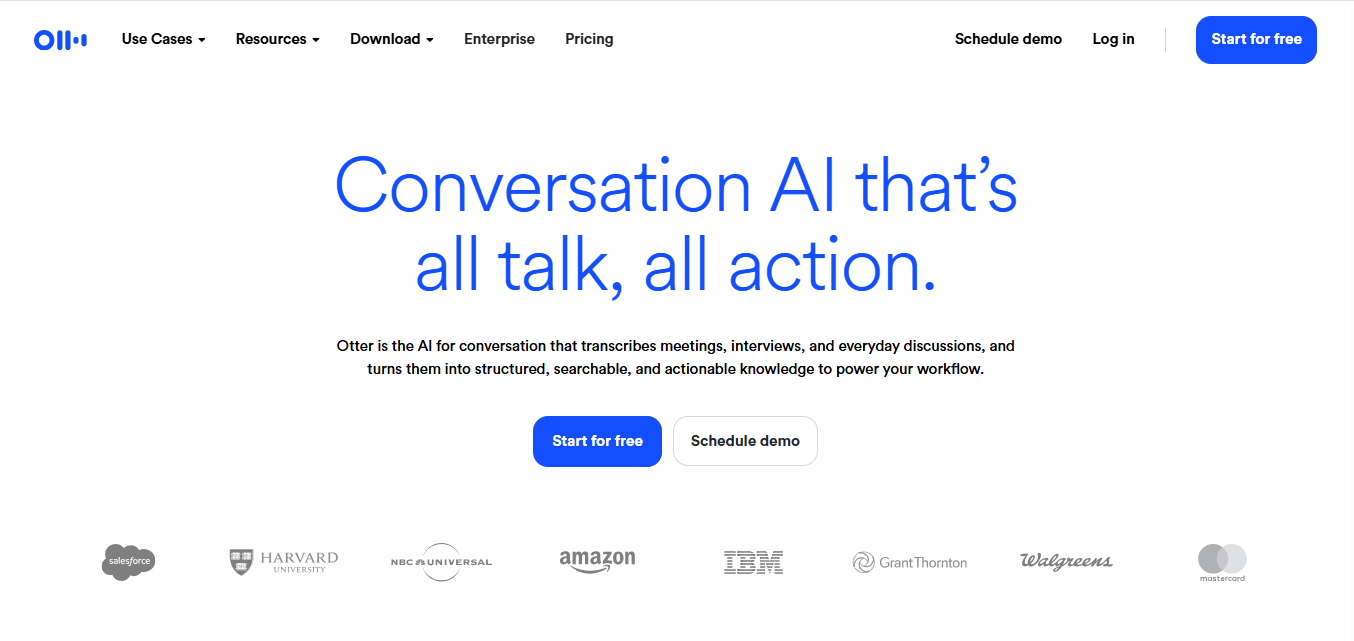 provides AI meeting summaries, transcription, and meeting collaboration. Its platform supports automated summaries, meeting integrations, and transcription for team conversations.
Real-time use: A marketing leader can use Otter to summarize weekly sales calls and identify recurring objections for future content, CRO, and sales enablement.
Key Features
Live transcription: Recording and transcribing meetings in real time.
AI meeting summaries: Creates concise summaries, action items, and searchable notes following calls.
Meeting integrations: Uses Zoom, Google Meet, and Microsoft Teams to capture conversations.
Team collaboration: Supports shared notes, comments, and workspace-based meeting knowledge.
Pricing
-
Otter offers Basic, Pro, Business, and Enterprise plans.
-
The Basic plan is free, and paid tiers vary by monthly transcription limits, concurrent meetings, workspace controls, and enterprise requirements
Key benefit: Captures meeting knowledge that would otherwise disappear.
Decision note: Optional if you already use Fireflies; useful for meeting-heavy teams.
13. Demandbase
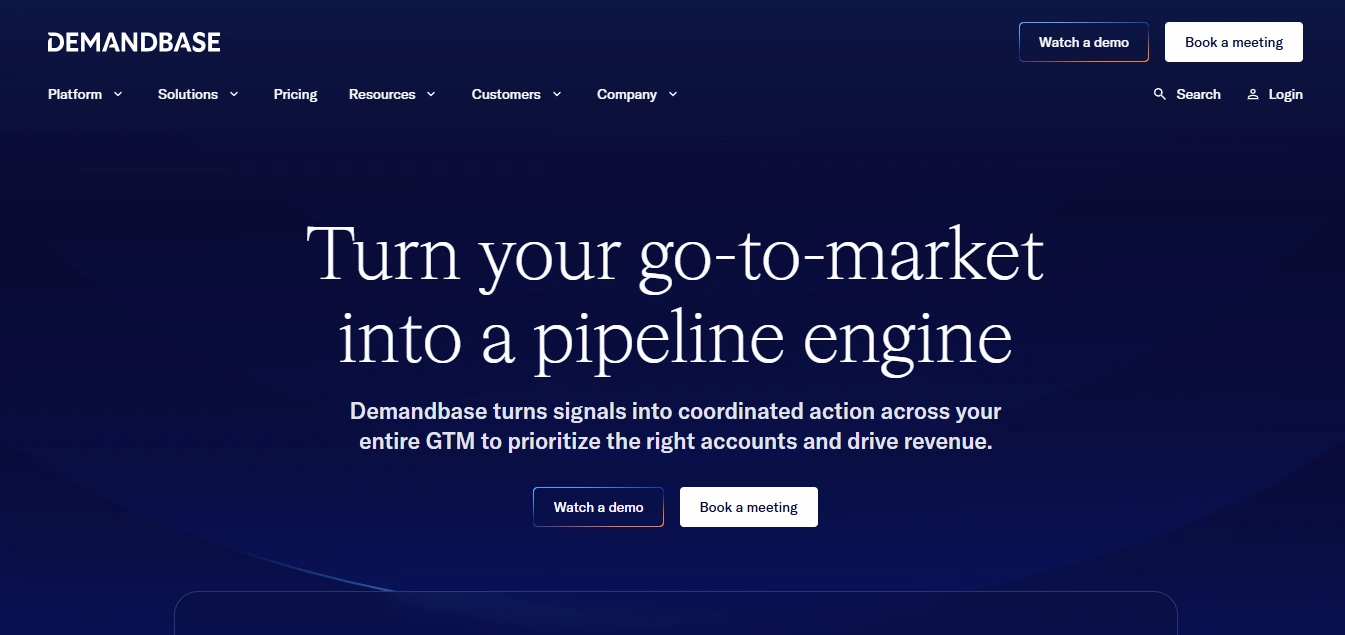
Demandbase is an ABM and GTM platform for B2B enterprises. It enables sales and marketing teams to find, target, and engage the right firms and buying committees that are most likely to acquire their products.
To prioritize revenue opportunities, Demandbase analyzes signals, accounts, and buying group activity with artificial intelligence.
Real-time use: Demandbase can help an enterprise GTM team identify in-market accounts, coordinate ads, personalize outreach, and align sales activity with purchasing signals.
Key Features
Account-based marketing: Helps teams identify, target, and engage high-value accounts.
Intent data and account intelligence: Surfaces buying signals and account activity.
Advertising and orchestration: Coordinates account-level campaigns across channels.
Sales and marketing alignment: Gives sales teams account insights to prioritize outreach.
Pricing
Demandbase uses a custom pricing model. Its public pricing page describes a platform fee plus a flat per-user fee, while package costs depend on selected products, users, and scale.
Key benefit: Stronger account prioritization and ABM execution.
Decision note: Must-have for mature ABM teams with enterprise sales cycles.
14. Napkin.ai
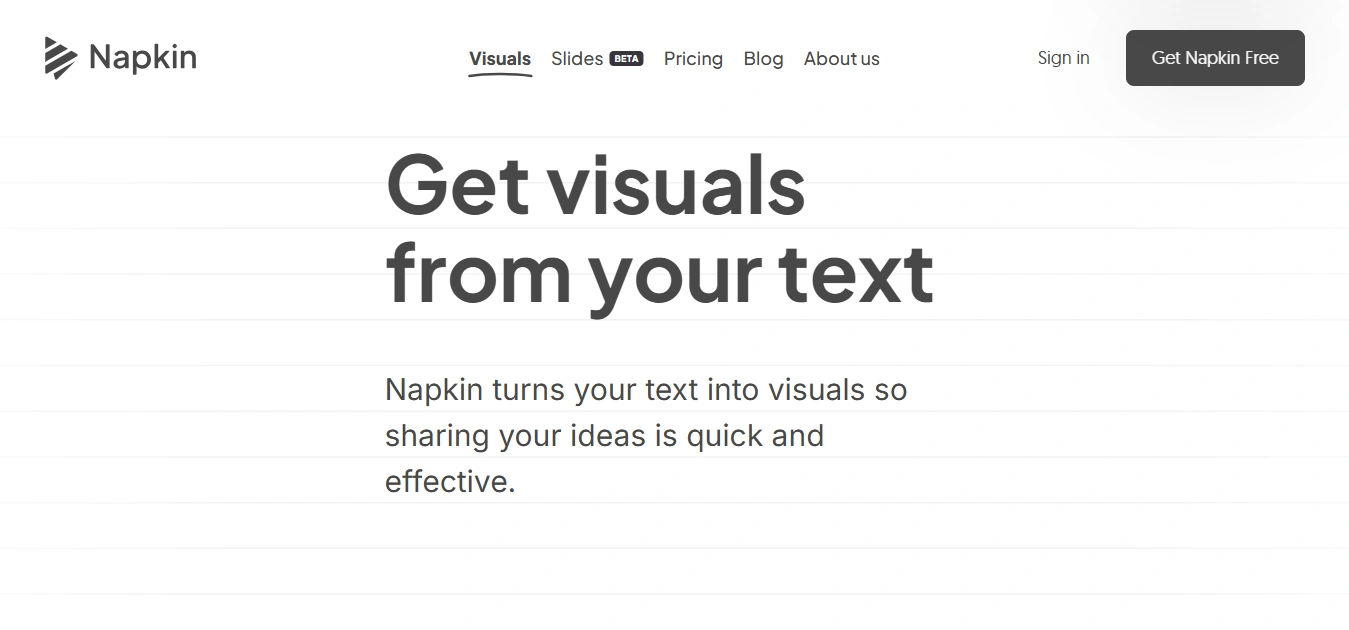
Napkin AI is a smart visualization software that rapidly transforms written text into beautiful, highly customizable diagrams, flowcharts, mind maps, and infographics.
It is developed to allow professionals, students, and creators produce their reports, presentations, and papers easily skimmable, fast, and without any graphic design abilities
It is useful when marketers need to explain frameworks, processes, or campaign logic quickly.
Real-time use: A B2B marketer can paste a positioning framework or workflow into Napkin.ai and turn it into a visual for a blog, deck, or LinkedIn post.
Key Features
Text-to-visual generation: Converts written ideas into diagrams, images, and concept graphics.
Import options include PPT, DOC, PDF, HTML, and Markdown.
Brand styling: Paid plans allow for brand styles, custom branding, font uploads, and watermark removal.
Export options: it includes PNG, PDF, PPT, and SVG exports, depending on the plan.
Pricing
-
Napkin.ai offers Free, Plus, Pro, and Enterprise options.
-
Free includes 500 AI credits per week.
-
Plus is $9/person/month
-
Pro is $22/person/month, and Enterprise is custom.
Key benefit: Makes complex ideas easier to communicate.
Decision note: Optional, but useful for content teams that create reports, decks, and thought leadership.
15. Gumloop
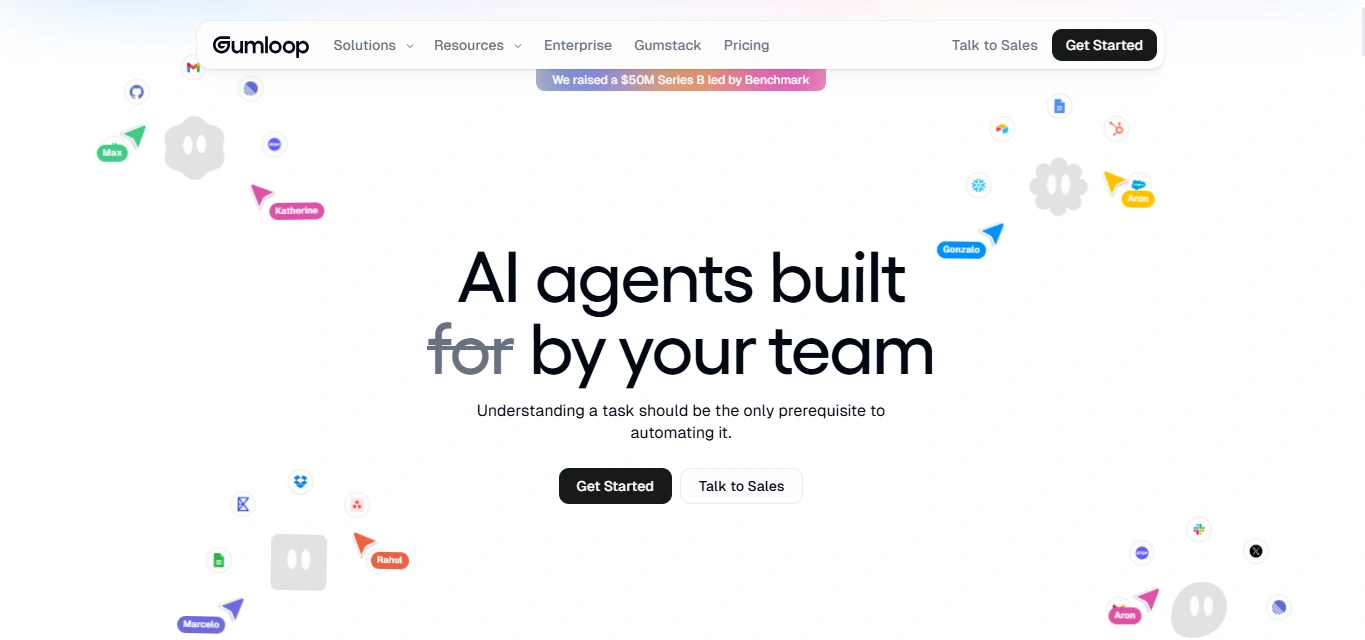
Gumloop is a no-code platform for AI agents and workflow automation. It lets teams build AI agents with different models and integrations, while IT controls access and governance.”
Real-time use: A RevOps team can automate research, enrichment, CRM updates, reporting steps, and repetitive data workflows without building custom engineering pipelines.
Key Features
No-code AI workflow builder: Allows teams to create AI-powered workflows without requiring engineering assistance.
AI agents and flows: Provides support for agents, triggers, integrations, and multi-step automation.
Governance controls: it encompass security measures, data retention policies, and enterprise compliance options.
Model flexibility: Teams can create workflows using various AI models and integrations.
Pricing
-
Gumloop offers Free, Pro, and Enterprise plans.
-
Free includes 5,000 credits/month, one seat, and limited triggers.
-
Pro starts at $37/month, and Enterprise is custom
Key benefit: Turns repeatable marketing operations into governed AI workflows.
Decision note: Best after your team knows which workflows are worth automating.
16. Chatfuel
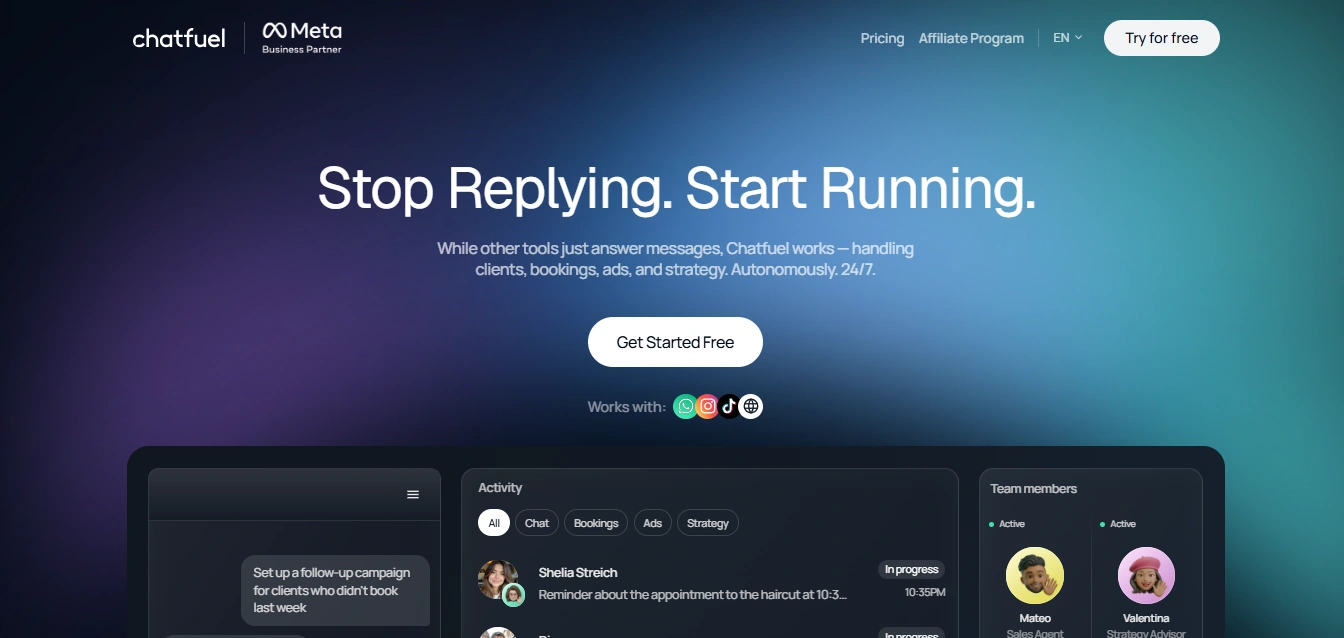
Chatfuel is the world’s premier no-code conversational AI and chatbot platform that allows organizations to automate sales, marketing, and customer care on all major messaging platforms.
Originally founded as a major contributor to Facebook Messenger, it has since evolved into a full-fledged messaging platform powered by advanced LLMs like OpenAi’s GPT models
Chatfuel creates AI chatbots and social messaging automation for platforms including Instagram, WhatsApp, TikTok, Messenger, and websites.
Real-time use: A B2B service company can use Chatfuel to qualify inbound social leads, respond to common questions, and direct serious prospects to a sales call.
Key Features
AI chatbot automation: Automates conversations on Instagram, WhatsApp, Facebook, TikTok, and website widgets.
Lead qualification funnels: Helps capture, qualify, and route leads through automated chat flows.
AI knowledge base: Responds to customer inquiries using approved business information.
Broadcasting and re-engagement: Enables follow-up campaigns and audience reactivation.
Pricing
-
Chatfuel offers a free trial and paid plans.
-
Its public pricing page lists AI Pro at $49/month for teams ready to sell and support with AI, with Premium/custom options available for larger needs
Key benefit: Automates social conversation and lead qualification.
Decision note: Must-have if social messaging is a serious lead source.
How to Choose the Right AI Tool
If your team struggles with content velocity, start with Jasper, ChatGPT, Claude, or Gemini.
If sales calls contain valuable insights but no one uses them, start with Fireflies or Otter.
If your problem is ABM execution, look at Demandbase or Factors.ai.
Zapier or Gumloop can help you bring your scattered workflows together across tools.
The best AI tools for B2B marketing are not the ones with the most features. They are the ones that remove friction from the work that already matters.
Conclusion
AI tools are not valuable because they sound advanced. They are valuable when they reduce operational drag, improve decision-making, and help teams act faster without lowering quality.
For B2B marketing, the highest-impact stack usually covers five areas: content creation, customer research, CRM intelligence, workflow automation, and revenue attribution. The tools suggested above can help you a lot to better manage operational drag and further streamline the process.
The practical move is simple. Pick one bottleneck, choose one tool, define one measurable outcome, and test it for 30 days. If it saves time, improves quality, or creates better pipeline visibility, keep it. If it only adds another dashboard, remove it.
Make your business visible to AI
AI tools can cut manual work, speed up campaigns, and help your team focus on strategy instead of repetitive execution



Your SEO, on autopilot
Saffron OS runs 15+ AI agents that audit your visibility across Google, ChatGPT, Gemini and Perplexity every day — then fix what's broken, automatically. Built over 18 months. Results in 2–15 minutes.
Explore Saffron OSFrequently Asked Questions
How do I stop ChatGPT or Gemini from inventing product details when I use them for B2B content?

A: Use them for drafting, not source-of-truth facts, and feed them only verified inputs like product docs, case studies, or landing page copy. Add a human review step for claims, numbers, and competitor comparisons before publishing. This matters most in regulated, enterprise, or highly technical B2B.
Why does AI-generated B2B content often sound generic even when the prompt is detailed?
A: Generic output usually means the model lacks business context, buyer-stage context, or your actual positioning. Give it an audience segment, pain point, offer, proof points, and the exact CTA so it can write against a real sales motion. Without that, it will produce polished but interchangeable results.
How can we use AI for ABM without sending the same “personalized” message to every target account?
A: Use intent data, firmographic context, and buying-stage signals to create account-level message variations. AI should help prioritize which accounts get what message, not just swap in a company name. If every account sees the same template with minor edits, the ABM program will feel automated rather than relevant.
How do I know whether AI should be used for content creation or for workflow automation first?
A: Start with the bottleneck that costs the most time or creates the most revenue friction. If your team loses hours on drafts and repurposing, use content tools first; if handoffs and updates are broken, use automation first. The highest ROI usually comes from fixing a repeated workflow, not from adding another writing assistant.
Why do AI tools fail when B2B teams already have a CRM, MAP, and ABM platform?
A: They often fail because the tools are not connected into one decision workflow. AI can surface insights, but someone still has to own the action: routing, budget shift, follow-up, or message change. If no one is accountable for the next step, the AI output becomes just another dashboard alert.

Shreya Debnath

Shreya Debnath is a Marketing Manager at Saffron Edge with over 5 years of experience in SEO, AI-driven marketing, growth marketing, and technical SEO. She has hands-on expertise in optimizing existing content, improving performance, and driving scalable growth through data-backed strategies. She has worked with international markets, especially the US and UK, and diverse teams to build effective marketing campaigns, strengthen brand positioning, and enhance audience engagement across multiple channels. Her approach focuses on aligning sales and marketing to ensure consistent and measurable results. Outside of work, Shreya enjoys exploring new cities, pursuing creative hobbies, and discovering unique stories through travel and local experiences.
Related Blogs
We explore and publish the latest & most underrated content before it becomes a trend.


5 min read
Harnessing Marketing Automation for B2B Content Marketing
By Sabah Noor

Subscribe to Saffron Edge Newsletter!


Your SEO, on autopilot
Saffron OS runs 15+ AI agents that audit your visibility across Google, ChatGPT, Gemini and Perplexity every day — then fix what's broken, automatically. Built over 18 months. Results in 2–15 minutes.
Explore Saffron OS