


SEO Rankings Software: Best SEO Software Tools Trusted By Agencies


Jan 19, 2026

 7 min
7 min
Search rankings in 2026 aren’t something you check once and forget. They move daily, sometimes hourly, and agencies are expected to explain every shift with confidence.
With Google rolling out frequent updates and AI-powered results taking more space on the SERP, staying visible now depends heavily on the tools you use behind the scenes.
That’s why more than 75% of marketing agencies rely on SEO ranking software to track performance, spot problems early, and prove ROI to clients.
SEO ranking software gives agencies a clear view of keyword positions, search visibility, and competitive movement.
But not all tools are built for agency demands. Some are better for deep analysis, while others shine in automation, reporting, or handling multiple clients at scale.
So how do you pick the right one without wasting budget or time?
As one SEO expert says, “If you can’t measure it, you can’t improve it.” This guide breaks down the SEO software agencies trust most in 2026 and why they work. Let’s get in!
What Is SEO Ranking Software?
SEO ranking software is a tool designed to track where a website appears on search engines for specific keywords.
But in 2026, it goes far beyond simple position tracking. Modern SEO ranking software connects rankings with intent, visibility, traffic potential, and competitive movement. It shows not just where you rank, but why those rankings change and what to do next.
For agencies, SEO ranking software acts like a control center. It monitors keyword performance across locations, devices, and search features such as AI Overviews, local packs, and featured snippets. As Google continues to shift toward AI-driven results, ranking software now tracks volatility and SERP layout changes that directly impact clicks.
Unlike basic analytics tools, SEO ranking software focuses on forward-looking insights. It highlights keyword opportunities, ranking drops, and competitor gains before they turn into traffic losses. This helps agencies stay proactive instead of reactive.
In short, SEO ranking software turns SEO agency search data into clear signals. It helps agencies explain performance, make smart decisions, and prove value to clients in a search landscape that keeps changing fast.
How SEO Ranking Software Is Helpful For Agencies?
SEO agencies manage more than rankings. They manage expectations, timelines, and results across multiple clients. SEO ranking software helps agencies stay organized, accurate, and confident in every report they deliver
- It saves time by automating keyword tracking across multiple clients and locations
- It provides accurate, real-time ranking data to support faster decision-making
- It helps agencies spot ranking drops or growth trends before traffic is affected
- It makes client reporting easier with clear visuals and ranking history
- It tracks competitors to identify gaps and new ranking opportunities
- It supports local and national SEO campaigns with location-based tracking
- It reduces manual work, allowing teams to focus on strategy instead of data collection
- It improves client trust by showing transparent, measurable SEO progress
- It scales easily as agencies add more clients without increasing workload
Our Top Pick SEO Rankings Software In 2026
SEO ranking software in 2026 is no longer just about checking keyword positions. Agencies and in-house teams now rely on tools that connect rankings with traffic, intent, technical health, and conversions. The best platforms help you act faster, explain results clearly, and scale without chaos.
Before breaking down each platform, here’s a quick comparison table to help you understand where every tool fits best.
SEO Rankings Software Comparison Table
| Tool Name | Best Use Case | Core Strength |
| Semrush | All-in-one SEO & competitor tracking | Full marketing visibility |
| Ahrefs | Backlinks & keyword research | Data accuracy |
| SE Ranking | Budget-friendly SEO suite | Value for agencies |
| Moz Pro | Beginner-friendly SEO | Ease of use |
| Screaming Frog | Technical site crawling | Deep audits |
| Sitebulb | Visual technical SEO | Clear reporting |
| Surfer SEO | On-page optimization | SERP-based content |
| Clearscope | Content quality optimization | Topic relevance |
| BrightLocal | Local SEO tracking | Map rankings |
| Whitespark | Local citations | Local authority |
| Semrush Local Toolkit | Multi-location SEO | Scalable local SEO |
| Ubersuggest | Keyword ideas | Affordable research |
| AnswerThePublic | Content ideation | Search intent |
| Google Search Console | Performance monitoring | Google data |
| Google Analytics 4 | Traffic & conversions | User behavior |
1. Semrush
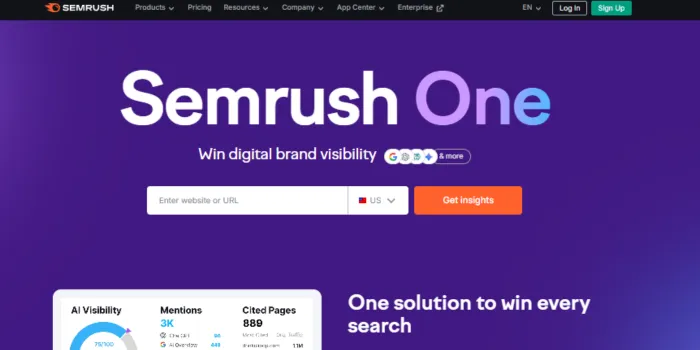
Semrush remains one of the most complete SEO ranking platforms for agencies in 2026. It connects keyword tracking, SEO site audits, content planning, and competitor analysis in one dashboard. This makes it easier to explain ranking changes to clients and take action faster.
Pros
- Detailed keyword tracking with intent insights
- Strong competitor visibility
- Advanced site audits with priority fixes
Cons
- Can feel complex for small teams
- Higher-tier plans cost more
Why Choose Semrush
Semrush works best when SEO is part of a larger growth strategy. It’s ideal for agencies managing SEO, content, and paid search together.
2. Ahrefs
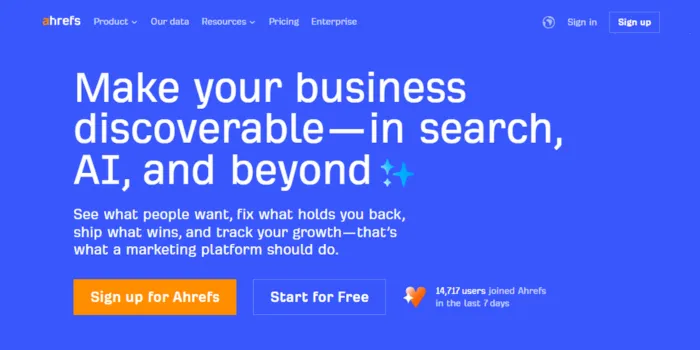
Ahrefs is trusted for clean data and strong ranking accuracy. It focuses heavily on backlinks, keyword difficulty, and ranking history, which helps teams understand why pages move up or down.
Pros
- Industry-leading backlink database
- Accurate keyword difficulty scores
- Reliable rank tracking
Cons
- Fewer content workflow tools
- Premium pricing
Why Choose Ahrefs
Ahrefs is perfect for SEO teams that care about precision, especially for competitive niches and link-driven strategies.
3. SE Ranking
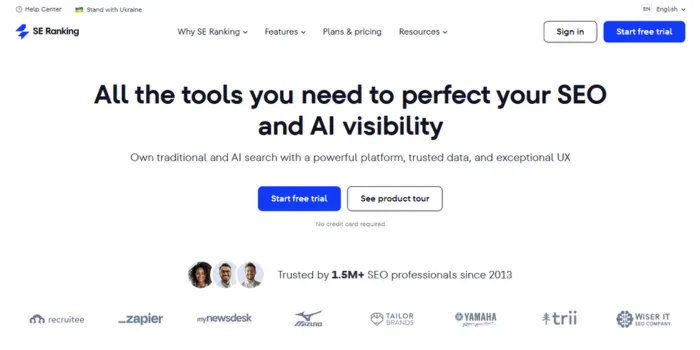
SE Ranking offers a full SEO toolkit at a more accessible price point. It covers rank tracking, site audits, and reporting without unnecessary complexity.
Pros
- Affordable plans for agencies
- White-label reporting
- Easy-to-use interface
Cons
- Smaller keyword database
- Fewer advanced integrations
Why Choose SE Ranking
SE Ranking is a strong fit for small to mid-sized agencies that want reliable ranking data without overspending.
4. Moz Pro
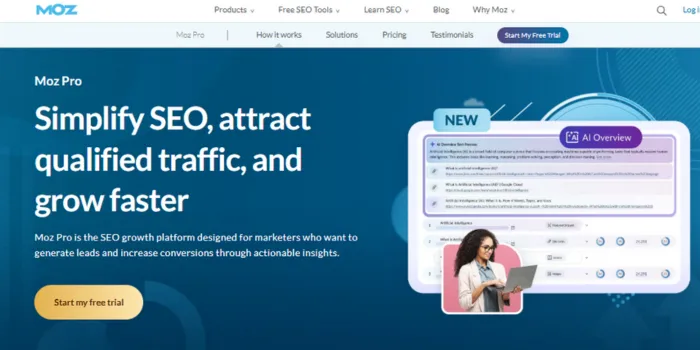
Moz Pro is known for its simplicity and educational approach. It helps teams understand rankings, links, and keywords without overwhelming dashboards.
Pros
- Clean interface
- Strong learning resources
- Trusted domain metrics
Cons
- Slower data updates
- Limited automation
Why Choose Moz Pro
Moz Pro works well for teams new to SEO or agencies onboarding junior marketers.
5. Screaming Frog
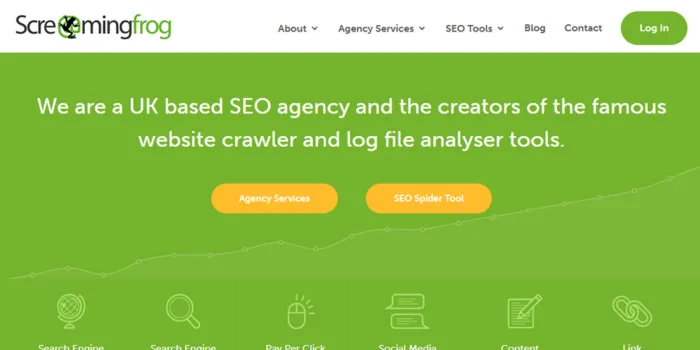
Screaming Frog is a technical SEO essential. It crawls websites quickly and surfaces issues that can quietly hurt rankings.
Pros
- Deep crawl insights
- Highly customizable
- Reliable for large sites
Cons
- Desktop-based tool
- Steeper learning curve
Why Choose Screaming Frog
Use it when technical SEO issues are blocking ranking growth.
6. Sitebulb
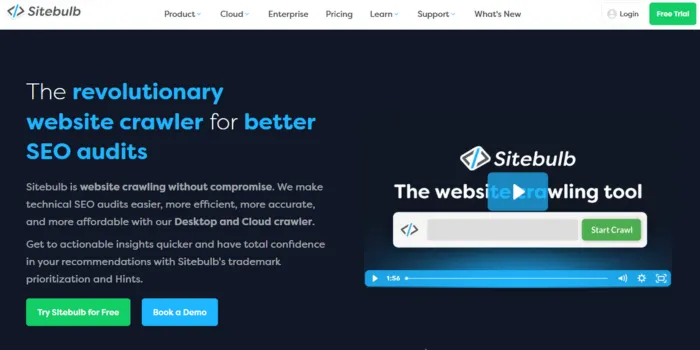
Sitebulb makes technical SEO easier to understand by turning data into visual reports.
Pros
- Clear visual explanations
- Easy client reporting
- Strong audit insights
Cons
- Smaller feature range
- Requires desktop install
Why Choose Sitebulb
Sitebulb is ideal for agencies that need to explain technical issues clearly to clients.
7. Surfer SEO
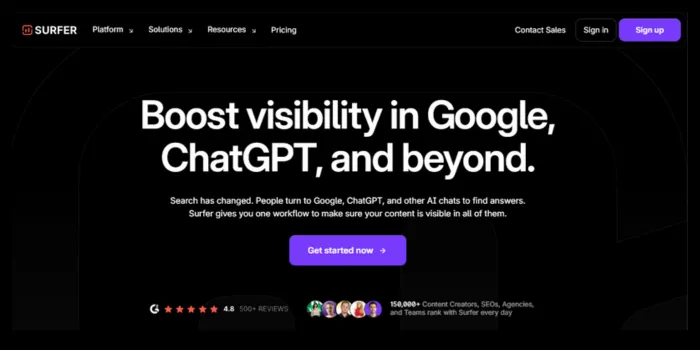
Surfer SEO helps optimize content based on what already ranks in search results.
Pros
- Real-time content guidance
- SERP comparison insights
- Works well with writers
Cons
- Needs pairing with ranking tools
- Subscription costs add up
Why Choose Surfer SEO
Surfer is best for teams focused on improving rankings through on-page content optimization.
8. Clearscope
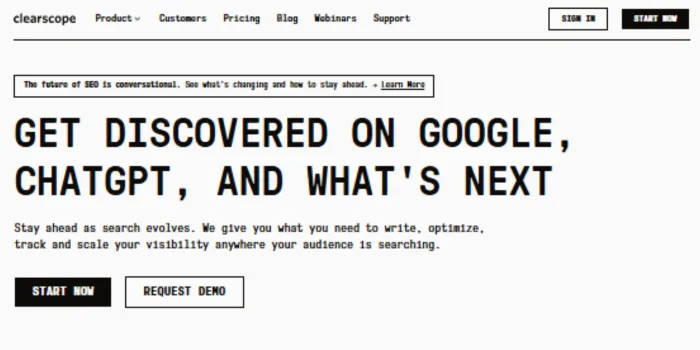
Clearscope focuses on content depth and relevance rather than keyword stuffing.
Pros
- Strong topic coverage guidance
- Improves content quality
- Trusted by publishers
Cons
- Higher pricing
- No technical SEO features
Why Choose Clearscope
Clearscope is ideal for editorial teams aiming for authority-driven rankings.
9. BrightLocal
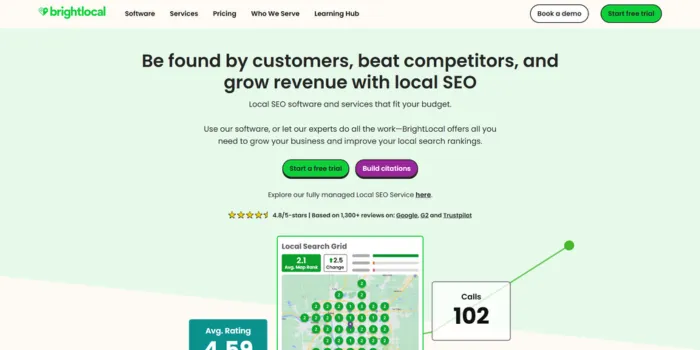
BrightLocal specializes in local SEO rankings and map visibility.
Pros
- Accurate local rank tracking
- Citation management
- Clean reporting
Cons
- Limited global tracking
- Local-focused only
Why Choose BrightLocal
BrightLocal is a must-have for agencies serving local businesses.
10. Whitespark
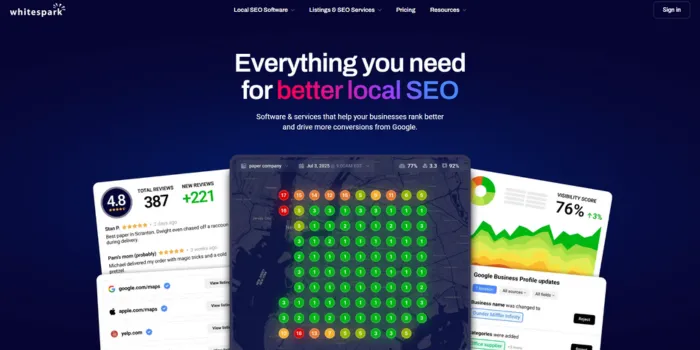
Whitespark focuses on local citations and link opportunities.
Pros
- Strong local citation data
- Local ranking insights
- Niche-specific tools
Cons
- Narrow feature scope
- Not suited for national SEO
Why Choose Whitespark
Whitespark helps strengthen local trust signals that impact rankings.
11. Semrush Local Toolkit
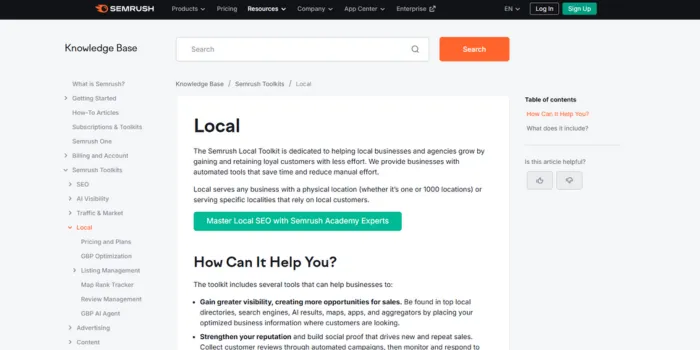
This add-on helps manage local SEO at scale within Semrush.
Pros
- Multi-location support
- Review monitoring
- Listing management
Cons
- Add-on pricing
- Learning curve
Why Choose Semrush Local Toolkit
Great for agencies managing multiple local brands under one platform.
12. Ubersuggest
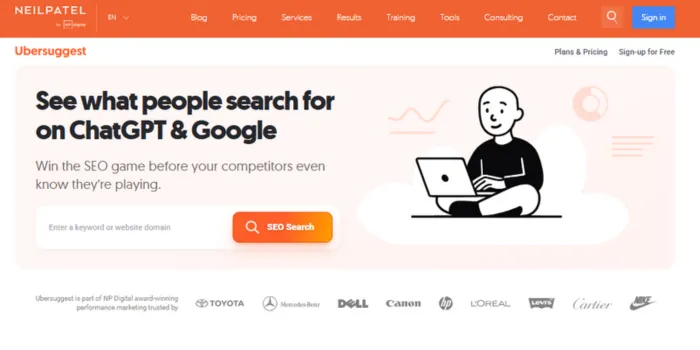
Ubersuggest offers keyword research and basic ranking insights at a low cost.
Pros
- Affordable plans
- Simple keyword ideas
- Beginner-friendly
Cons
- Limited data depth
- Fewer advanced features
Why Choose Ubersuggest
Ubersuggest works well for solo marketers and early-stage teams.
13. AnswerThePublic
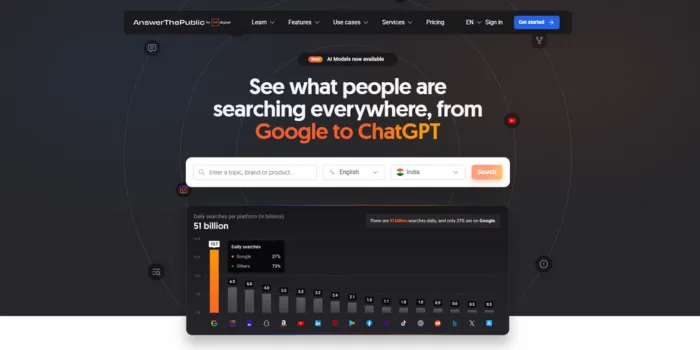
AnswerThePublic helps uncover real search questions people ask.
Pros
- Strong intent insights
- Visual keyword data
- Great for content ideas
Cons
- No rank tracking
- Limited SEO metrics
Why Choose AnswerThePublic
It’s best used alongside ranking tools for content planning.
14. Google Search Console
Google Search Console provides direct data from Google itself.
Pros
- Free and accurate
- Indexing insights
- Performance tracking
Cons
- Limited reporting
- No competitor data
Why Choose GSC
Every SEO strategy starts with Search Console. No shortcuts here.
15. Google Analytics 4 (GA4)
GA4 connects rankings to real user behavior and conversions.
Pros
- Tracks engagement and conversions
- Free tool
- Cross-channel insights
Cons
- Learning curve
- Limited SEO-specific metrics
Why Choose GA4
GA4 shows whether ranking gains actually drive business results.
Therefore, the best SEO ranking software in 2026 isn’t about having every tool. It’s about choosing the right mix that fits your workflow, clients, and goals. The right setup saves time, improves clarity, and keeps rankings moving in the right direction.
Rankings Don’t Move by Guesswork Anymore
Agencies that win in 2026 rely on AI SEO services and software that show what’s working, what’s broken, and what to fix next. No noise. Just clear data that turns rankings into results.
Stop chasing tools. Start choosing smarter.
How To Choose The Best SEO Reporting Software?
Choosing SEO reporting software is not about picking the most popular name. It’s about finding a tool that fits how your agency works, scales, and communicates value.
1. Look for simple, easy-to-read reports that clients can understand quickly.
2. Choose software with automated and scheduled reporting features.
3. Make sure the data is accurate, updated frequently, and reliable.
4. Check for white-label options to keep reports fully branded.
5. Ensure the tool integrates with Google Analytics and Search Console.
6. Select software that supports multiple clients and campaign types.
7. Prioritize flexibility in report customization for different client needs.
8. Consider the learning curve and ease of use for your team.
9. Evaluate pricing based on long-term value, not just features.
Bottom Line
SEO ranking software is no longer optional for agencies. It’s a core part of how results are tracked, explained, and improved. As search engines evolve and competition increases, agencies need tools that provide clarity, speed, and confidence.
The right software helps agencies move from reactive fixes to a proactive strategy. It simplifies reporting, strengthens client trust, and supports smarter decisions backed by real data.
So, if you manage local businesses or enterprise clients, SEO ranking software keeps your campaigns measurable and accountable.
That said, no single tool fits every agency. The best choice depends on your workflow, client type, and reporting needs. Focus on tools that align with how your team works, not just what’s trending.
In 2026, agencies that win are not chasing rankings blindly. They’re tracking smarter, reporting better, and adapting faster. SEO ranking software makes that possible.
Rankings Are Easy to Track. Results Aren’t.
Manual audits, missed issues, and slow updates add up fast.
Most SEO tools show numbers. Saffron Edge turns those numbers into actions that actually grow traffic, leads, and revenue. We help agencies pick, set up, and scale SEO ranking software that fits real goals, not dashboards.
Smarter tools. Better outcomes.
Share


Rank in AI Overviews
FAQs
What is the main purpose of SEO ranking software?

The main purpose is to track keyword positions and search visibility over time. It helps agencies understand performance changes and improve SEO strategy.
Is SEO ranking software necessary for small agencies?
Yes, even small agencies benefit from automation, accuracy, and professional reporting. It saves time and improves client communication.
How often should rankings be tracked?
Most agencies track rankings daily or weekly, and daily tracking is ideal for competitive industries or active campaigns.
Can SEO ranking software track local rankings?
Yes, many tools offer location-based tracking for cities, states, or even ZIP codes is essential for local SEO.
Does SEO ranking software replace analytics tools?
No, ranking software focuses on visibility and positions. Analytics tools track traffic and behavior. Both are needed for a full SEO strategy.
How do agencies use ranking reports with clients?
Agencies use ranking reports to show progress, explain changes, and justify strategy decisions. Also, clear reports build trust and retention.

Shreya Debnath

Shreya Debnath is a dedicated marketing professional with expertise in digital strategy, content development and scaling with AI & Automation along with brand communication. She has worked with diverse teams to build impactful marketing campaigns, strengthen brand positioning, and enhance audience engagement across multiple channels. Her approach combines creativity with data-driven insights, allowing businesses to reach the right audiences and communicate their value effectively. She perfectly aligns sales and marketing together and makes sure everything works in sync. Outside of work, Shreya enjoys exploring new cities, diving into creative hobbies, and discovering unique stories through travel and local experiences.
Related Blogs
We explore and publish the latest & most underrated content before it becomes a trend.



Subscribe to Saffron Edge Newsletter!


Rank in AI Overviews