





Google Ads Rolls Out Video Campaign Groups Globally


Jul 23, 2026

 2 min
2 min


On July 13, 2026, Google Ads announced the global rollout of video campaign groups, which allow advertisers to better manage reach and frequency across multiple YouTube campaigns.
Advertisers can group multiple video campaigns under a shared reach or frequency goal while maintaining their budget, creative assets, bidding strategy, and targeting settings.
This provides advertisers with the ability to manage audience exposure across a broader YouTube strategy, rather than reviewing each campaign in a silo.
A Meridian marketing mix modeling (MMM) study conducted by Google found that an optimal frequency of 2.7 impressions per week led to a 19% increase in ROI.
What Are Video Campaign Groups?
Video campaign groups are groups of YouTube campaigns working together to deliver against a shared goal.
Advertisers can use this feature to increase their unique reach or to meet a common weekly frequency goal. Google Ads then optimizes delivery based on exposure across the grouped campaigns.
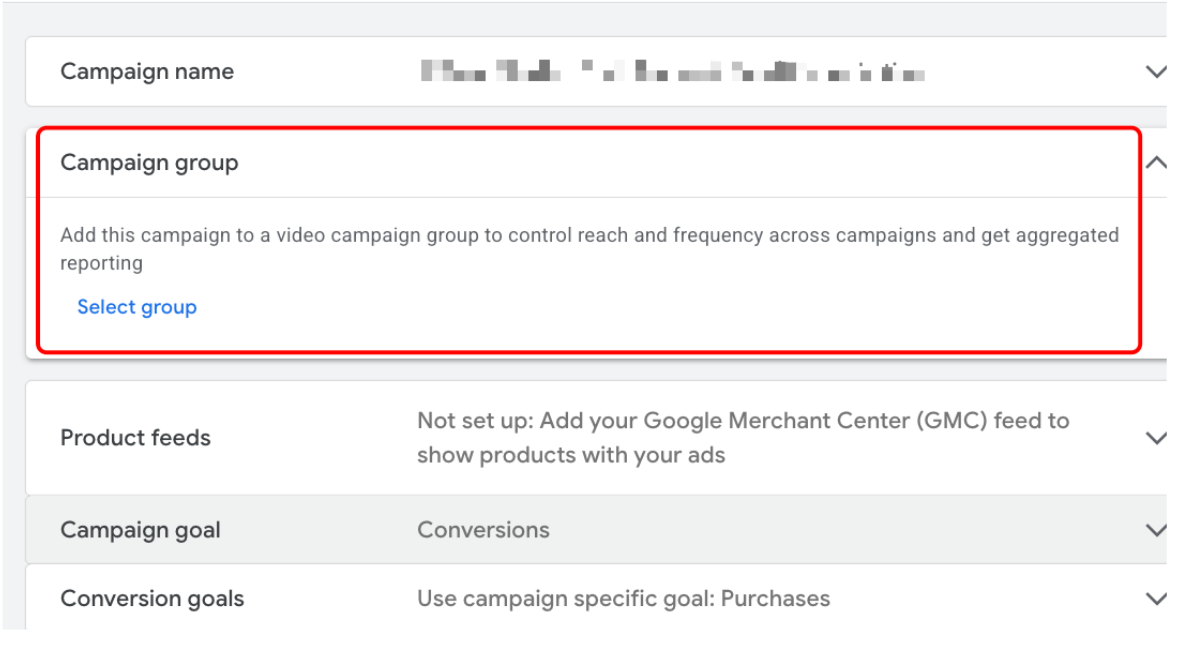
Credits: Search Engine Land
Why Did Google Introduce This Feature?
Running several YouTube campaigns can create audience overlap.
One person may see ads from different campaigns several times, while other potential customers receive little or no exposure. Managing each campaign independently also makes it harder to understand total reach and frequency.
Video campaign groups aim to solve this by coordinating delivery across eligible campaigns.
Google referenced a Meridian study on marketing mix modeling involving around 600 US brands. The study found that an average weekly frequency of 2.7 impressions delivered a 19% increase in ROI.
The result does not mean every advertiser should use the same target. The right frequency will depend on audience size, campaign goals, creative quality, and buying cycles.
Key Benefits for Advertisers
Google Ads can coordinate grouped campaigns to reach more unique users instead of serving ads to the same audience over and over.
Better Frequency Regulation - Advertisers can control frequency at the campaign group level, rather than establishing goals for each individual campaign.
Consolidated Report - Marketers can view reach and frequency performance for participating campaigns in one place.
Campaign Flexibility - Each campaign has its own budget, creatives, targeting, and bidding parameters. Advertisers have more power without having to redesign their account structure.
Who Does It Help?
Video campaign groups will help advertisers who are running multiple YouTube campaigns that target similar audiences or have common awareness goals. The function can be useful for:
-
Brands that operate multiple video formats
-
Agencies with big advertising accounts
-
Companies reaching the same audience with separate campaigns
-
Marketing teams who need consolidated reach and frequency reporting
The tool might not be very useful for businesses who launch only one video campaign.
How Can It Benefit Businesses?
The main business value is improved media efficiency. Advertisers can lower duplicated exposure, grow unique reach, and understand how campaigns work together.
They also help with a higher-level video advertising objective without losing control at the campaign level.
This could help marketing teams spend their expenditures more intentionally, particularly when campaigns are running simultaneously for the same population.
What Comes Next?
Google plans to bring capabilities for managing video campaigns to Display & Video 360.
For now, the global rollout gives Google Ads users a more structured way to coordinate
multiple YouTube campaigns and manage audience exposure across their video strategy.



Your SEO, on autopilot
Saffron OS runs 15+ AI agents that audit your visibility across Google, ChatGPT, Gemini and Perplexity every day — then fix what's broken, automatically. Built over 18 months. Results in 2–15 minutes.
Explore Saffron OS
Shreya Debnath

Shreya Debnath is a Marketing Manager at Saffron Edge with over 5 years of experience in SEO, AI-driven marketing, growth marketing, and technical SEO. She has hands-on expertise in optimizing existing content, improving performance, and driving scalable growth through data-backed strategies. She has worked with international markets, especially the US and UK, and diverse teams to build effective marketing campaigns, strengthen brand positioning, and enhance audience engagement across multiple channels. Her approach focuses on aligning sales and marketing to ensure consistent and measurable results. Outside of work, Shreya enjoys exploring new cities, pursuing creative hobbies, and discovering unique stories through travel and local experiences.
Related Blogs
We explore and publish the latest & most underrated content before it becomes a trend.



5 min read
Top 10 B2B Sales Automation Tools to Boost Revenue in 2025
By Shreya Debnath

Subscribe to Saffron Edge Newsletter!


Your SEO, on autopilot
Saffron OS runs 15+ AI agents that audit your visibility across Google, ChatGPT, Gemini and Perplexity every day — then fix what's broken, automatically. Built over 18 months. Results in 2–15 minutes.
Explore Saffron OS