


15 Best Surfer SEO Alternatives For Content Optimization


Jan 16, 2026

 10 min
Surfer SEO had its moment, but content optimization in 2025 looks very different. Google’s recent updates have made one thing clear: pages that sound forced or overly optimized just don’t hold up anymore.
In fact, studies now show that over 68% of top-ranking pages focus more on search intent than keyword density. That shift has pushed writers, marketers, and agencies to rethink the tools they rely on.
As one marketer recently put it, “If the tool fights your voice, it’s the wrong tool.”
So the big question is simple: Is Surfer SEO still the best option or just the most familiar one?
In this guide, we’ll break down the 15 best Surfer SEO alternatives that help you optimize content without sounding stiff, outdated, or overworked. Also, you will get to know about the surfer platform, how it is used and how it's different or a basic comparison.
Let's get started!
What Is A Surfer?
Surfer SEO is a content optimization tool built to help pages rank better by analyzing what already works on Google. It studies top-ranking results and turns that data into on-page guidelines, such as word count, keyword usage, headings, and structure.
The idea is simple: if high-ranking pages share certain patterns, matching those patterns should improve SEO agency your chances of showing up in search results.
How To Use A Surfer?
Surfer SEO works best when you treat it as a support tool, not a writing boss. So, here find out how most teams use Surfer effectively today.
- First, start by entering your main keyword into Surfer’s Content Editor. The tool analyzes top-ranking Google pages and pulls live SERP data so you’re working with what’s already ranking.
- Then review suggested word count, headings, and terms before writing. This step helps you see what topics users expect answers for, not just which keywords to repeat.
- Write naturally while monitoring the optimization panel. As you cover relevant ideas, the content score updates in real time.
- Always use Surfer to find gaps because competitors address common questions you missed, add clarity instead of filler.
- After that avoid forcing keywords just to raise scores Google favors clean flow and real answers.
Why Do People Look For Surfer SEO alternatives?
With Google’s focus on helpful content, writers now want tools that support natural writing and real value.
Here’s why people do look for alternatives:
- Surfer leans heavily on keyword usage, which can make content feel over-optimized.
- Many teams want intent-based suggestions instead of score chasing.
- Pricing can be a stretch for freelancers and small businesses.
- Writers want more flexibility to match brand voice and US audience tone.
- Some tools offer deeper topic coverage instead of term counting.
- Modern workflows demand faster research and smoother collaboration.
15 Best Surfer SEO Alternatives That Deserve A Try
Below are the best 15 surfer SEO alternatives that you should try once to boost your content. So, let’s get into it:
| Surfer SEO Alternatives | Features | Pricing |
| Clearscope | Improves content clarity using semantic keywords while keeping writing natural and editor-friendly for competitive SERPs. | From $170/month |
| MarketMuse | Builds topical authority by identifying content gaps and guiding long-term strategy for high-competition niches. | Free plan, paid from $149/month |
| Frase | Intent-based briefs and outlines using SERP data to answer real user questions faster. | From $45/month |
| NeuronWriter | NLP-driven suggestions and simple scoring for affordable and beginner-friendly content optimization. | From $19/month |
| Scalenut | Combines keyword research, outlines, and optimization into one workflow for fast content production. | From $39/month |
| Dashword | Helps teams build clear content briefs and optimize pages with smooth collaboration features. | From $99/month |
| PageOptimizer Pro | Delivers precise on-page recommendations using data-backed analysis for technical SEO control. | From $34/month |
| WriterZen | Groups keywords into clusters and helps plan content that matches search intent. | From $39/month |
| TopicRanker | Finds low-competition keywords ideal for niche sites and early ranking opportunities. | One-time $97 |
| RankIQ | Provides pre-validated keywords and simple optimization built for bloggers and affiliates. | From $49/month |
| Outranking | Structured content planning with SERP-based briefs and optimization guidance. | From $79/month |
| Content Harmony | Focuses on SERP intent mapping and editorial planning for enterprise content teams. | Custom pricing |
| GrowthBar | Offer quick SEO insights and competitor checks through a lightweight interface. | From $29/month |
| SEOContent.ai | Improves readability and relevance using natural language optimization. | From $30/month |
| DIY Stack | Allows full control by combining custom tools for research, writing, and optimization. | Varies |
1. Clearscope
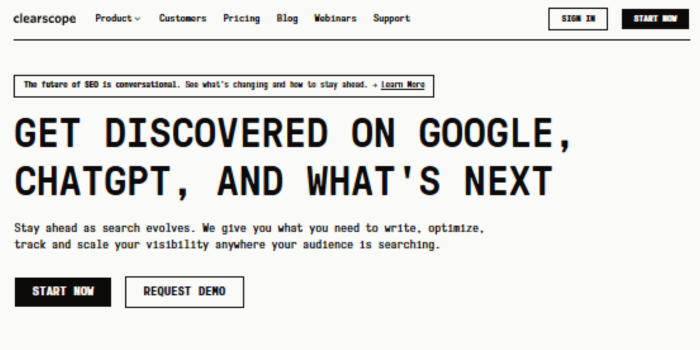
Clearscope is built for writers and editors who want simple, accurate guidance that preserves voice. It highlights semantic terms and suggests how to make content readable and relevant without turning it into a stats page.
Key features
- Semantic keyword suggestions and content grading.
- Integration with content workflows and AI prompt tracking.
- Topic discovery and monitoring for AI + search visibility.
Pricing
Clearscope offers tiered plans, with Essentials and Business options and enterprise plans for larger teams. So, essentials start at a monthly rate of $170 per month.
Pros
- Editor-friendly UI.
- It focuses on natural phrasing.
- Trusted by publishers.
Cons
- It can be pricey for solo creators.
- Limited deep technical SEO tooling.
2. MarketMuse
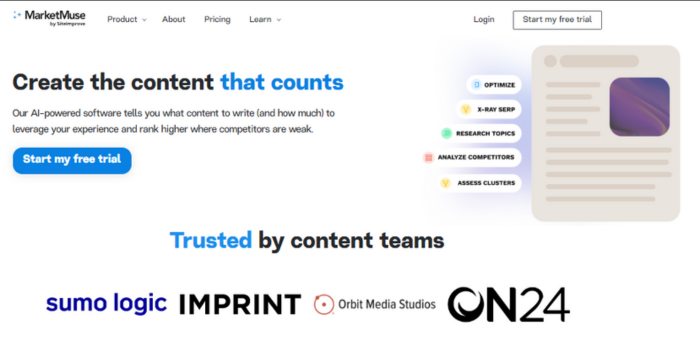
MarketMuse centers on building topical depth and authority. Instead of just counting keywords it structures topic clusters and shows what subtopics matter most for ranking a subject over time.
Key features
- Topic modeling and gap analysis.
- Content inventory and prioritization tools.
- Long-term planning for authority building.
Pricing
It has multiple tiers, including a limited free option and paid plans start near $149 per month for teams. The platform is positioned for serious content programs and enterprise needs.
Pros
- Great for scaling content strategy.
- Strong competitive research tools.
Cons
- Steeper learning curve.
- Costs add up for larger teams.
3. Frase
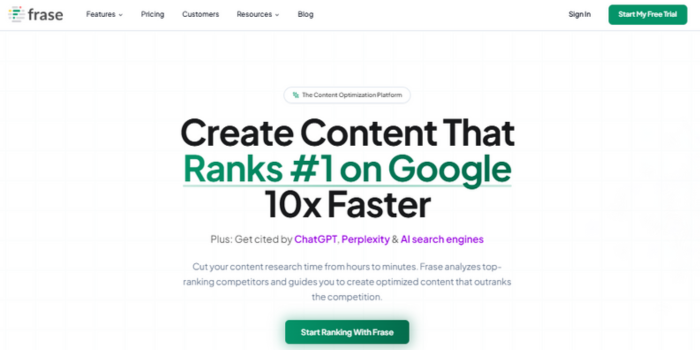
Frase is built for speed, which creates SERP-based briefs and outlines that match user intent. Teams that need quick, on-point briefs and outlines find it very useful for producing content that answers actual queries.
Key features
- Automated briefs and question discovery.
- AI-assisted outlines and optional AI Search Tracking.
- GEO and SERP insights for local optimization.
Pricing
It offers several plans starting at a low entry price $45 per month and scales to team and agency tiers that include AI SEO service search tracking and other advanced features.
Pros
- Fast research to brief turnaround.
- Good for intent-driven content.
Cons
- Optimization depth can feel lighter than enterprise tools.
- UI may be busy for some users.
4. NeuronWriter
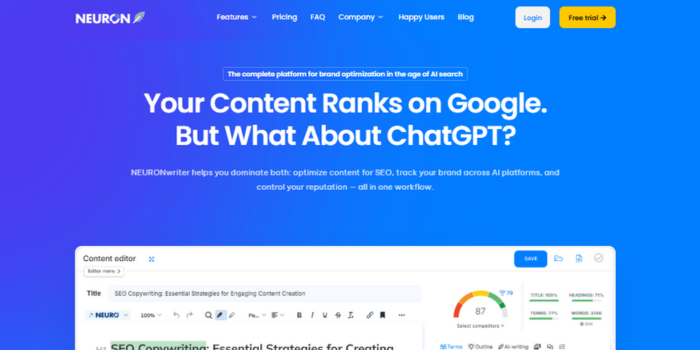
NeuronWriter brings NLP-driven recommendations at a friendly price. It balances semantic suggestions with a simple editor so smaller teams can optimize content without a heavy learning curve.
Key features
- NLP-based term recommendations.
- Content scoring and Google Docs support.
- Integrations like GSC, WP, Shopify in higher tiers.
Pricing
It offers multiple plans from beginner to agency levels around $30, with annual discounts and features.
Pros
- Affordable for freelancers and small teams.
- Practical NLP insights.
Cons
- Smaller feature set than big platforms.
- Some limits on advanced reporting.
5. Scalenut
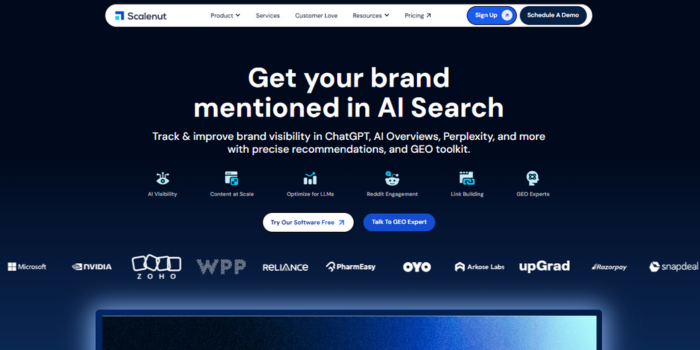
Scalenut mixes AI writing and SEO research into one workflow. It focuses on fast outlines, automated content creation, and optimization, all with collaboration features for teams.
Key features
Automated outlines and content briefs.
Keyword clustering and content optimization.
Social listening and GEO features for local signals.
Pricing
It provides tiered plans starting from $39 aimed at individuals and teams.
Pros
- Strong all-in-one value.
- Useful for fast content production.
Cons
- AI drafts need human editing.
- Interfaces can feel crowded at times.
6. Dashword
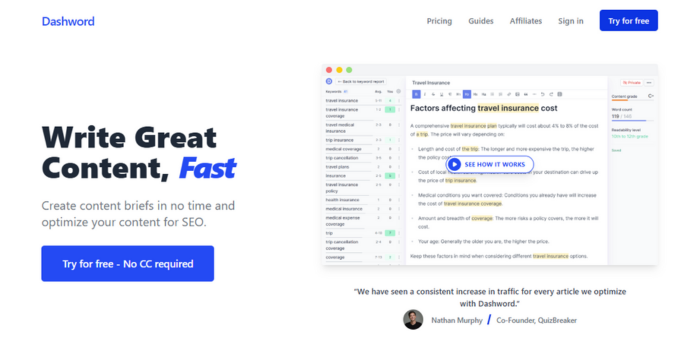
Dashword focuses on clean briefs and collaborative optimization. Therefore, agencies and content teams like how it turns SERP data into actionable briefs with shared
Key features
- Content briefs, reports, and team seats.
- Simple SERP comparison dashboards.
- API access and bulk report creation for larger teams.
Pricing note
Dashword offers mid-range plans from $99 starting suitable for agencies.
Pros
- Clean workflow for teams.
- Good reporting and collaboration.
Cons
- Less emphasis on keyword discovery.
- The feature ecosystem is smaller than major players.
7. PageOptimizer Pro (POP)
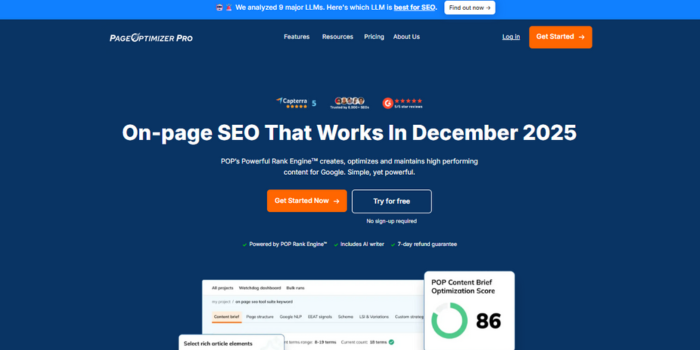
POP is designed for technical on-page SEOs audit services who want granular control. It uses research-backed formulas to recommend exact changes at the HTML level for the best on-page impact.
- Detailed on-page reports and credit-based tools
- EEAT and NLP modules for deeper analysis.
- POP AI writer and watchdog tools.
Pricing
POP uses credit bundles and plans start at $34 with monthly credit allocations. This model fits users who do frequent, technical reports.
Pros
- Precise, data-driven recommendations.
- Great for tactical SEO gains.
Cons
- Not aimed at casual writers.
- Requires SEO experience to use fully.
8. WriterZen

WriterZen is built around keyword discovery and topic clustering. It helps you group keywords logically and turn clusters into content plans that target intent.
Key features
- Keyword research and clustering.
- Content brief generation and topic discovery.
- Workflow support for multiple authors.
Pricing
It offers transparent plans starting from $39 and options that appeal to agencies and solo creators.
Pros
- Excellent for strategy and planning.
- Clear cluster visualization.
Cons
- The editor lacks the polish of some rivals.
- Updates can feel slower.
9. TopicRanker
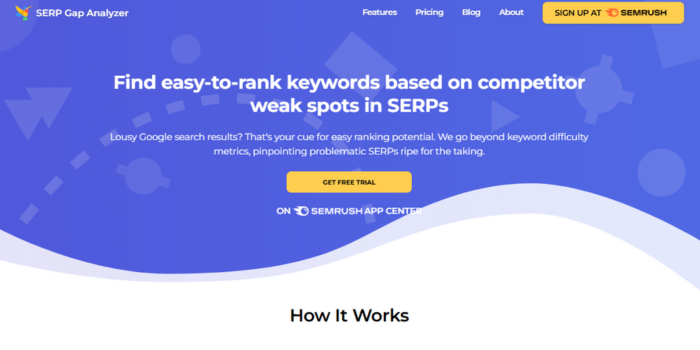
TopicRanker specializes in surfacing less competitive keyword opportunities. It’s useful for niche and affiliate sites that need quick wins and targeted topic ideas.
Key features
- Low-competition keyword discovery.
- SERP strength and opportunity scoring.
Pricing
It is often sold with a one-time purchase option and simple pricing of $97 for smaller teams.
Pros
- Useful for niche research.
- Simple and focused.
Cons
- Limited broader optimization features.
- The interface feels dated.
10. RankIQ

RankIQ is purpose-built for bloggers which curates keyword ideas and gives straightforward optimization suggestions that work well for US-based niches and affiliate content
Key features
- Pre-vetted keyword database.
- Blog-targeted optimization tips.
- Grows with the user via established workflows.
Pricing
RankIQ positions itself at a mid-range price $49 attractive to bloggers and small publisher teams.
Pros
- Great for solo bloggers.
- Simple, results-focused guidance.
Cons
- Not as useful for enterprise needs.
- Keyword pool may be limited for large sites.
11. Outranking
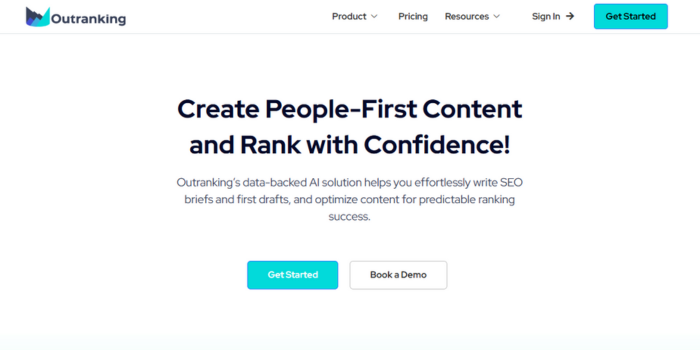
Outranking blends brief generation with structured optimization. However, teams that want fast draft-to-brief workflows can use it to standardize output and reduce research time.
Key features
- SEO briefs, outline building, and SERP-based optimization.
- Integration with writing workflows.
Pricing
Outranking has multiple plans starting from $79 for individuals and teams. It scales by the number of documents and features.
Pros
- It is helpful for structured content teams.
- Good balance of automation and control.
Cons
- AI output still needs review.
- Platform learning curve for new users.
- Not as useful for enterprise needs.
- Keyword pool may be limited for large sites.
12. Content Harmony
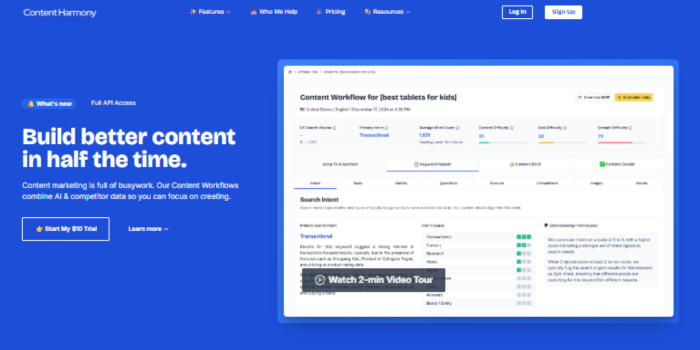
Content Harmony is a deeper research platform that targets enterprise content strategy. It focuses on SERP intent mapping and editorial planning for large content programs.
Key features
- SERP intent mapping and editorial templates.
- Enterprise workflows and reporting.
Pricing
Content uses custom pricing tailored to enterprise customers.
Pros
- Strong for large brands.
- Deep SERP analysis and planning features.
Cons
- Not cost-effective for small teams.
- No public pricing makes comparison harder.
13. GrowthBar
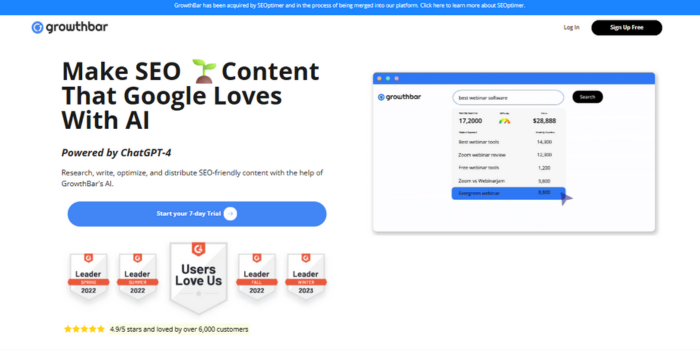
GrowthBar is a simple, fast tool for quick on-page checks and competitor lookups. It’s useful when you want quick signals without a full research workflow.
Key features
- Chrome extension and quick SEO checks.
- Fast competitor snapshots.
Pricing
GrowthBar offers $29 an entry-level price aimed at solo creators and small teams.
Pros
- Easy to use and fast.
- Good for quick audits.
Cons
- Limited depth for scaling content.
- Basic compared to full platforms.
14. SEOContent.ai

SEOContent.ai emphasizes natural-language and readability. It nudges writers toward cleaner phrasing while keeping SEO relevance in view.
Key features
- Readability and natural language recommendations.
- Simple optimization scoring.
Pricing
Typically positioned as an affordable option starts at $30 for writers prioritizing readability.
Pros
- Keeps content sounding human.
- Beginner-friendly.
Cons
- Smaller feature set.
- Less brand recognition.
15. DIY Stack
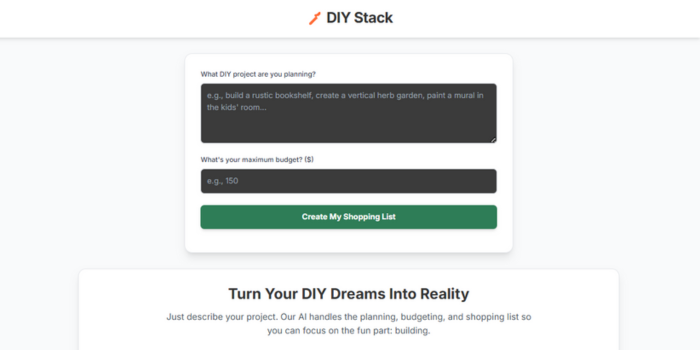
Some teams prefer a modular setup. ZimmWriter plus separate NLP and analysis tools gives you flexibility and cost control. This stack works if you like tech control and custom workflows.
Key features
- Mix-and-match tools for research, writing, and optimization.
- Full control over APIs and data flow.
Pricing
DIY stack costs vary based on tools chosen, but this approach can be cost-efficient if you pick the right mix.
Pros
- Highly customizable.
- Scales with your needs.
Cons
- Setup time and maintenance.
- Requires technical know-how.
Using SEO Tools but Not Seeing the Payoff?
Content optimization isn’t about scores anymore. It’s about clarity, intent, and strategy. Learn how the right tools and smart decisions can help your content rank better and connect with the right audience.
Surfer SEO vs Its Top Alternatives: A Quick Comparison
Surfer SEO set the standard for content optimization, but the SEO game has changed fast. So, let’s know how Surfer SEO is still in the game then other alternative:
| Tool | Best For | Optimization Style | Flexibility | Pricing Level |
| Surfer SEO | Quick on-page checks | Keyword + score-based | Medium | High |
| Clearscope | Editorial content quality | Semantic relevance | High | High |
| MarketMuse | Topical authority building | Topic depth and gaps | Medium | High |
| Frase | Intent-based content planning | SERP questions and outlines | High | High |
| NeuronWriter | Budget-friendly optimization | NLP term guidance | Medium | Low |
| Scalenut | All-in-one content workflow | Research to optimization | Medium | High |
| Dashword | Teams and agencies | Briefs and collaboration | High | High |
| PageOptimizer Pro | Technical on-page SEO | Data-driven precision | Low | High |
| WriterZen | Keyword clustering | Topic planning | Medium | High |
| TopicRanker | Niche keyword discovery | Low-competition focus | Medium | Low |
| RankIQ | Bloggers and affiliates | Pre-validated keywords | High | High |
| Outranking | Structured SEO briefs | SERP-driven structure | Medium | High |
| Content Harmony | Enterprise strategy | Intent mapping | High | High |
| GrowthBar | Fast SEO insights | Lightweight optimization | High | Low |
| SEOContent.ai | Readability-focused writing | Natural language | High | Low |
| DIY Stack | Full control users | Custom tool setup | High | High |
Therefore, Surfer SEO still holds value for quick on-page optimization and fast checks, especially for users who like clear benchmarks.
However, as search moves toward intent, clarity, and real usefulness, many alternatives offer more flexibility and smarter insights. When choosing the right tool depends on how you create content today and how you plan to grow it tomorrow.
How To Choose The Right Surfer SEO Alternative?
To choose the right tool starts with knowing what your content actually needs such as:
Define your main goal
Bloggers should focus on readability and structure as larger teams need planning and authority-building tools.
Match the tool to your skill level
Simple tools work best for beginners that is why advanced SEOs may want deeper control.
Check pricing against usage
Always avoid paying for features you won’t use as many tools offer affordable plans with core features.
Prioritize intent support
Always choose platforms that help answer real search questions.
Plan for growth
The right tool should scale with your content strategy.
Final Take
Content optimization in 2025 is no longer about chasing scores or stuffing pages with terms. As Google’s updates have made it clear that useful, well-structured content will only be verified and ranked. That shift is exactly why so many writers, marketers, and agencies are looking beyond Surfer SEO.
However, each alternative in this guide brings something different to the table. Some tools focus on clean writing and intent. Others help build topical authority or speed up research. The right choice depends on how you work, your budget, and how much control you want over optimization.
If you are a solo creator, simpler tools can keep things moving without stress. If you manage content at scale, deeper platforms can support long-term growth. The key is choosing a tool that supports your voice instead of boxing it in.
At the end of the day, tools should make content better for readers. When that happens, rankings usually follow.
Still Stuck Tweaking SEO Tools Instead of Seeing Results?
SEO tools give you data, but data alone doesn’t grow traffic. Saffron Edge helps brands turn insights into clear actions that improve rankings, drive qualified traffic, and support real business goals. No guesswork. No wasted effort.
Share


Rank in AI Overviews
FAQs
Here are quick answers to common questions readers have before switching tools.
Is Surfer SEO still useful in 2025?

Yes, but it’s better used as guidance rather than strict rules.
Which Surfer SEO alternative is best for beginners?
NeuronWriter and GrowthBar are easy to use and budget-friendly.
Are lower-cost tools reliable?
Many affordable tools offer strong results without heavy scoring systems.
Do these tools support US-based SEO?
Yes, most analyze US SERPs and search intent.
Should I use more than one tool?
Some teams combine tools, depending on budget and workflow.

Shreya Debnath

Shreya Debnath is a dedicated marketing professional with expertise in digital strategy, content development and scaling with AI & Automation along with brand communication. She has worked with diverse teams to build impactful marketing campaigns, strengthen brand positioning, and enhance audience engagement across multiple channels. Her approach combines creativity with data-driven insights, allowing businesses to reach the right audiences and communicate their value effectively. She perfectly aligns sales and marketing together and makes sure everything works in sync. Outside of work, Shreya enjoys exploring new cities, diving into creative hobbies, and discovering unique stories through travel and local experiences.
Related Blogs
We explore and publish the latest & most underrated content before it becomes a trend.

6 min read
How to Build a WhatsApp Chatbot in 2025: A Step-by-Step Guide
By Sabah Noor
2 min read
6 Quick Tips Before You Go For A SEO Keyword Brainstorming Session
By Nishant Ahlawat

Subscribe to Saffron Edge Newsletter!


Rank in AI Overviews