





AI Tools for Sales and Marketing [Tested & Reviewed]


Aug 03, 2026

 9 min
9 min


Today’s AI tools in sales and marketing monitor behavior, tailor campaigns, and uncover buyer intent beforehand.
With the rise of use in ChatGPT, Claude, Gemini, Perplexity, and many more, the AI patterns are becoming increasingly sophisticated, enabling businesses to predict customer needs and enhance engagement strategies effectively.
A McKinsey study showed that companies that invest in AI for marketing and sales have 3% to 15% revenue uplift and 10% to 20% sales ROI uplift.
According to HubSpot’s 2026 marketing study, 80% of marketers use AI to create content, and 75 percent use it to produce media.
Deloitte also found that workers’ access to AI climbed 50% in 2025, and organizations with 40% or more of their AI projects in production expect that number to quadruple in six months.
Best AI Tools in Sales and Marketing
| Sno. | Tool Name | Business Operation It Helps | Rating |
|---|---|---|---|
| 1 | Salesforce Sales Cloud / Agentforce Sales | CRM, pipeline management, lead scoring, forecasting, account intelligence, and AI-assisted sales workflows. | 4.4/5 |
| 2 | Outreach | Sales engagement, outbound sequencing, prospect follow-ups, rep task automation, and CRM-connected outreach. | 4.3/5 |
| 3 | Salesloft | Sales engagement, cadence management, AI sales assistant workflows, coaching, and opportunity management. | 4.5/5 |
| 4 | Gong | Conversation intelligence, revenue intelligence, call analysis, deal risk detection, and sales coaching. | 4.7/5 |
| 5 | HubSpot Marketing Hub | Marketing automation, email campaigns, landing pages, forms, lead nurturing, and campaign reporting. | 4.4/5 |
| 6 | Adobe Campaign / Adobe Marketing Cloud Stack | Omnichannel campaign orchestration, email, SMS, push notifications, journey automation, and enterprise personalization. | 4.1/5 |
| 7 | Jasper | AI content creation, brand voice support, campaign copy, blog drafts, ad variations, and marketing content workflows. | 4.7/5 |
| 8 | Braze | Customer engagement, journey orchestration, push notifications, email, SMS, AI decisioning, and one-to-one personalization. | 4.5/5 |
1. Salesforce Sales Cloud
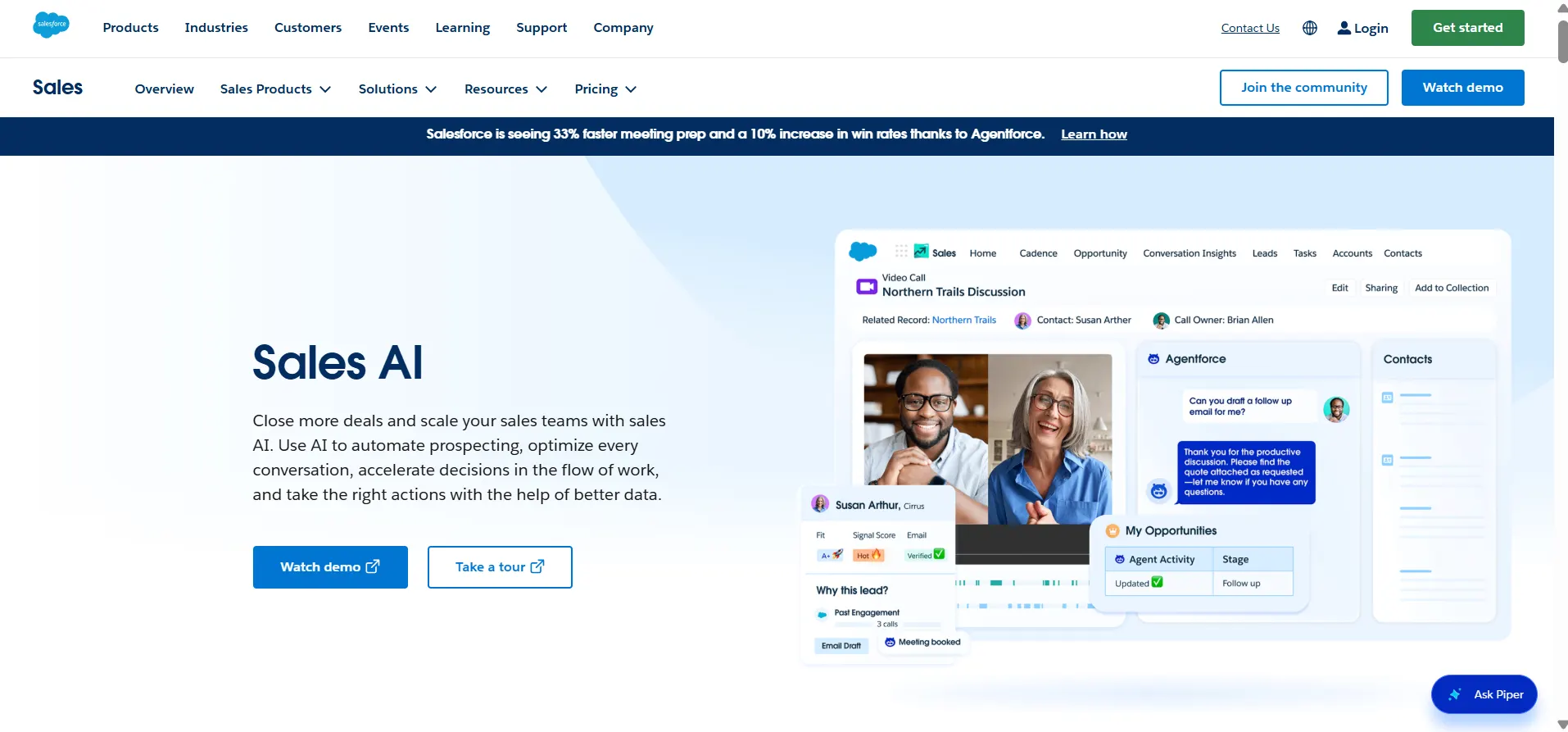
Salesforce Sales Cloud is an enterprise CRM built for sales pipeline management, account tracking, forecasting, lead management, and AI-assisted revenue operations.
Its AI layer, Einstein and Agentforce, helps sales teams automate prospecting and recommend next actions based on CRM data. Salesforce positions Sales Cloud as a full sales operating system where AI agents and human reps work inside the same workflow.
Specific feature that solves a business problem:
- Einstein Lead Scoring enables teams to prioritize leads using CRM behavior, engagement history, firmographic data, and likelihood of conversion.
- It addresses the common sales challenge of reps spending time on low-intent prospects while high-value accounts remain unattended.
Best use case and ideal fit:
Businesses use Salesforce Sales Cloud to handle enterprise sales, account-based selling, forecasting, pipeline governance, lead routing, and sales automation.
It is best suited for mid-market and corporate firms with long sales cycles, many sales teams, complicated reporting demands, and rigorous CRM governance.
2. Outreach
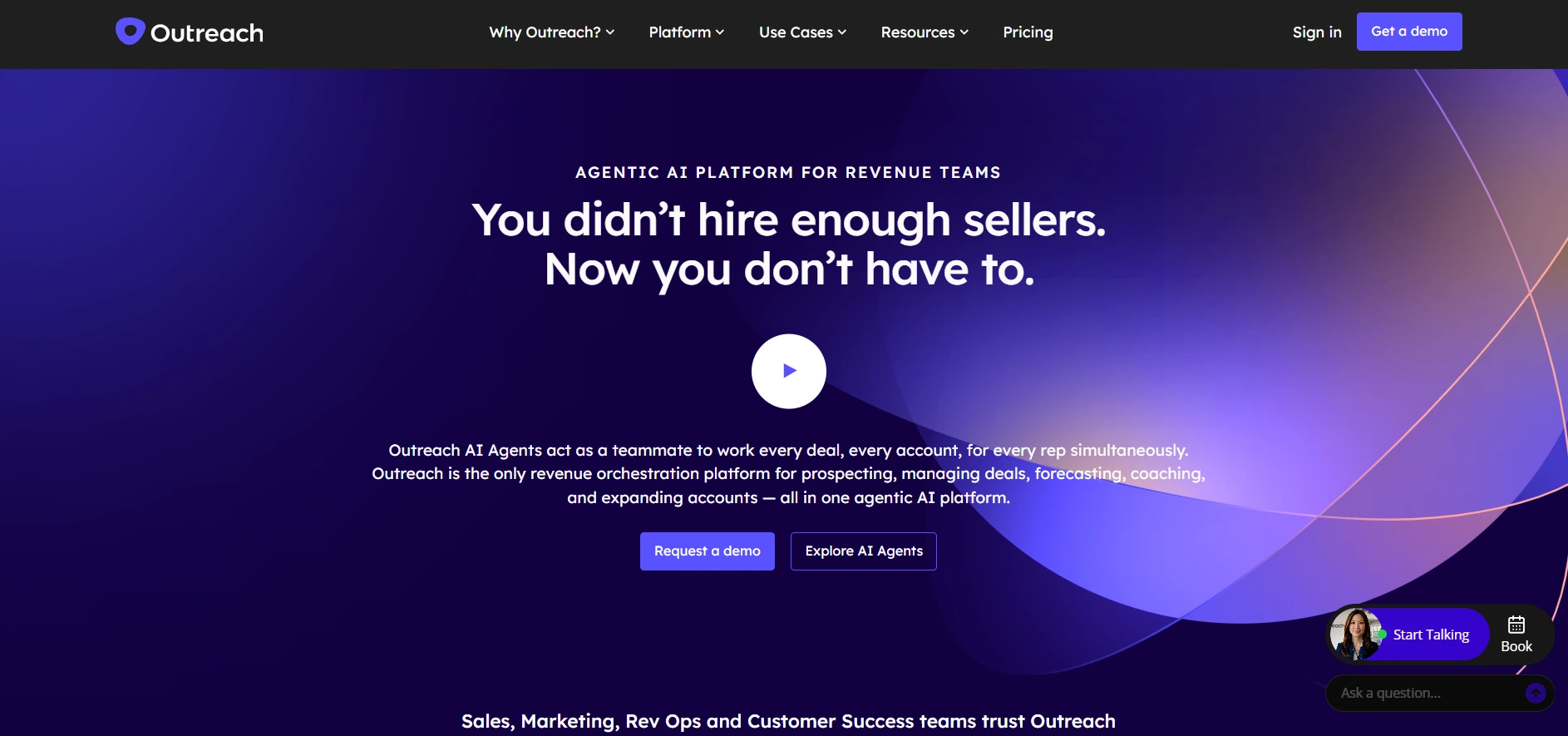
Outreach is a sales engagement and revenue orchestration platform built for outbound prospecting, multi-channel sequences, deal management, forecasting, and rep productivity.
It helps sales teams run structured outreach across email, phone, LinkedIn, and CRM-connected workflows. Outreach is an agentic AI for revenue teams, with AI agents supporting prospecting, coaching, forecasting, and account expansion.
Specific feature that solves a business problem:
- AI-powered sequences enable sales teams to personalize outreach across multiple touchpoints without building every cadence from scratch.
- This reduces inconsistent follow-ups, missed prospects, and fragmented outbound execution.
Best use case and ideal fit:
Businesses can use Outreach for outbound sales, SDR workflows, account follow-ups, pipeline creation, and sales activity tracking.
It works best for B2B sales teams running high-volume outreach with structured cadences and multiple decision-makers.
3. Salesloft
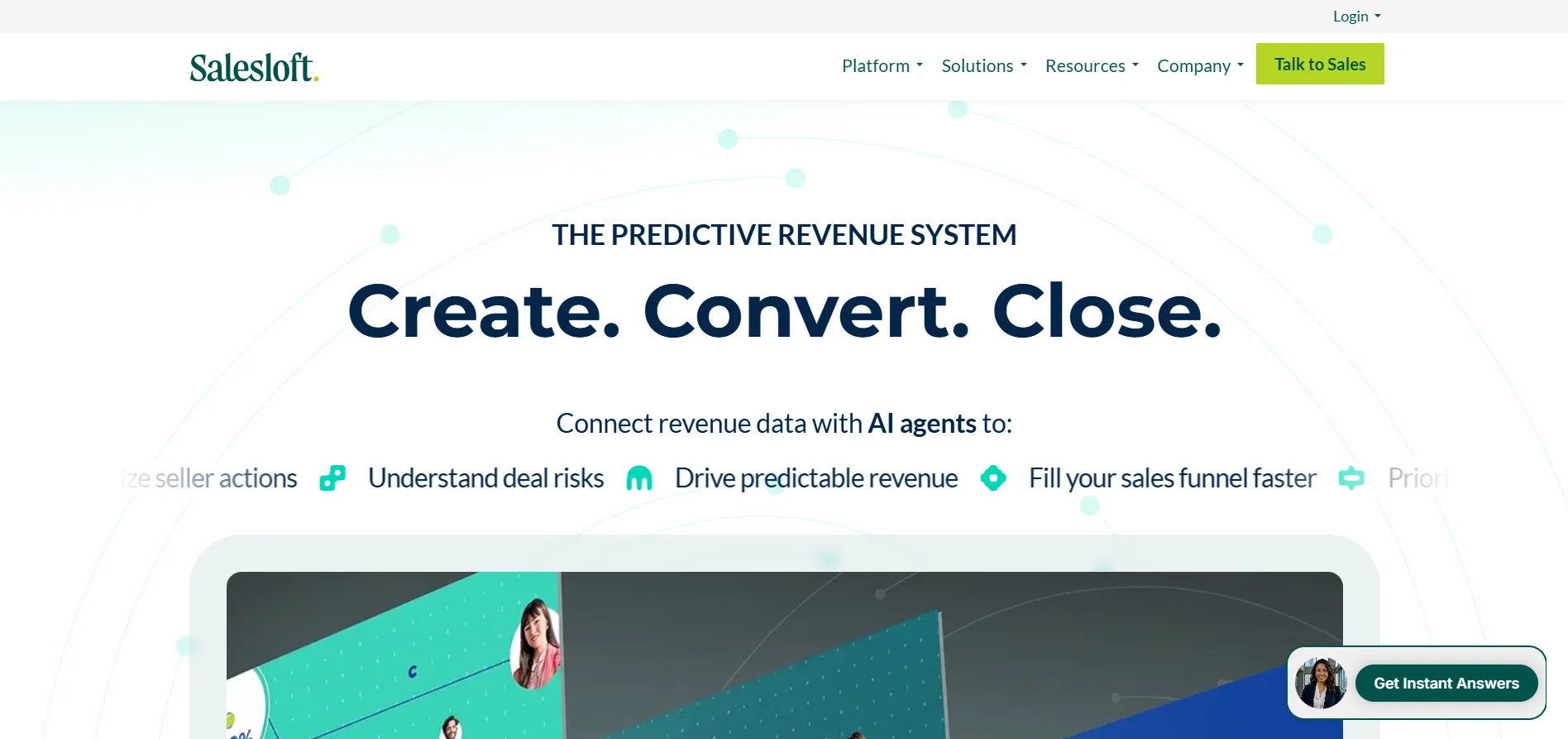
Salesloft is an AI that uses a large revenue data model built from more than 5 billion buyer-seller interactions.
Salesloft is an AI revenue management platform that connects sales engagement, forecasting, buyer signals, and deal execution.
It helps sales teams create pipelines, convert prospects, close deals, and retain customers through connected revenue workflows.
Specific feature that solves a business problem:
- Salesloft’s AI-guided selling capabilities direct representatives to the best next step based on buyer engagement, cadence performance, and deal activity.
- This helps sales representatives focus on the actions most likely to move deals forward and drive revenue.
Best use case and ideal fit:
Businesses can use Salesloft for outbound cadences, sales engagement, pipeline workflows, rep coaching, forecasting support, and revenue execution.
It works best for sales teams that need structure, visibility, and repeatable selling motions across SDRs, AEs, and revenue managers.
4. Gong
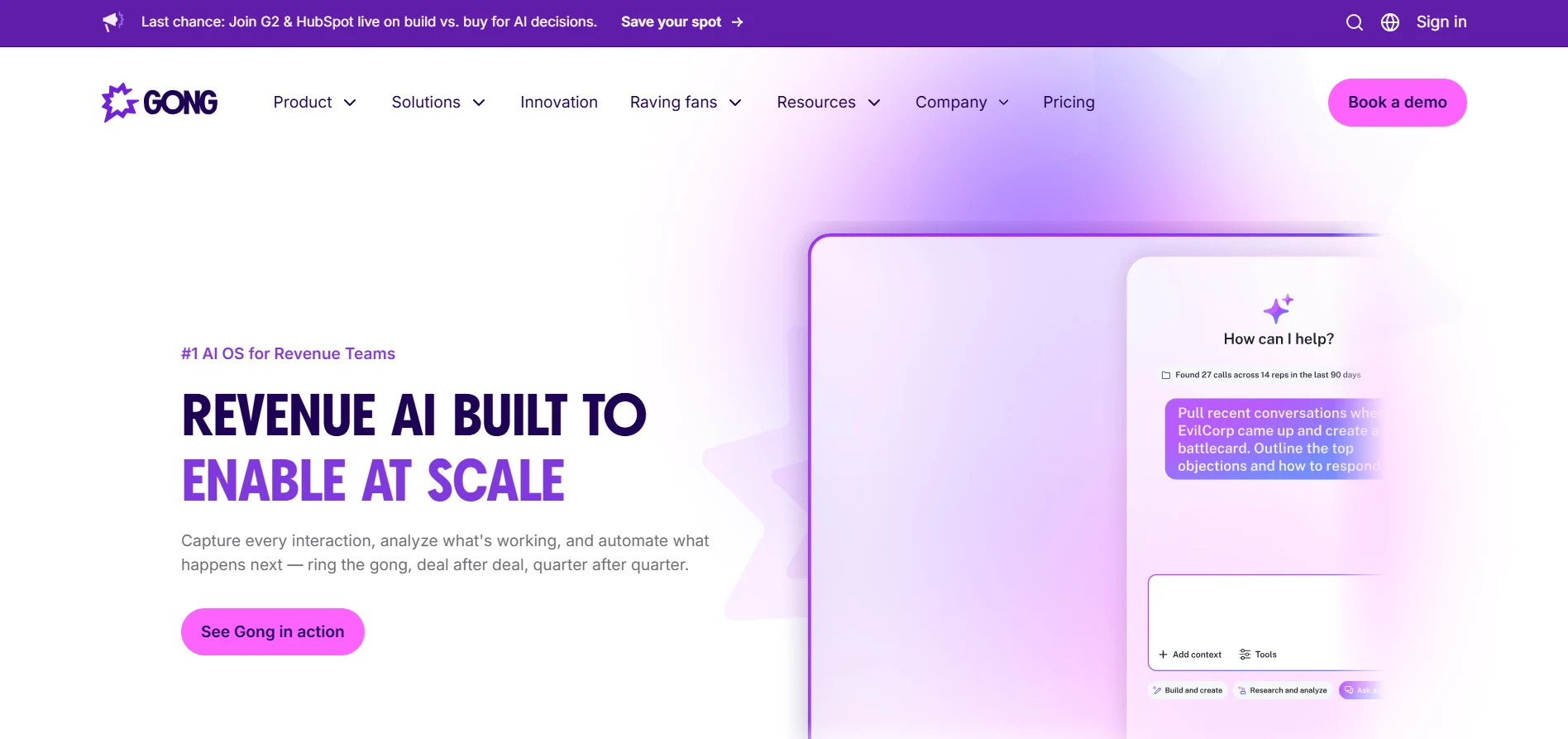
Gong is a revenue and conversation intelligence platform that monitors client interactions across calls, emails, meetings, and deal activity.
It transforms buyer discussions into revenue intelligence for coaching, forecasting, deal risk identification, and messaging optimization.
Gong pitches its Revenue AI OS as a solution that translates consumer interactions into revenue results.
Specific feature that solves a business problem:
- Gong’s call analysis uncovers buyer objections, competitor mentions, pricing discussions, talk ratios, next steps, and potential deal risks.
- This helps sales leaders rely on insights from actual buyer conversations instead of incomplete or subjective rep notes.
Best use case and ideal fit:
Businesses can use Gong to coach calls, inspect deals, enable sales, analyze wins and losses, validate forecasts, and test messages.
It is best suited for B2B teams with consultative sales cycles, demo-heavy motions, complex buying committees, and coaching-led sales management.
5. HubSpot Marketing Hub
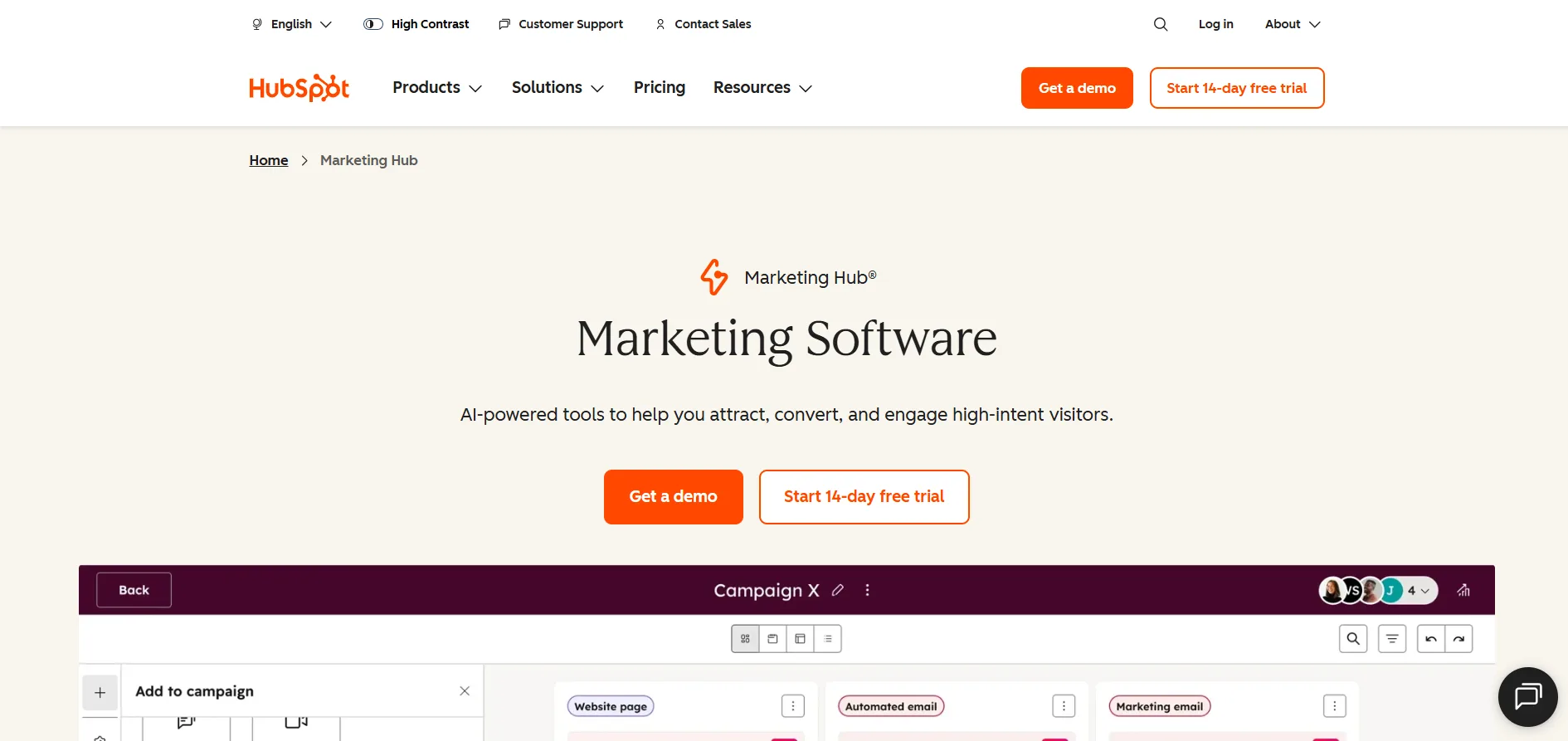
HubSpot Marketing Hub is a marketing automation tool for email marketing, landing pages, forms, lead collection, segmentation, reporting, workflows, and campaign management.
Its Breeze AI engine lives inside HubSpot and uses CRM data, customer chats, and deal history to help marketing, sales, and service teams.
HubSpot’s Breeze AI has AI agents, an AI assistant, and more than 100 integrated AI features across the platform.
Specific feature that solves a business problem:
- HubSpot workflows enable marketers to automate lead nurturing based on form submissions, page views, lifecycle stage, email engagement, and CRM activity.
- This ensures leads receive timely, relevant follow-up instead of entering the funnel without consistent engagement.
Best use case and ideal fit:
Businesses can use HubSpot Marketing Hub for inbound marketing, lead nurturing, email automation, landing pages, campaign reporting, AI SEO content support, and lifecycle marketing. It works best for SMB and mid-market B2B teams that want marketing, sales, and CRM data in one connected platform.
6. Adobe Marketing Cloud
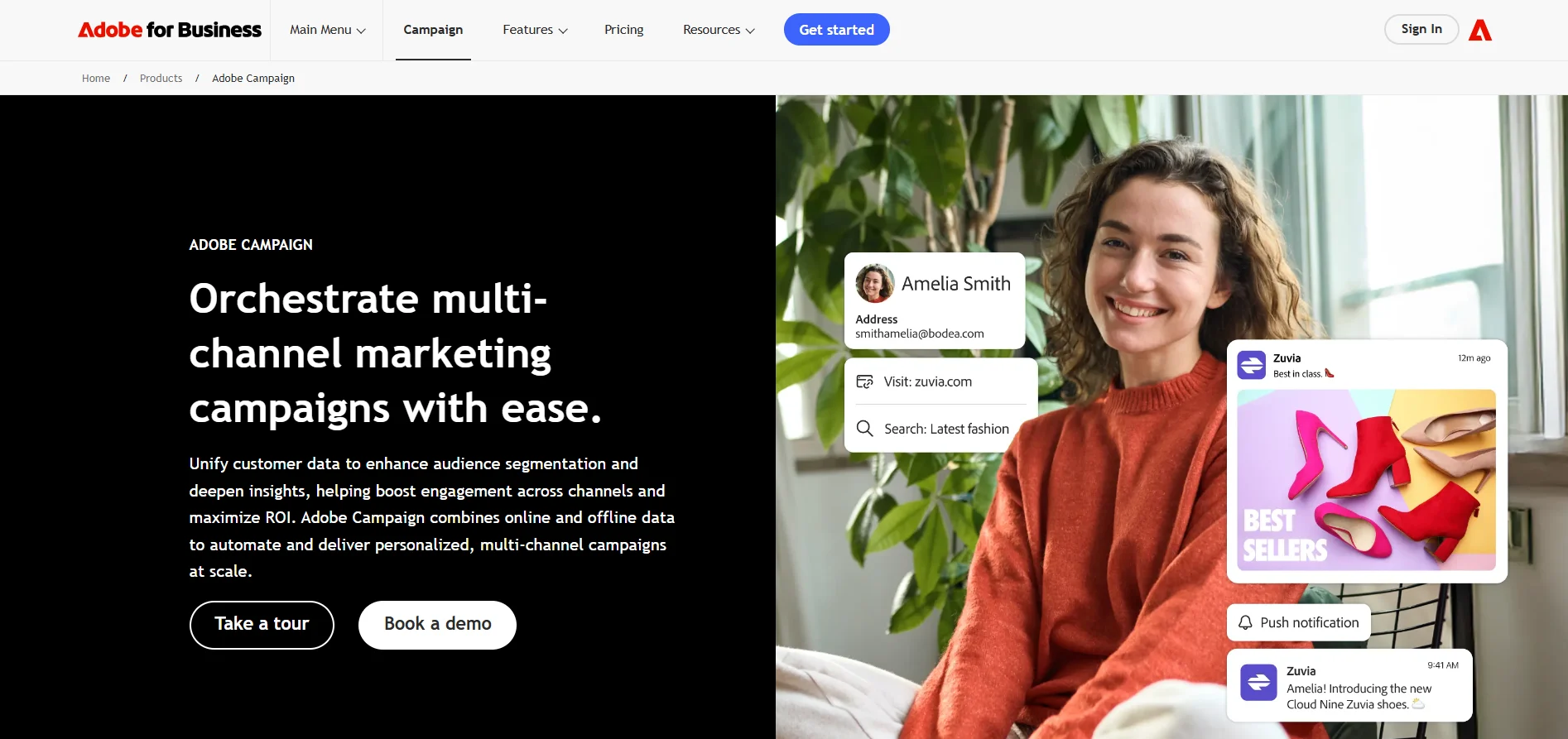
Adobe Marketing Cloud, primarily using Adobe Campaign and Adobe Journey Optimizer, assists enterprise teams in managing customer data, segmentation, campaign management, personalization, and omnichannel journeys.
With Adobe Campaign you can run personalized campaigns for email, SMS, direct mail, and more.
Adobe Journey Optimizer leverages AI and machine learning to generate content, estimate send times, and deliver real-time consumer experiences.
Specific feature that solves a business problem:
Adobe Journey Optimizer's AI-powered send-time optimization enables teams to deliver messages when customers are most likely to engage.
This solves the problem of campaign fatigue, poor timing, and low engagement across large customer segments.
Best use case and ideal fit:
Adobe Marketing Cloud provides businesses with enterprise campaign management, customer journey management, real-time personalization, lifecycle marketing, and cross-channel communication.
It’s perfect for major B2C, retail, finance, healthcare, telecom, travel, media, and business B2B teams with sophisticated data infrastructures.
7. Jasper
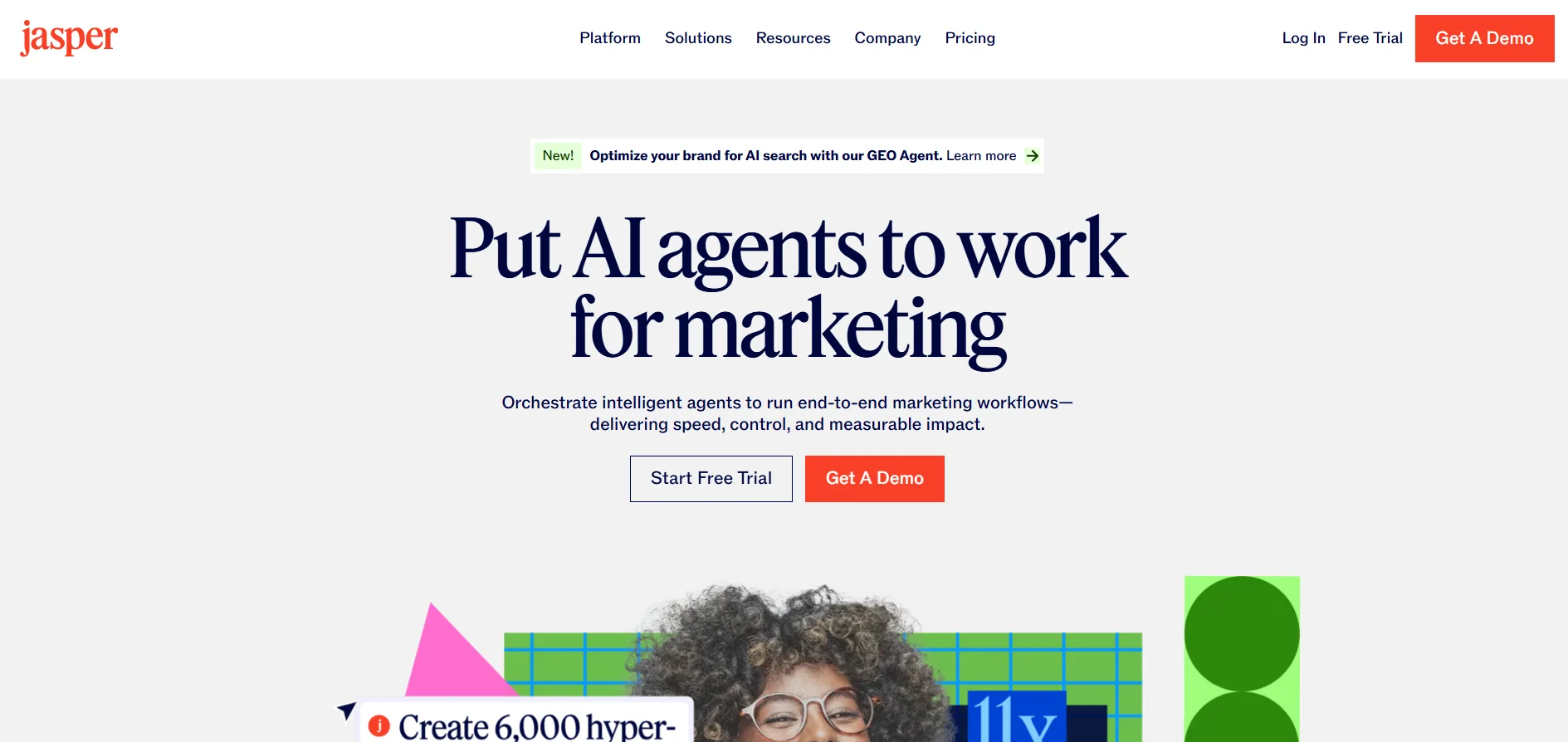
Jasper is an AI content and marketing platform that enables campaign creation, brand voice management, content production, and AI search visibility.
It enables marketing teams to create blogs, ads, emails, landing page copy, social posts, product messaging, and campaign assets faster while adhering to brand guidelines.
Jasper also offers GEO and AI optimization for brands seeking visibility in ChatGPT, Claude, Perplexity, Gemini, AI Mode, and AI Overview.
Specific feature that solves a business problem:
- Jasper Brand Voice stores tone, style, messaging rules, and brand guidelines, enabling teams to create consistent content across channels.
- This helps maintain content quality and brand consistency when multiple writers, freelancers, and marketers produce assets at scale.
Best use case and ideal fit:
Businesses can use Jasper to create campaign copy, content repurposing, ad variations, landing page drafts, email copy, brand messaging, and AI SEO workflows.
It is best suited for marketing teams that require high-volume content production while maintaining brand consistency.
8. Braze
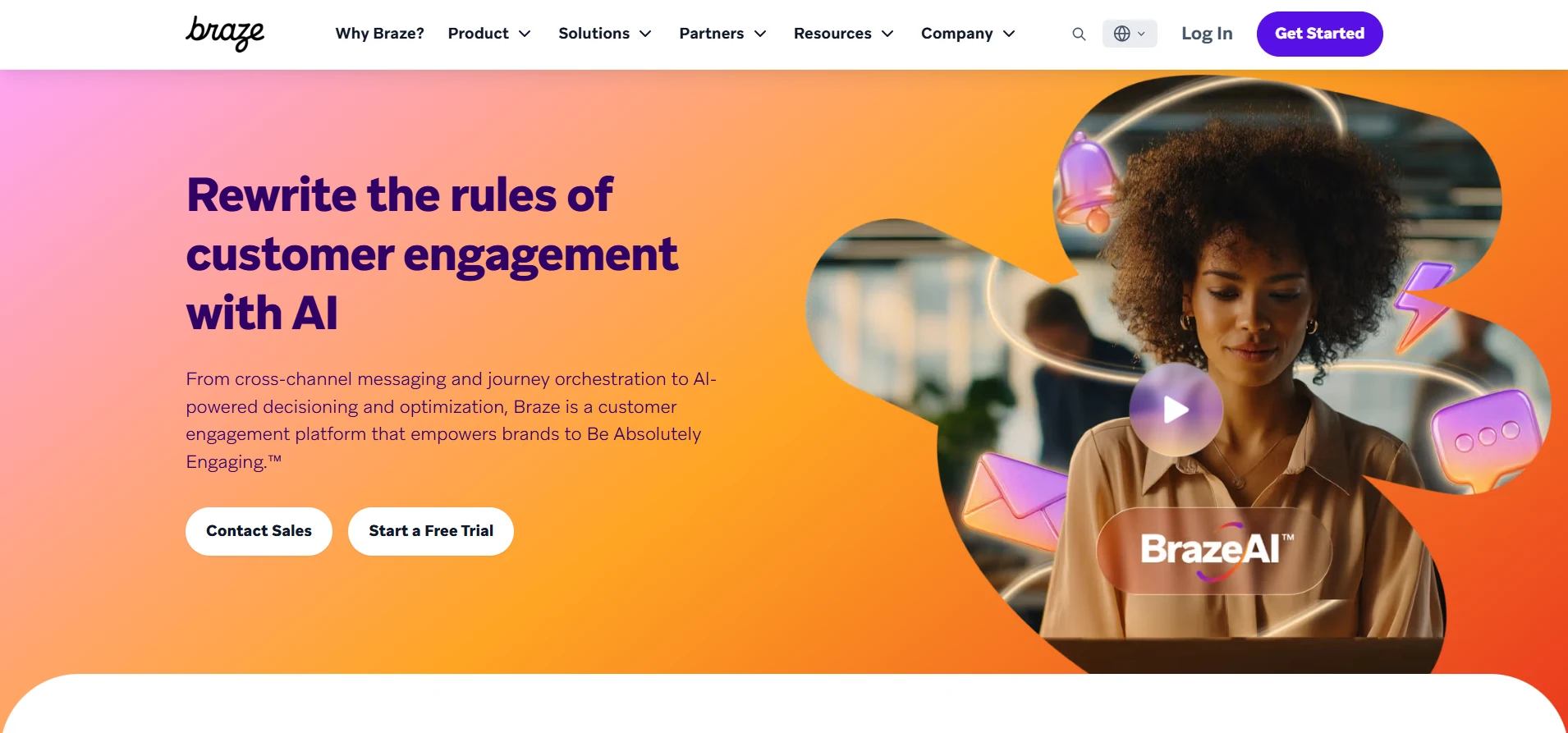
Braze is a customer engagement platform designed for real-time, multi-channel lifecycle marketing. It enables brands to activate customer data, personalize journeys, and deliver campaigns via email, SMS, push notifications, in-app messages, and the web.
BrazeAI facilitates campaign creation, testing, decision-making, and customer engagement optimization.
Specific feature that solves a business problem:
- Braze AI decisioning enables marketers to select the optimal message, timing, and channel based on each customer's behavior.
- This helps deliver personalized campaigns instead of sending the same message to every customer regardless of their intent, risk level, or lifecycle stage.
Best use case and ideal fit:
Businesses can use Braze for retention campaigns, onboarding journeys, customer engagement, churn reduction, product-led growth, mobile messaging, and lifecycle personalization.
It works best for B2C, SaaS, e-commerce, fintech, media, travel, and app-based businesses with high-volume user behavior data.
Overall Tools for Sales and Marketing Leaders
These tools have integrated systems that help marketing and sales work together in sync. Their features allow them to share data within the tools themselves.
| Sno. | Tool Name | Business Operation It Helps | Rating |
|---|---|---|---|
| 1 | HubSpot | Unified CRM, marketing, sales, service, content, automation, and reporting for growth teams. | 4.4/5 |
| 2 | Salesforce | Enterprise CRM, customer data, sales, marketing, service, analytics, AI agents, and an extensive app ecosystem. | 4.4/5 |
| 3 | Zoho CRM Plus | All-in-one customer experience suite for sales, marketing, support, analytics, chat, and automation. | 4.4/5 |
1. HubSpot
HubSpot is an all-in-one customer platform that connects CRM, marketing, sales, service, content, commerce, automation, and reporting. Its AI layer, Breeze, helps teams create content, answer business questions, automate workflows, enrich CRM data, qualify leads, and support customer-facing teams. Top AI sales tool guides also position HubSpot as useful for managing the full sales process, from deal tracking to revenue forecasting.
Specific feature that solves a business problem:
HubSpot’s unified CRM record connects marketing engagement, sales activity, service tickets, and customer history in one place. This solves the problem of teams working from disconnected tools and giving prospects fragmented experiences.
Best use case and ideal fit:
Businesses can use HubSpot for CRM, inbound marketing, lead management, sales automation, customer service, content operations, reporting, and revenue alignment. It works best for startups, SMBs, and mid-market teams that need one flexible platform instead of a heavy enterprise stack.
2. Salesforce
Salesforce is an enterprise customer platform that integrates sales, marketing, service, commerce, analytics, artificial intelligence agents, and customer data.
Salesforce provides full customer lifecycle support through Agentforce, Data Cloud, Marketing Cloud, Service Cloud, Slack, and Tableau.
Its Agentforce platform enables businesses to create autonomous AI agents that answer questions, perform actions, and operate within Salesforce workflows.
Specific feature that solves a business problem:
- Agentforce enables businesses to create AI agents that securely interact with Salesforce data, permissions, workflows, and business logic.
- This helps organizations move beyond standalone AI tools by enabling governed access to CRM data and the ability to execute approved business actions.
Best use case and ideal fit:
Salesforce can help businesses with enterprise CRM, customer data management, AI agents, customer service automation, revenue operations, marketing automation, analytics, and workflow orchestration.
It is best suited for enterprises that require scale, security, customization, compliance, and deep system integration.
3. Zoho CRM Plus
Zoho CRM Plus is an all-in-one customer experience platform combines sales, marketing, support, analytics, social media, surveys, live chat and project management.
Its AI helper Zia helps teams predict patterns, suggest the optimal times to engage consumers, analyze sentiment in emails and issues, and build intelligent dashboards.
Zoho also offers AI tools for email, phone, sales prediction, content writing, bespoke AI, and agentic AI workflows.
Specific feature that solves a business problem:
- Zia’s best-time-to-contact feature analyzes engagement behavior and recommends when sales representatives should call or email prospects.
- This helps improve response rates by reducing missed opportunities caused by poorly timed outreach.
Best use case and ideal fit:
Zoho CRM Plus can help businesses with CRM, customer support, campaign tracking, sales automation, social engagement, analytics, email workflows, and customer experience management.
It is ideal for small and medium-sized businesses that require comprehensive sales, marketing, and support capabilities without the cost or complexity of a large enterprise stack.
Conclusion
AI tools are no longer considered optional add-ons for sales and marketing teams. They now provide support for core revenue functions such as lead scoring and outreach automation, CRM management, and AI search visibility.
However, increasing the number of tools does not yield the best results. They result from using the appropriate tools in the proper workflow.
Businesses that combine AI with clean data, well-defined processes, and measurable revenue targets will create faster pipelines, stronger customer journeys, and more efficient marketing campaigns.
Your AI Tools Should Shorten the Sales Cycle
Use AI to score leads, personalize outreach, automate campaigns, analyze calls, and move qualified buyers faster.



Your SEO, on autopilot
Saffron OS runs 15+ AI agents that audit your visibility across Google, ChatGPT, Gemini and Perplexity every day — then fix what's broken, automatically. Built over 18 months. Results in 2–15 minutes.
Explore Saffron OSFrequently Asked Questions
Which AI marketing tools actually improve conversion, retention, or CAC, not just content output?

The tools that matter most are the ones tied to targeting, personalization, lead scoring, and lifecycle orchestration, not just copy generation. Think HubSpot, ActiveCampaign, Salesforce/Agentforce, and similar workflow tools that connect data to action.
What marketing workflows are worth automating first, and which should stay human?
Automate repetitive work like segmentation, reporting, send-time optimization, lead routing, and content repurposing first. Keep strategy, positioning, final messaging, and high-risk approvals human-led.
How do you prevent AI tools from generating generic, repetitive, or off-brand content?
Feed the model brand voice rules, specific audience context, first-party examples, and real data points. Then use human editing plus originality checks before anything customer-facing ships.
Which AI tools create measurable lift in SEO, paid ads, email, and lifecycle marketing?
SEO and ads benefit most from tools that automate content workflows, testing, and reporting; email and lifecycle see the strongest lift from personalization and predictive segmentation. The best results come when the tool is connected to CRM and behavior data.
How do you tell whether an AI marketing tool is driving performance or only saving time?
Compare the AI workflow against a baseline on conversion, CAC, retention, or revenue per send—not just hours saved. If the tool increases output but not business metrics, it is a productivity tool, not a growth driver.
What data quality issues break AI marketing systems the fastest?
Bad CRM records, missing event tracking, stale audiences, duplicated contacts, and weak attribution are the fastest failure points. AI can only optimize what the system can reliably see and trust.

Shreya Debnath

Shreya Debnath is a Marketing Manager at Saffron Edge with over 5 years of experience in SEO, AI-driven marketing, growth marketing, and technical SEO. She has hands-on expertise in optimizing existing content, improving performance, and driving scalable growth through data-backed strategies. She has worked with international markets, especially the US and UK, and diverse teams to build effective marketing campaigns, strengthen brand positioning, and enhance audience engagement across multiple channels. Her approach focuses on aligning sales and marketing to ensure consistent and measurable results. Outside of work, Shreya enjoys exploring new cities, pursuing creative hobbies, and discovering unique stories through travel and local experiences.
Related Blogs
We explore and publish the latest & most underrated content before it becomes a trend.

5 min read
How To Use Emotional Targeting To Drive More Conversions In 2021?
By Sabah Noor


Subscribe to Saffron Edge Newsletter!


Your SEO, on autopilot
Saffron OS runs 15+ AI agents that audit your visibility across Google, ChatGPT, Gemini and Perplexity every day — then fix what's broken, automatically. Built over 18 months. Results in 2–15 minutes.
Explore Saffron OS