


Top 20 Account-based Marketing Tools For B2B Companies


Apr 25, 2025

Contents
 17 min
- What is an Account-Based Marketing Tool?
- Why Do Businesses Need Account-based Marketing Tools?
- Top 20 Account-based Marketing Tools
- #1 ABM Data & Intent Tools
- #2 ABM Orchestration & Platform
- #3 ABM Engagement & Advertising Tools
- #4 ABM Measurement & Analytics Tools
- What are the Features Of Account-based Marketing Tools?
- 9. Engagement & Lead Nurturing
- Key Categories of Account-based Marketing Tools
- How to Pick the Right Account-based Marketing Tools?
Imagine landing your dream client, not by luck, but because every email, ad, and website visit felt made just for them. That’s the magic of Account-Based Marketing (ABM).
Instead of spraying messages to thousands and hoping one sticks, ABM treats each high-value company like its own little market. Sales and marketing team up, pick the best targets, and craft experiences that turn “maybe” into “yes” faster.
In 2026, AI will change how we reach out on LinkedIn or write cold emails. Tools now predict who’s shopping, personalize at scale, and prove every dollar spent drives revenue.
This guide walks you through what ABM software really is, why your business can’t ignore it, and the 20 best tools to make it happen. Ready to stop chasing leads and start winning accounts? Let’s dive in.
What is an Account-Based Marketing Tool?
An Account-Based Marketing (ABM) tool is software or a platform designed to support ABM strategies that target and engage specific high-value accounts or companies with personalized marketing and sales efforts, rather than broad, generalized campaigns.
These tools help align sales and marketing teams by providing capabilities such as identifying ideal target accounts, creating customized content, tracking engagement across channels, scoring accounts based on fit and intent, and measuring ROI on account-specific initiatives.
Account-based marketing (ABM) software empowers B2B teams to treat key accounts as individual markets. It leverages data for hyper-personalized outreach across email, ads, and the web.
This shifts from volume-based leads to strategic, revenue-focused engagements. AI-powered account identification and journey tracking are core to ABM tools.
Why Do Businesses Need Account-based Marketing Tools?
Traditional marketing scatters resources; ABM aligns teams for shorter cycles and higher close rates.
Key Statistics
- ABM tools prioritize high-intent accounts, reducing wasted ad spend by up to 30%.
- Businesses see 2x pipeline velocity with intent-driven targeting.
- Research shows ABM delivers 208% more revenue from key accounts.
These tools foster collaboration via shared dashboards and alerts. They deliver measurable ROI through attribution, proving campaign impact on revenue.
In a privacy-focused era, compliant ABM platforms ensure ethical scaling.
Let us tell you about a tech firm:
- They spent $100K on ads, got 2,000 leads and zero big deals. Sound familiar?
- Traditional marketing casts a wide net; ABM fishes with a spear.
- These platforms save your budget by targeting only high-fit, high-intent accounts.
- They cut sales cycles (some by 40%) and boost win rates.
Plus, sales and marketing finally speak the same language, share dashboards, real-time alerts, and one source of truth. Without ABM? You’re leaving money on the table.
Top 20 Account-based Marketing Tools
We’ve ranked the top 20 based on real user feedback from G2 and Capterra, AI capabilities, scalability, and proven results in the field.
|
Tool |
Primary ABM Output |
Key Features / Best For |
G2 Rating |
|
ZoomInfo |
High-quality B2B data and buying intent signals to build target account lists (TALs). |
Contact database, real-time company intent data, multi-platform integration |
4.5/5 (Leader in multiple categories) |
|
6sense |
Predictive intelligence that identifies in-market accounts and recommends next steps. |
AI-powered predictions, buying stage identification, seamless integration with Buyer Intent |
4.3/5 (936+ reviews) |
|
Bombora |
Surge intent data showing which companies are actively researching specific topics. |
Intent data co-op, topic-level insights, integrates with DSPs and ABM platforms |
4.4/5 (160+ reviews) |
|
Clearbit |
Real-time data enrichment to personalize website experiences for ICP. |
Data APIs, form auto-fill, audience segmentation traits, and waterfall enrichment. |
4.4/5 (600+ reviews) |
|
Cognism |
Compliant, GDPR-safe contact data for prospecting into global markets. |
Diamond Data for phone numbers, intent triggers, GDPR/CCPA compliance. |
4.5/5 (1000+ reviews) |
|
LeadFeeder |
Identifies anonymous B2B website visitors and turns them into account-level insights. |
Website visitor identification, company mapping, lead scoring, CRM sync. |
4.3/5 (743 reviews) |
|
Priority Engine |
Provides intent-driven account lists and insights specifically for technology buyers. |
Account scoring by behavior, contact-level intent, pipeline acceleration focus. |
4.3/5 (450 reviews) |
|
Demandbase One |
Unified GTM platform combining personalized experiences for key accounts. |
AI-driven account intelligence, multi-channel execution, and a real-time analytics dashboard . |
4.4/5 (2000+ reviews) |
|
Terminus |
Full-funnel ABM orchestration with a focus on advertising ROI and rapid implementation. |
T.E.A.M. framework, multi-channel campaigns (ads, chat, email), intent integration . |
4/5 (10+ reviews) |
|
HubSpot Marketing Hub |
Integrated ABM execution within a powerful, easy-to-use CRM |
Seamless Workflow automation for all journeys, segmentation, connected dashboards |
4.4/5 (25,850+ reviews) |
|
Marketo Engage |
Enterprise-grade marketing automation with advanced AI for complex B2B ABM workflows. |
Predictive Audiences & Content, Adobe Sensei AI, CRM-native integrations (Salesforce, MS Dynamics) |
4.5/5 (53,895+ reviews) |
|
LeanData |
Lead-to-account matching and routing to ensure clean data and efficient sales handoffs. |
Fuzzy matching for lead routing, workflow automation, and Salesforce-native insights. |
4.6/5 (1000+ reviews) |
|
RollWorks |
Account-based execution for mid-market teams, combining intent data with a powerful native advertising DSP. |
Website visitor identification, keyword intent, fit scoring, multi-channel activation account-based DSP . |
4.3/5 (100+ reviews) |
|
Influ2 |
Person-based advertising that targets specific decision-makers within an account |
Contact-level ad targeting, engagement tracking for sales, CRM integrations for sales follow-up . |
4.7/5 (111 reviews) |
|
Madison Logic |
Global multi-channel ABM activation platform for engaging full buying committees. |
Intent-driven targeting, multi-channel ads and content syndication, ROI measurement tying activity to revenue . |
4.3/5 (241 reviews) |
|
FoundryABM (Triblio) |
Account-based orchestration for personalizing web experiences and running targeted ads. |
AI-driven account scoring, visual campaign builders, web personalization, multi-channel execution. |
4.2/5 (347 reviews) |
|
Sendoso |
Adds a direct mail and gifting layer to ABM programs to create memorable, tangible engagement. |
Personalized e-gifts and direct mail, CRM-triggered automations, global fulfillment, ROI analytics. |
4.2/5 (1200 reviews) |
|
Combines a vast B2B contact database with sales engagement tools for outbound ABM. |
AI-powered ICP filtering, multi-channel sequences (email, calls), intent data, HubSpot sync. |
4.7/5 (9400 reviews) |
|
|
Pipedrive |
Visual pipeline management with CRM features that support ABM workflows for sales teams. |
Smart contact data, deal-forecasting reports, lead routing automations, mobile CRM access. |
4.3/5 (3000+ reviews) |
|
Dreamdata |
B2B revenue attribution platform that maps the complex buyer journey across all touchpoints. |
Multi-touch attribution models, visual journey timelines, account scoring, integrations to unify data sources . |
4.7/5 (240 reviews) |
Each tool below breaks down its core strengths, key features, and how it delivers value, helping you see which ones align best with your strategy and tech stack.
#1 ABM Data & Intent Tools
These tools power the "Identify" stage of ABM. They are used to build target account lists (TALs), source accurate contact data, and detect buying intent signals to prioritize the right accounts.
1. ZoomInfo
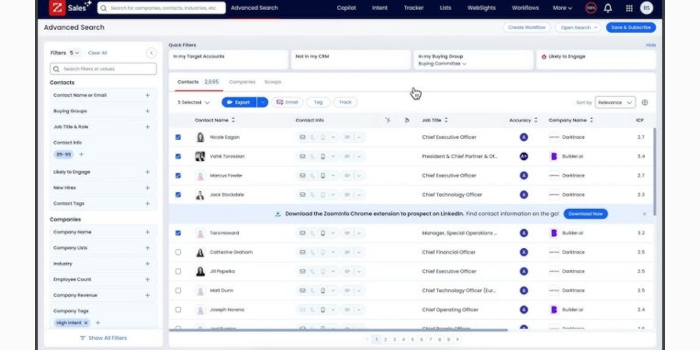
ZoomInfo delivers B2B intelligence for lead gen and enrichment. Its vast database powers ABM targeting. Enterprise-grade for global prospecting.
Features
-
Real-time enrichment adds firmographics and contacts.
-
Intent signals prioritize accounts; CRM sync automates workflows.
-
Compliance ensures GDPR/CCPA adherence.
Why use ZoomInfo tool for marketing?
ZoomInfo cuts sales cycles by 32 days with accurate data. It fuels personalized ABM at scale.
2. 6Sense
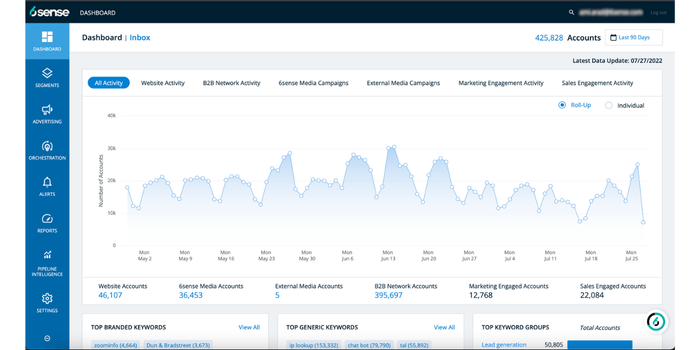
6sense is a revenue AI platform using predictive analytics for account engagement. It uncovers hidden buying signals to prioritize in-market accounts. Ideal for B2B teams seeking data-driven growth.
Features
-
Intent detection analyzes signals for scoring and orchestration.
-
AI segmentation personalizes journeys; integrations sync with CRMs.
-
Journey analytics forecasts revenue impact.
Why use 6sense tool for marketing?
6sense transforms ABM by revealing buyer intent early, increasing conversions by 50%. It empowers precise targeting, shortening cycles in competitive markets.
3. Bombora

Bombora supplies surge intent data for targeting. Its taxonomy covers 13K topics. Powers content and ABM syndication.
Features
-
Company graph maps signals
-
Topic tagging organizes insights.
-
DSP integrations activate audiences.
Why use Bombora tool for marketing?
Bombora prioritizes in-market accounts, lifting conversions 30%. It focuses efforts.
4. Clearbit
Clearbit enriches profiles for segmentation. Real-time data fuels personalization. Integrates with CDPs for ABM.
Features
-
Form auto-fill; audience insights via traits.
-
Waterfall enrichment layers sources.
-
GDPR compliant.
Why use Clearbit tool for marketing?
Clearbit boosts targeting accuracy 85%. It personalizes at speed.
5. Cognism
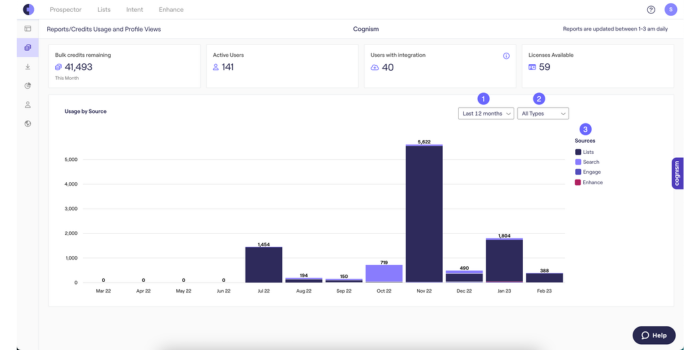
Cognism provides compliant global data for prospecting. It enriches ICPs with intent. Strong in EMEA/US for ethical ABM.
Features
-
Diamond Data verifies contacts
-
Intent tracks triggers.
-
CRM integrations automate enrichment
-
Segmentation filters audiences.
Why use Cognism tool for marketing?
Cognism ensures 87% phone accuracy, speeding outreach. It scales globally without risks.
6. LeadFeeder
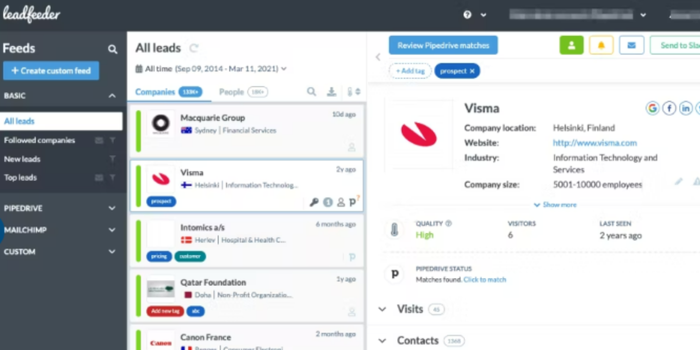
Leadfeeder identifies anonymous site visitors for insights. It scores traffic for prioritization. Affordable for traffic analysis.
Features
-
Visitor ID maps companies
-
Lead scoring tracks behaviors.
-
CRM syncs data
-
Filters segment audiences.
Why use Leadfeeder tool for marketing?
Leadfeeder uncovers 9/10 hidden visitors, boosting leads 20%. It reveals intent early.
7. Priority Engine
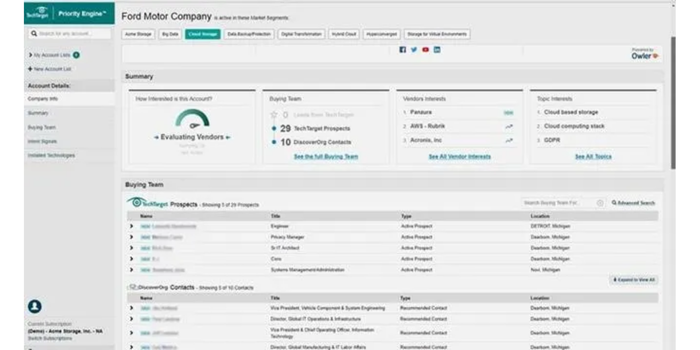
Priority Engine delivers intent via research insights. It ranks influencers for prioritization. Tech-focused for B2B.
Features
-
Account scoring by behavior
-
Contact access with opt-ins.
-
Dashboards track surges; ABM activation.
Why use the Priority Engine tool for marketing?
Priority Engine accelerates the pipeline 40% with surges. It engages buyers precisely.
#2 ABM Orchestration & Platform
These tools act as the central hub for running ABM programs. They unify data, align sales and marketing teams, manage target accounts, and orchestrate personalized journeys across channels.
8. Demand-Base
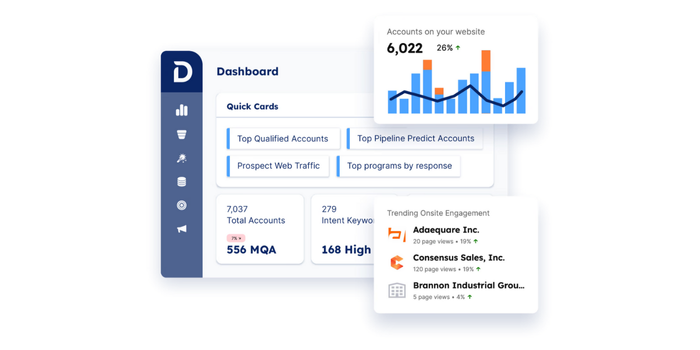
Demandbase is an AI-driven ABM platform unifying data for go-to-market orchestration. It identifies high-value accounts and automates personalized experiences across channels. Trusted by enterprises, it accelerates revenue through seamless integrations.
Features
-
Account intelligence aggregates first- and third-party data for scoring.
-
Multi-channel execution includes ads, web personalization, and email.
-
Analytics dashboards track engagement and attribution in real-time.
Why Use Demandbase tool for marketing?
Demandbase excels in scaling ABM for complex enterprises, boosting pipeline via predictive insights. It aligns sales-marketing with unified views, reducing silos and enhancing ROI.
9. Terminus

Terminus is a full-funnel ABM platform for revenue orchestration. It targets accounts with multi-touch campaigns. Focuses on B2B teams needing integrated engagement.
Features
-
Account hub centralizes targeting and analytics.
-
Advertising spans display and social; playbooks guide tactics.
-
Engagement tracking aggregates signals.
Why use Terminus tool for marketing?
Terminus accelerates pipeline by 40% with intent-based ads. It streamlines complex strategies for measurable impact.
10. HubSpot Marketing Hub
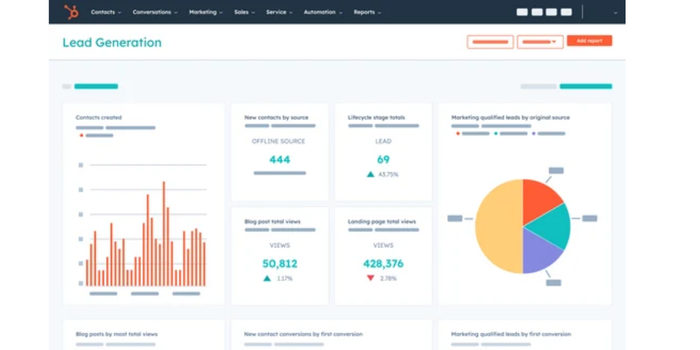
HubSpot's hub integrates CRM with ABM tools for seamless targeting. It supports SMBs building personalized campaigns. All-in-one for inbound-outbound alignment.
Features
-
Target account lists with segmentation
-
Smart content personalizes experiences
-
Analytics track engagement
-
LinkedIn ads sync audiences
Why use HubSpot Marketing Hub tool for marketing?
HubSpot simplifies ABM for SMBs, boosting leads by 20% via easy integrations. It fosters collaboration without complexity.
11. Marketo Engage
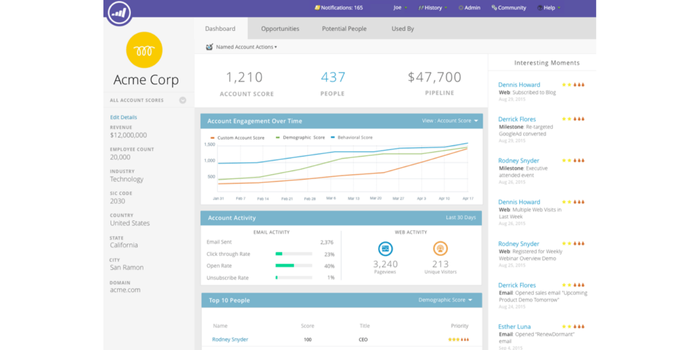
Marketo Engage is Adobe's AI platform for B2B automation and personalization. It orchestrates journeys across channels. Enterprise-focused for scalable ABM.
Features
-
Target account management builds buying groups
-
AI predicts engagement.
-
Multi-channel delivery includes email and ads.
-
Analytics measure ROI.
Why use Marketo Engage tool for marketing?
Marketo drives 3x response rates with predictive personalization. It unifies complex ecosystems.
12. LeanData
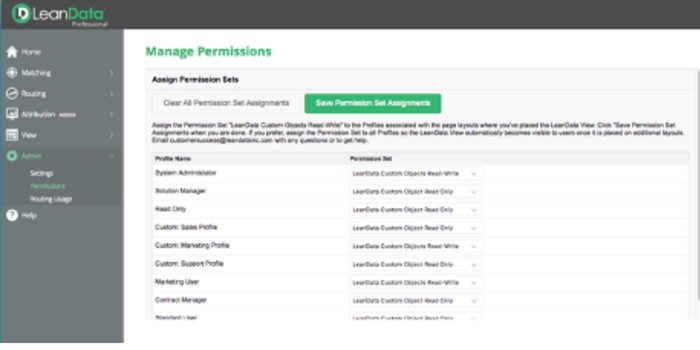
LeanData orchestrates GTM with lead matching in Salesforce. It aligns teams via automation. For complex sales motions.
Features
-
Fuzzy matching routes leads
-
Workflows trigger actions.
-
Insights surface metrics
-
Integrations support ABM plays.
Why use LeanData tool for marketing?
LeanData reduces delays by 50%, enhancing efficiency. It powers real-time alignment.
#3 ABM Engagement & Advertising Tools
These tools execute the "Engage" stage. They focus on reaching decision-makers within target accounts through personalized ads, direct mail, web personalization, and multi-channel touchpoints.
13. RollWorks
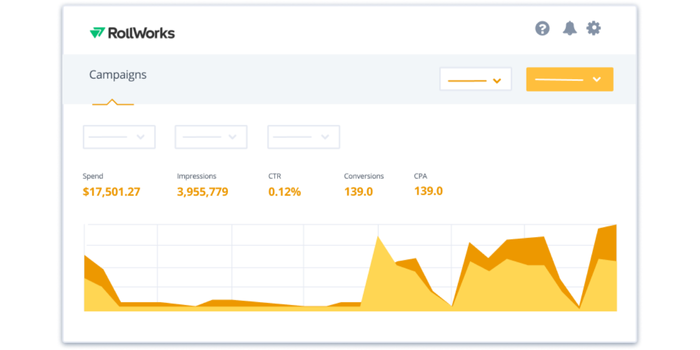
RollWorks is a B2B platform leveraging 4.2B profiles for account insights. It drives engagement via ads and personalization. Suited for mid-market scaling multi-channel strategies.
Features
-
Buyer data turns into actionable insights with AI scoring.
-
Cross-channel campaigns include display and social ads.
-
Reporting measures funnel progression.
Why use RollWorks tool for marketing?
RollWorks boosts alignment, cutting ad waste by 25% through precise targeting. It simplifies execution for faster revenue gains.
14. Influ2
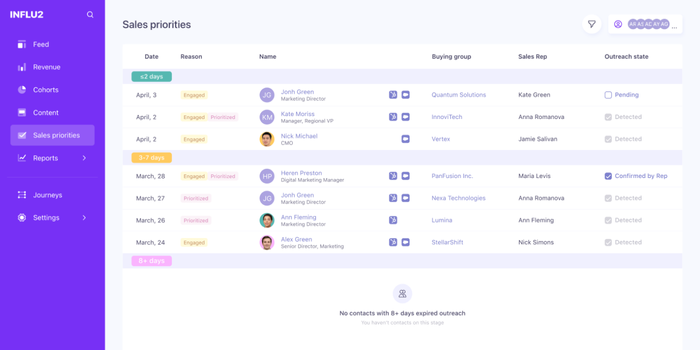
Influ2 pioneers person-based ABM ads for 1:1 targeting. It tracks individual engagement. Ideal for sales development boosting response rates.
Features
-
High-resolution ads deliver to decision-makers; person tracker scores behaviors.
-
CRM sync alerts reps; reporting shows influenced pipeline.
Why use Influ2 tool for marketing?
Influ2 triples responses with contact-level intent. It personalizes at scale.
15. Madison Logic
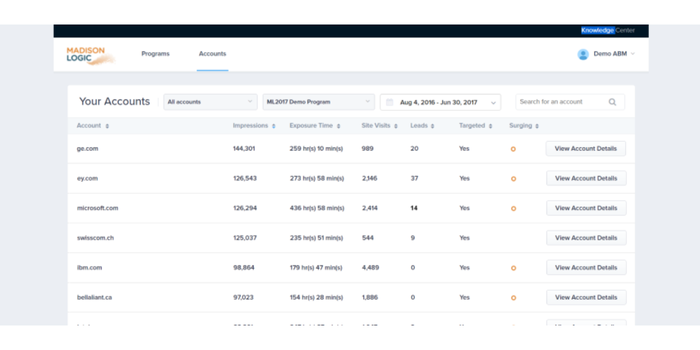
Madison Logic's ML Platform activates ABM with intent data. It engages buying committees globally. Suited for enterprises tracking ROI.
Features
-
Intent-driven targeting
-
Multi-channel ads and syndication.
-
Measurement ties to revenue
-
AI optimizes campaigns.
Why use Madison Logic tool for marketing?
Madison Logic accelerates cycles by 25% with precise activation. It maximizes engagement ROI.
16. FoundryABM

Foundry ABM (ex-Triblio) orchestrates campaigns with predictive intent. It personalizes web and ads. For scaling multi-channel efforts.
Features
-
AI engine scores journeys.
-
Visual builders design tactics.
-
Analytics track funnel impact
-
Integrations unify data.
Why use Foundry ABM (Triblio) tool for marketing?
Foundry scales personalization, lifting engagement 35%. It optimizes for revenue.
17. Sendoso
Sendoso automates gifting for relationship building. It integrates direct mail into ABM. Adds human touch to digital campaigns.
Features
-
Personalized sends with e-gifts
-
CRM triggers automations.
-
Analytics track ROI
-
Global fulfillment.
Why use Sendoso tool for marketing?
Sendoso lifts responses 2x via memorable touches. It strengthens bonds.
18. Apollo.io
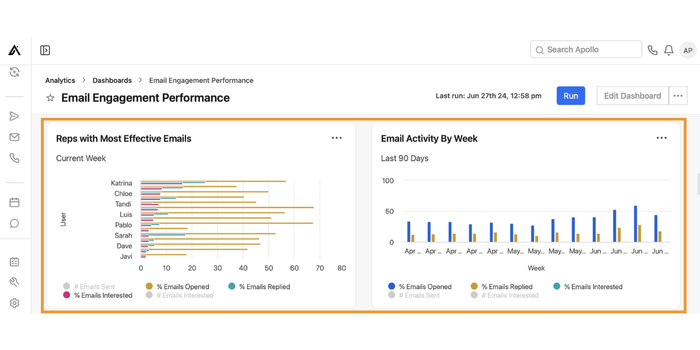
Apollo.io combines sales intelligence with automation. It prospects via vast database. Versatile for outbound ABM.
Features
-
AI filters ICPs
-
Sequences personalize outreach.
-
Analytics track performance.
-
HubSpot syncs data.
Why use Apollo.io tool for marketing?
Apollo books 2x meetings with enriched leads. It scales prospecting.
19. Pipedrive

Pipedrive visualizes pipelines for deal tracking. Its CRM supports ABM workflows. SMB-friendly for agile teams.
Features
-
Smart data enriches contacts
-
Automations route leads.
-
Reporting forecasts revenue; mobile access.
Why use Pipedrive tool for marketing?
Pipedrive shortens cycles 20% with visuals. It simplifies execution.
#4 ABM Measurement & Analytics Tools
These tools handle the "Measure" stage. They track account engagement, map the buyer journey across touchpoints, and provide attribution reporting to prove the revenue impact of ABM campaigns.
20. DreamData
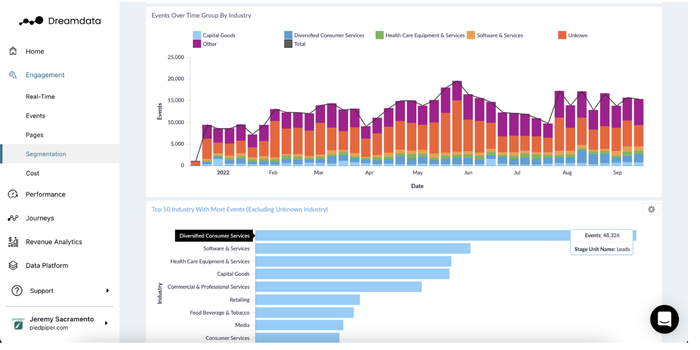
Dreamdata maps B2B journeys for attribution. It connects touchpoints to revenue. Essential for proving ABM impact.
Features
-
Visual timelines aggregate data
-
Account scoring predicts value.
-
Integrations unify sources
-
Dashboards show ROI.
Why use the Dreamdata tool for marketing?
Dreamdata clarifies 50% more pipeline sources. It optimizes budgets.
What are the Features Of Account-based Marketing Tools?
The best ABM platforms feel like having a crystal ball and a megaphone in one. They’re tools and your secret weapon for turning data into dollars.
Drawing from the latest trends, here’s a deeper dive into the must-have features that make these platforms shine.
We’ve structured them with what they do, why they matter, and real-world tips to get started.
1. Account Identification & Selection
AI scans firmographics (company size, industry), technographics (tech stack), and intent data to build and prioritize target account lists. Tools like ZoomInfo or 6sense auto-weed out poor fits.
Why it matters: No more guessing games. You focus on the 20% of accounts driving 80% of revenue, cutting waste and boosting efficiency by up to 30%.
Pro tip: Start with your ICP (ideal customer profile) and let the platform suggest expansions, watch your pipeline fill with qualified gems.
2. Intent Data & Predictive Analytics
Tracks buying signals from website visits, content downloads, competitor research, and even job postings. Predictive AI forecasts readiness, scoring accounts like a credit report.
Why it matters: Engage prospects when they’re hot, before competitors do. Teams using this see 50% higher conversions. In 2026, with AI advancements, it’s like having a time machine for sales timing.
Tip: Layer first-party (your site data) with third-party intent for a 360-degree view; set alerts for surge scores above 70.
3. Cross-Channel Orchestration
It automates campaigns across email, LinkedIn, display ads, webinars, and social media, all synced for consistent messaging.
Why it matters: Buyers switch channels 7 times before deciding; orchestration ensures your story follows them seamlessly, lifting engagement 3x.
Tip: Map your buyer journey first, then use playbooks to trigger multi-touch sequences, like an ad after an email open.
4. Personalization & Customization
Dynamically tweaks content, emails, landing pages, and ads based on account traits. AI even generates custom assets on the fly.
Why it matters: Generic blasts get ignored; tailored ones build trust. Personalization drives 20% shorter cycles and 2x response rates.
Tip: Use variables like {company_pain_point} in templates; test A/B versions to see what resonates.
5. CRM & Marketing Automation Integration
Plugs into Salesforce, HubSpot, Marketo, syncing data bidirectionally for unified views and automated workflows.
Why it matters: Silos kill deals; seamless flow means sales sees marketing’s work in real-time, reducing handoff friction by 50%.
Tip: Audit integrations quarterly; prioritize bi-directional sync to avoid data ghosts haunting your reports.
6. Account-Based Advertising
Runs hyper-targeted ads on Google, LinkedIn, and programmatic networks—reaching decision-makers with retargeting and lookalikes.
Tip: Upload your TAL (target account list) as custom audiences; monitor frequency to avoid ad fatigue.
7. Sales & Marketing Alignment Tools
Shared dashboards, real-time alerts, and collaboration features like Slack integrations for joint planning
Why it matters: Aligned teams close 2x faster; these tools turn “he said, she said” into “we win together.
Tip: Set weekly sync rituals around the tool’s insights, celebrate joint wins to build momentum.
8. Analytics & Reporting
Delivers account-level metrics: engagement scores, pipeline velocity, revenue attribution, and ROI dashboards.
Why it matters: Prove your impact, CFOs love seeing marketing’s 72% ROI edge over other tactics. Data drives optimization.
Tip: Tie everything to revenue; use multi-touch models to credit all channels fairly.
9. Engagement & Lead Nurturing
Automates sequences, AI chatbots, and nurture paths with personalized content drips.
Why it matters: Keeps accounts warm through long cycles, increasing close rates 40%.
Tip: Segment by stage, nurture top-funnel with education, bottom with case studies.
10. Scalability & Usability
Handles growing lists with intuitive UI, role-based access, and no-code automations.
Why it matters: As you scale from 100 to 1,000 accounts, it grows without growing pains, key to expansion and scaling in 2026.
Tip: Onboard with training; customize dashboards to match team roles.
Bottom line? These features make marketing targeted, personal, and measurable, driving engagement, shorter cycles, and real growth.
Pick a platform that nails your top three pain points first.
ABM-Driven Growth Starts Here
Choose the right ABM tools to personalize outreach, shorten sales cycles and unlock enterprise deals. Saffron Edge makes account‑based marketing work at scale.
Key Categories of Account-based Marketing Tools
Think of ABM like building a house. You need different tools for each job. No single hammer does it all. So here’s a structured breakdown of the key categories, pulled from 2025’s martech landscape.
Each includes what it covers, top examples, and why it fits your strategy. Mix and match for a full stack.
1. Data & Intent Tools
Uncover and enrich target accounts with firmographics, technographics, and buying signals. They’re your foundation, spotting who to pursue.
Top examples: 6sense (predictive intent), ZoomInfo (contact enrichment), Bombora (surge data), Clearbit (real-time profiling).
Why use them: Build accurate TALs fast; intent data alone lifts conversions 30%. Ideal for early-stage targeting.
Tip: Layer with your CRM for hybrid lists, start with 500 accounts, refine quarterly.
2. Engagement & Personalization Tools
Deliver tailored content, emails, and web experiences across channels. They’re the heart of making interactions feel bespoke.
Top examples: RollWorks (multi-channel ads), Foundry ABM (web personalization), Sendoso (gifting), Influ2 (person-based ads).
Why use them: Boost response rates 3x with relevance; personalization is non-negotiable in 2025.
Tip: A/B test dynamic elements; track lift in engagement scores.
3. Orchestration & Automation Tools
Coordinate full-funnel campaigns, workflows, and multi-touch plays. They’re the conductor, unifying sales/marketing efforts.
Top examples: Demandbase (all-in-one), Terminus (playbooks), Marketo Engage (AI automation), LeanData (lead matching).
Why use them: Scale without chaos; automation cuts manual work 50%, freeing time for strategy.
Tip: Map journeys first; use triggers like “intent spike” for proactive nudges.
4. Advertising & Targeting Tools
Hyper-target ads on LinkedIn, Google, and programmatic, focusing on decision-makers.
Top examples: Madison Logic (intent ads), Apollo.io (outreach automation), HubSpot Marketing Hub (integrated ads).
Why use them: Precision cuts ad waste 25%; essential for awareness in competitive markets.
Tip: Upload TALs as audiences; blend with retargeting for full coverage.
5. Analytics & Reporting Tools
Measure ROI, attribution, and journey impact at the account level. They’re your scorecardpro, ving value.
Top examples: Dreamdata (journey mapping), Priority Engine (research insights), Leadfeeder (visitor analytics).
Why use them: Tie marketing to revenue; 72% of ABM users cite better ROI tracking as the win.
Tip: Focus on velocity and influence metrics; share dashboards weekly.
6. CRM & Alignment Tools
Sync data and workflows for sales/marketing harmony, including pipelines and collaboration.
Top examples: Pipedrive (visual pipelines), Cognism (global compliance), Salesforce integrations across platforms.
Why use them: Alignment speeds closes 2x; bridges the “marketing vs. sales” gap.
Tip: Mandate shared access; use alerts for handoffs.
How to Pick the Right Account-based Marketing Tools?
Choosing the right ABM platform comes down to alignment, integration, and proven impact. Start by clarifying your goals, auditing your stack, and matching features to your maturity level, then test rigorously before committing.
- Define objectives: Shorten cycles? Land enterprises? Align sales/marketing on 1–3 KPIs like pipeline velocity or win rate.
- Audit your tech: List your CRM (Salesforce or HubSpot), ad platforms, and data tools. Demand bi-directional sync from day one to eliminate silos and keep data flowing smoothly.
- Match to stage: Startups thrive with simple CRM sync and basic targeting. Mid-market teams need multi-channel orchestration and account scoring. Enterprises require full AI automation plus advanced attribution.
- Run a 30-day pilot: Test the tool with 10–20 real target accounts. Track engagement lift above 15% and confirm sales reps actually log in and use it daily.
- Vet the vendor: Look for G2 ratings above 4.5 stars, dedicated onboarding support, and proven time-to-value under 60 days.
- Future-proof it: Ensure a strong AI roadmap, GDPR/CCPA compliance, and scalability to handle 1,000+ accounts without slowing down.
- Conclusion
In 2025, Account-based Marketing tools are no longer “nice-to-haves”, they’re growth engines for every serious B2B brand.
From AI-driven intent data to cross-channel personalization, these ABM platforms redefine how businesses connect, engage, and close deals with precision.
Choosing the right Account-Based Marketing software depends on your goals and scale. Whether it’s Demandbase for enterprise orchestration, 6sense for predictive insights, or RollWorks for multi-channel engagement, every tool adds a new layer of intelligence to your go-to-market strategy.
In short, ABM isn’t about chasing leads anymore; it’s about winning relationships. Invest in the right ABM tools, align your teams, and watch your pipeline evolve from numbers to meaningful revenue.
Maximize ROI with ABM Tools for High-Value Accounts.
Use AI-powered ABM tools to engage the right accounts at the right time. Saffron Edge drives measurable revenue through targeted Demand Gen campaigns.
Share


10 Mistakes in Your GTM Strategy
Frequently Asked Questions
What size of business needs Account-Based Marketing tools?

Account-based marketing platforms are ideal for B2B companies targeting high-value clients. Small and midsize businesses can also use ABM platforms to personalize campaigns and improve ROI.
Can I run ABM without Account-Based Marketing tools?
Yes, you can start ABM manually. However, Account-Based Marketing tools automate targeting, personalization, and measurement, making campaigns more scalable and efficient.
How much does Account-Based Marketing software cost?
Account-Based Marketing software pricing varies by features and scale. Entry-level ABM tools start at a few hundred dollars monthly, while enterprise ABM platforms can cost thousands.
What metrics should I track using ABM platforms?
Track engagement rates, pipeline value, and ROI using ABM platforms. The best Account-Based Marketing tools provide account-level analytics to measure impact precisely.
How can I ensure my team adopts Account-based Marketing tools effectively?
To maximize adoption, choose intuitive Account-Based Marketing software, integrate it with your CRM, and train both sales and marketing teams on how to use ABM tools efficiently.
Improve Lead Engagement with Marketing Automation!
Streamline your marketing & sales workflows with AI-driven automation. From lead nurturing to CRM integration, Saffron Edge helps you boost conversions, save time, and drive revenue.
Nishant Ahlawat

Nishant Ahlawat is a marketing professional specializing in SaaS, SEO, and content strategy. He has experience working with B2B companies to improve online visibility, develop content frameworks, and implement data-driven SEO practices. His work focuses on helping businesses grow their organic presence through search optimization, strategic planning, and performance tracking. Outside of work, Nishant enjoys traveling to offbeat destinations, trekking in the mountains, and exploring local cultures and landscapes.
Related Blogs
We explore and publish the latest & most underrated content before it becomes a trend.


6 min read
8 Powerful eCommerce Marketing Automation Strategies and Top Tools for 2025
By Sabah Noor
3 min read
3 Highly Effective Social Media Optimization Tips You Might Not Know
By Praveen Kumar

Subscribe to Saffron Edge Newsletter!


10 Mistakes in Your GTM Strategy