


Trusted By




























Common SEO Risks During Migration
Without structured oversight, visibility losses can happen within days of launch.
Traffic Decline
Incorrect redirects or URL mismatches cause immediate organic traffic loss.
Ranking Instability
High-performing keywords may lose positions if authority isn't passed correctly.
Crawl Errors
Broken links, redirect chains, missing canonical tags, or blocked resources hinder indexing.
Indexing Delays
Incorrect sitemap and signal updates slow search engine reprocessing.
Data Disruption
Analytics and tracking configurations may break during environment changes.
Slow Site Speed
A new, unoptimized design or, or heavy, inefficient code can hurt user experience and SEO, as speed is a ranking factor.
When Should You Consider SEO Migration?
The purpose is stability and preservation. Once search equity is protected, optimization can continue without rebuilding lost authority.
Changing Your Domain
Transfer authority with structured redirects and change-of-address configuration.
Migrating to a New CMS
Preserve URL structure, metadata handling, and template logic across platforms.
Website Redesign
Maintain URL hierarchy, internal linking, navigation, and page templates.
Restructuring URLs
Plan redirect mapping for category paths, blog structures, or parameter changes.
HTTP to HTTPS
Handle protocol shifts with proper redirect and canonical management.
Consolidating Subdomains
Move content between subdomain and root domain environments safely.
International Expansion
Implement hreflang and indexing strategy for multi-language or multi-region sites.
Merging Multiple Websites
Map legacy equity correctly to prevent ranking dilution.
Infrastructure Changes
Switch hosting, servers, or implement headless architecture without crawl impact.
Our SEO Migration Services
Comprehensive coverage across every technical and search-related aspect of your migration.
Book Into CallPre-Migration Performance Benchmarking
Documenting current traffic, rankings, indexed URLs, backlink profiles, and technical health.
Redirect Mapping & URL Strategy
Building structured redirect plans to pass relevance and authority to correct destinations.
Internal Link Structure Review
Analyzing authority flow and preserving crawl pathways post-migration.
Metadata & Tag Consistency Checks
Validating title tags, meta descriptions, canonical tags, schema markup, and structured data.
Search Console Configuration
Managing property updates, sitemap submissions, coverage monitoring, and change-of-address requests.
Tracking & Analytics Validation
Ensuring GA4, tag management systems, and event tracking remain intact after deployment.
Staging Environment Technical Audit
Reviewing non-live environments for robots directives, indexation blocks, canonical conflicts, and redirect errors.
CMS Platforms We Support
Each CMS has unique indexing behavior. We adapt the migration strategy accordingly.










SEO Migration Framework
A structured migration follows three controlled stages. Each stage reduces risk and preserves search visibility.
Pre-Migration
Preparation & risk prevention
- Full technical audit of existing website
- Complete URL inventory & mapping
- Performance benchmarking (traffic, rankings, backlinks)
- Structured redirect matrix planning
- Staging environment review
During Migration
Stability at launch
- Redirect validation with correct status codes
- Real-time crawl testing for broken links
- Canonical & metadata verification
- Analytics and event tracking confirmation
- Sitemap submission & robots monitoring
Post-Migration
Stabilization & monitoring
- 404 and redirect error monitoring
- Ranking stability tracking
- Crawl & coverage gap analysis
- Internal link corrections
- Performance comparison against baseline
SEO Migration Pricing
Every migration is scoped individually. These packages provide a starting framework.
$2,500one-time
For small sites under 500 pages with straightforward migrations.
- Pre-migration SEO audit
- Redirect mapping (up to 500 URLs)
- Metadata validation
- Search Console setup
- Post-launch monitoring (2 weeks)
$5,500one-time
For mid-size sites with complex structures or CMS transitions.
- Everything in Essentials
- Redirect mapping (up to 5,000 URLs)
- Internal link structure review
- Staging environment audit
- Analytics & tracking validation
- Post-launch monitoring (6 weeks)
- Dedicated migration lead
Customscoped
For large-scale migrations, multi-domain, or international sites.
- Everything in Professional
- Unlimited URL redirect mapping
- Multi-domain / hreflang strategy
- Custom crawl & indexation plan
- Priority support & weekly reporting
- Post-launch monitoring (12 weeks)
- Executive stakeholder updates
Migration Outcomes
The objective of migration is stability first, improvement second.
Domain + CMS Transition
- Temporary traffic fluctuation under 10%
- Recovery within 4 weeks
- Improved crawl efficiency after structure refinement
Large-Scale URL Restructure
- Significant reduction in crawl errors
- Faster indexation of updated pages
- Stabilized keyword rankings within 6 weeks
HTTPS Migration
- No long-term ranking loss
- Improved security signals
- Clean transition without redirect chains
Case Study: Migration for B2B Healthcare SaaS Platform
Full CMS migration from WordPress to HubSpot CMS for a healthcare SaaS company with 4,200+ indexed pages, complex URL structures, and strict compliance requirements.
97%
Organic Traffic Retained
4,200+
Pages Migrated
3,800
Redirects Mapped
3 Weeks
Recovery Time
Website Migration Timeline
Discovery & Audit Week 1–2
Benchmarked 4,200+ indexed URLs across organic traffic, keyword rankings, backlink profile, and technical health. Identified 340 pages with thin content for consolidation and 120 redirect chains from prior migrations.
Redirect Strategy & Staging Review Week 3–4
Built a 3,800-row redirect map covering product pages, blog content, resource hubs, and legacy landing pages. Audited the staging environment for noindex directives, canonical conflicts, and crawl blocks before launch.
Migration Execution Week 5
Coordinated the DNS cutover and CMS switch from WordPress to HubSpot CMS. Validated all redirects in real-time, submitted updated sitemaps, and filed a change-of-address in Search Console within the first hour.
Post-Migration Monitoring Week 6–12
Monitored crawl stats, index coverage, and ranking fluctuations daily. Resolved 23 edge-case redirect errors within 48 hours. Organic traffic stabilized within 3 weeks and grew 12% by week 10.
Results After SEO Migration
- 97% of organic traffic retained through migration week
- Full traffic recovery and 12% growth within 10 weeks
- Zero critical crawl errors post-launch
- 340 thin-content pages consolidated, improving crawl efficiency by 18%
- All compliance-gated content and form tracking preserved
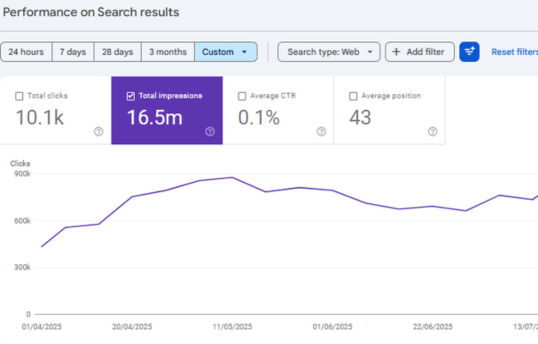
Prepare Your Website for Change Without Losing Search Equity
If you're planning a redesign, domain change, or CMS transition, a structured migration strategy reduces risk and protects long-term organic growth.
Case Studies
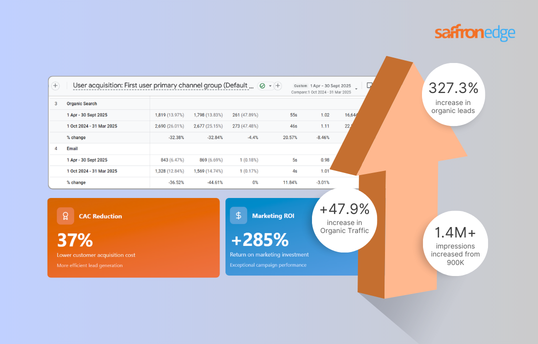
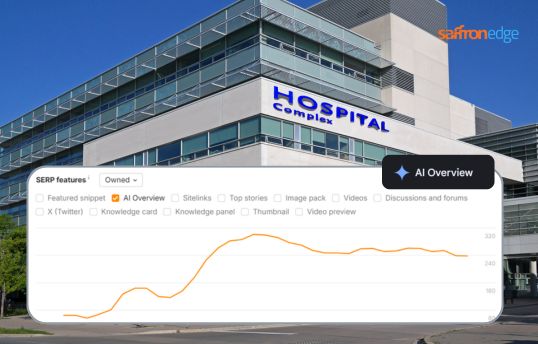
We drive exceptional results for every client

Testimonials


Frequently Asked Questions
What are web migration services?

Web migration services manage technical and search-related elements during structural website transitions, ensuring minimal disruption to visibility and indexing.
When should I engage an SEO migration agency?
An SEO migration agency is typically involved when a domain change, CMS migration, redesign, or URL restructuring is planned.
Are website migration services required for a redesign?
Yes. Even visual redesigns can alter page structure, navigation, or metadata — all of which influence search performance.
How long does SEO stabilization take after migration?
Stabilization timelines vary depending on site size and complexity. In structured migrations, performance typically stabilizes within several weeks.
What is the most common cause of traffic loss after migration?
Improper redirect mapping and indexing misconfiguration are the most frequent causes of post-migration visibility decline.
